Where Creative Direction Seems Unsteady, Glenn Martens at Maison Margiela Upholds a Legacy

Black

Maison Margiela Goes to Shanghai Fashion Week

3 April, 2026

Words by:

Sarah Palmieri

For their Fall/Winter 2026 debut, Maison Margiela left Paris for the first time ever. And in a collection that balanced both haute couture and ready to wear, their legacy stays poignent in the hands of Glenn Martens.

Maison Margiela’s latest announcement arrived via a Dropbox link marked “Maison Margiela/Folders” last February. Inside was an archive of past looks, references, and project timelines, offering a rare glimpse into the house’s typically guarded world. Among them, the most significant document was a ‘SAVE THE DATE’, an invitation outlining that the house would unveil its Fall Winter 2026 collection on April 1 at Shanghai Fashion Week. For the first time, Maison Margiela would present a collection outside of Paris.

Long defined by the anonymity of its founder, Martin Margiela, the label has remained a renegade within the industry, a spirit that continues under newly appointed creative director Glenn Martens. Founded in 1988, the house later entered a new era under John Galliano following the OTB Group’s acquisition in 2014. Galliano’s final runway in 2024, where glass faced models swayed beneath the Pont Alexandre III in London, one of the most memorable moments in fashion history.

So, when Martens, who also leads Diesel, stepped into the role, he inherited formidable expectations. His debut in Paris last July made clear his intent, that he would be pushing the boundaries of what couture can be. And Shanghai proved no exception.

For those less familiar with the house, whether through its four stitch signature, its tabi shoes, or even the lingering familiarity of By the Fireplace, there are many entry points into Margiela’s world. Reiner Holzemer’s documentary Margiela: In His Own Words remains one of the most revealing, preserving the designer’s anonymity while tracing the foundation of the house. In the wake of the Shanghai announcement, it felt necessary to return to it. Like any legacy, understanding where Margiela is now begins with understanding how it was built.
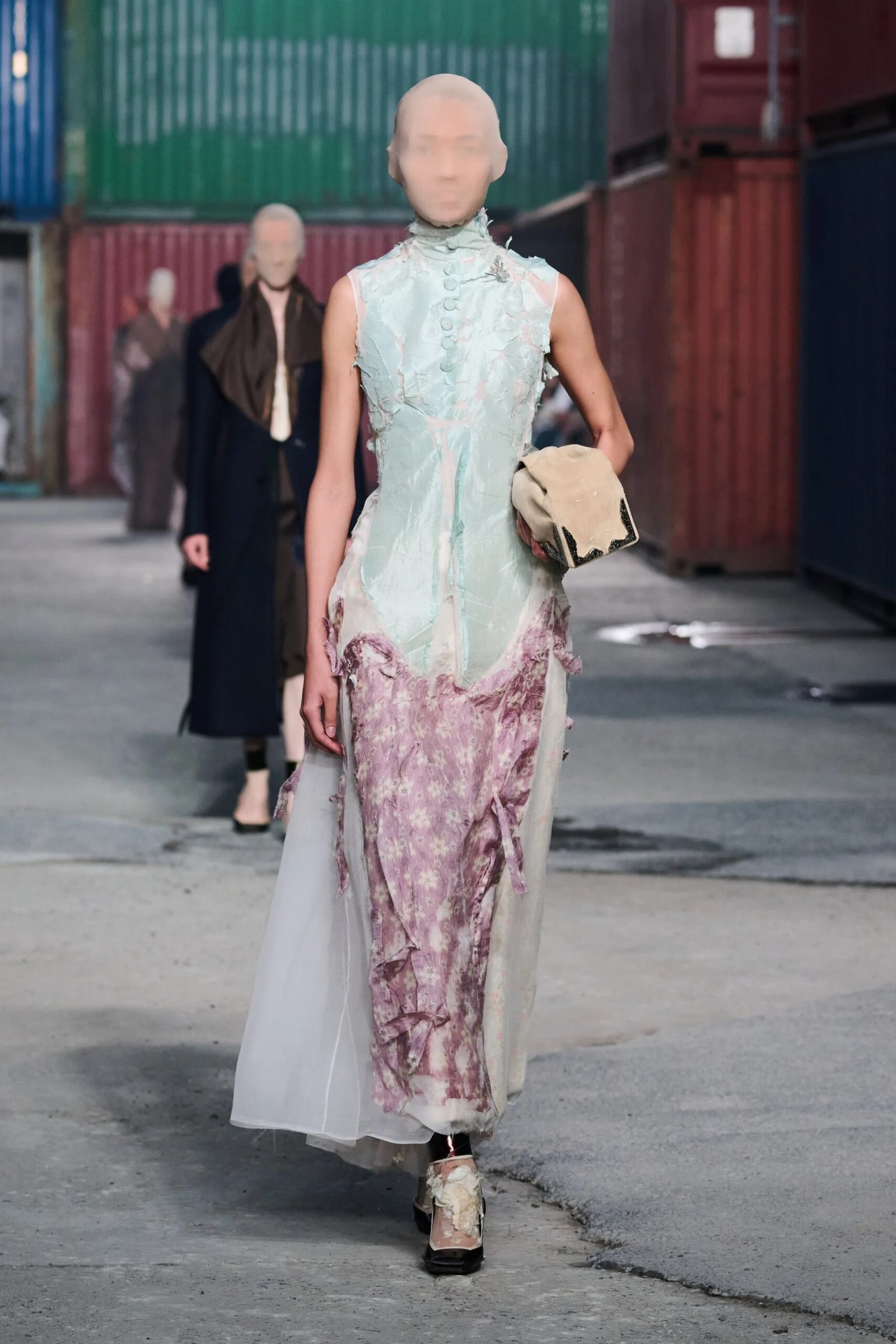
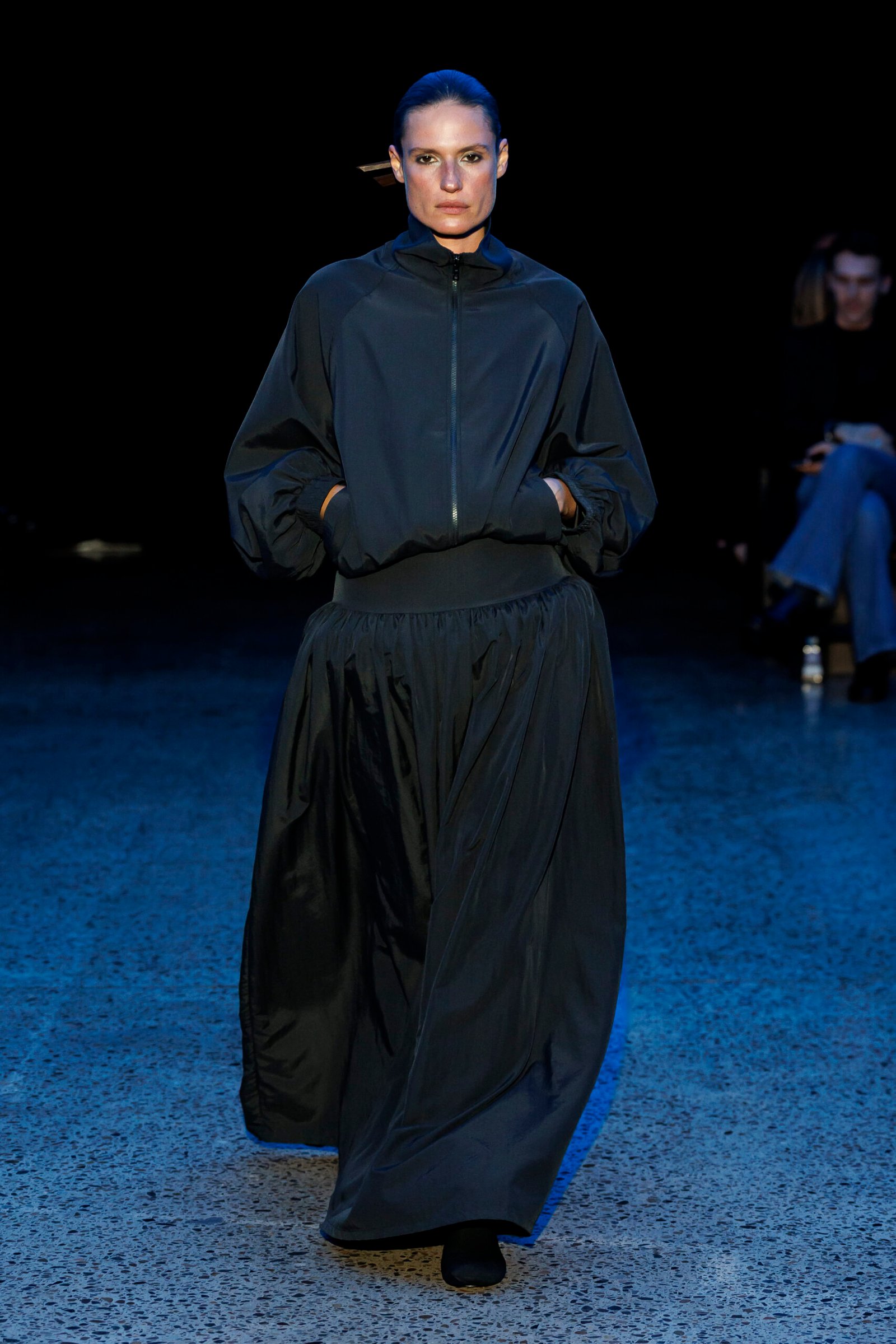
Yesterday, the collection was released. The audience sat in shipping containers as the first look came out to Kylie Minogue and Nick Cave’s Where the Wild Roses Grow. If Vivienne Westwood’s bridal gown is what everyone is after, then Martens’s opening look, a full-length, long-sleeved gown with a translucent face covering, waving and folding through shimmering fabric, is mine. The theatricality of Margiela sang through, as always, with complete elegance. It was both haute couture and ready-to-wear, designed to exist harmoniously.

Like so many of the greats, designers like Margiela and Rick Owens, or Alexander McQueen during his anarchist reign at Givenchy, can harness and break the historical rules of fashion, while still falling back on their ability to dress the body. For garments to sit, to hold, to be tailored in a way that makes high fashion worthwhile. Owens exemplifies this through his ability to drape textiles in a way that flatters outside of a traditional lens, while Martens approaches it through minimalistic clothing that becomes an effortless vessel of luxury.

A quarter of the way through the runway, we see a gold gown, bubbled and embellished with licks of textile. Like his debut haute couture show last July, Martens finds a way to make art wearable, to present a design almost as sculpture, something that could sit beside Louise Bourgeois or Anselm Kiefer. A gown to admire through glass, but one that, on this runway, can move into the real world.

Whether through the opulent gowns or the enlarged tailoring, the show holds the essence of 18th-century silhouettes and trimmings: sheer lace shirting under silk-lapelled suits; gowns corseted at the waist, then pushed and contoured outwards. It all felt very Sofia Coppola’s Marie Antoinette, whilst honouring Margiela’s house codes, the tabi, bianchetto, four stitches, and numeric coding.

But for all the awe the show has brought, the question still remains: why China? Some may say the OTB Group has shifted to broaden a Chinese audience, an attempt to bring the cult label into the mainstream. And considering the time we’re in, these niche houses are having to let go of what was once strictly part of their identity to bring in more sales. More pressure is being put on creative directors to sell, to create clothes that can be bought by the masses. After all, Margiela is based on identity, conceptualism, and minimalism, and that isn’t marooned to just a Western audience.

And at a time where creative directors are leaving left, right, and centre, most recently Matthieu Blazy exiting Chanel after what seemed like an incredible start, although Martens at Margiela feels steady, you never really know. Bigger juggernauts are getting their fingers into a game that was once art. For Margiela, change for the sake of growth is not needed to make the brand relevant. Its history and what it continues to do is enough.

Your next Read

For the past 50 years BMW has collaborated with world-famous artists, providing halo cars as …
With a beefed-up 250kW powertrain and all-wheel drive, Skoda has ensured that their first electric …

There’s a particular kind of person who builds a motorcycle from scratch. And not the …

A New Material in a Classic Design Ceramic, a material known for its durability and …