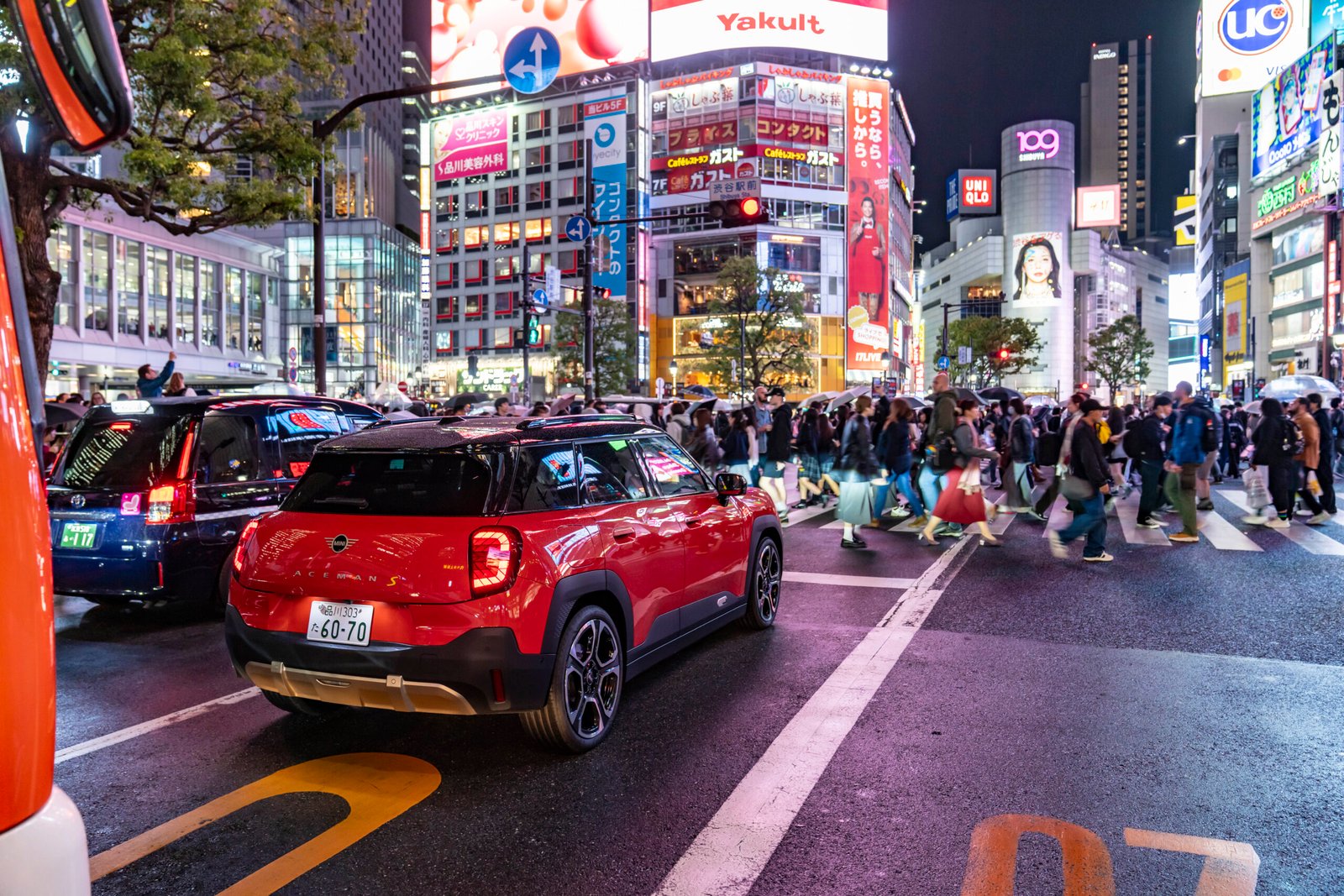
It’s tempting to talk about the original Mini as though its character was intentional, as if it arrived fully formed with a clear idea of what it should be. But the reality is less romantic, and in many ways more interesting.
It was born out of necessity.
Post-war Britain needed efficiency, affordability, and intelligent use of space. The transverse engine, the wheels pushed to the corners, the compact footprint that maximised interior room: these weren’t stylistic decisions in the way we understand them now. They were solutions. And yet, in solving those problems, the Mini created something unexpectedly characterful.
It felt direct because there was very little between you and the mechanics of the car. It felt agile because there was so little mass to manage. It felt playful because its proportions encouraged it to be. None of this was framed as the soul of MINI at the time. That language came later. What began as constraint became character, and over time, character became identity.
That shift matters, because once identity hardens, it becomes something people feel compelled to protect. MINI becomes small. MINI becomes light. MINI becomes mechanically expressive. Anything that deviates from that starts to feel like a dilution.
But that reading flattens the story. It treats those traits as fixed, rather than as the outcome of a very specific set of conditions. The world that produced them no longer exists, and neither do the constraints that shaped the original car.
Modern cars operate under entirely different pressures. Safety requirements alone reshape what a vehicle can be. Expectations of comfort, refinement and usability have expanded. Technology has layered itself over every part of the experience. And now, with electrification, the architecture of the car has shifted again.
To expect a modern MINI to replicate the original in any literal sense is to ignore all of that. It would require a kind of deliberate regression, not just in engineering, but in how the car fits into contemporary life. And even then, it wouldn’t necessarily recreate what people are actually responding to when they talk about the soul of the brand.
Because that soul, if it exists at all, was never just about the components. It was about the relationship those components created.
This is where electrification becomes less of a rupture and more of a reframing.
The original Mini was never silent. It communicated constantly through vibration, sound and the faint mechanical chatter that sat just beneath everything. Electric cars remove that layer entirely. No engine note, no gears, no sense of something building beneath you. What’s left is smoothness and quiet, which for some feels like absence. And in a literal sense, something has been removed.
But driving the Aceman, it becomes clear that this removal doesn’t necessarily create a vacuum. It creates space. Without an engine dominating the experience, other elements come forward: the immediacy of response, the way the car reacts to small inputs, the clarity of its movements through the city.
The engagement is still there, but it has been redistributed.
If you define character narrowly, as something tied to combustion and mechanical texture, then electrification inevitably erodes it. The Aceman will never replicate the feeling of an old Mini working hard up a hill, and it isn’t trying to. But if you widen the definition, even slightly, the picture shifts.
What the Aceman does well isn’t mechanical theatre, but response. It feels attentive, proportional and present. The instant delivery of torque gives it a kind of alertness that encourages interaction, even in ordinary situations. You find yourself taking small opportunities, adjusting your line through corners, engaging with the car in subtle ways that feel natural rather than forced.
It’s a quieter kind of involvement, but not necessarily a lesser one.
What MINI seems to be doing is shifting the locus of character away from the powertrain and into the broader experience of the car. The steering, the proportions, the visibility, the way it occupies space in an urban environment, even the way the cabin presents information and atmosphere, all of it carries more weight now.
In that sense, electrification doesn’t remove the soul so much as relocate it. Not in the engine, but in the response. Not in the noise, but in the interaction. Not in the mechanics, but in the intention.
That shift won’t work for everyone, and it probably shouldn’t. There is still something compelling about a car that wears its mechanics openly. But those qualities were never universal. They belonged to a particular moment, under a particular set of expectations.
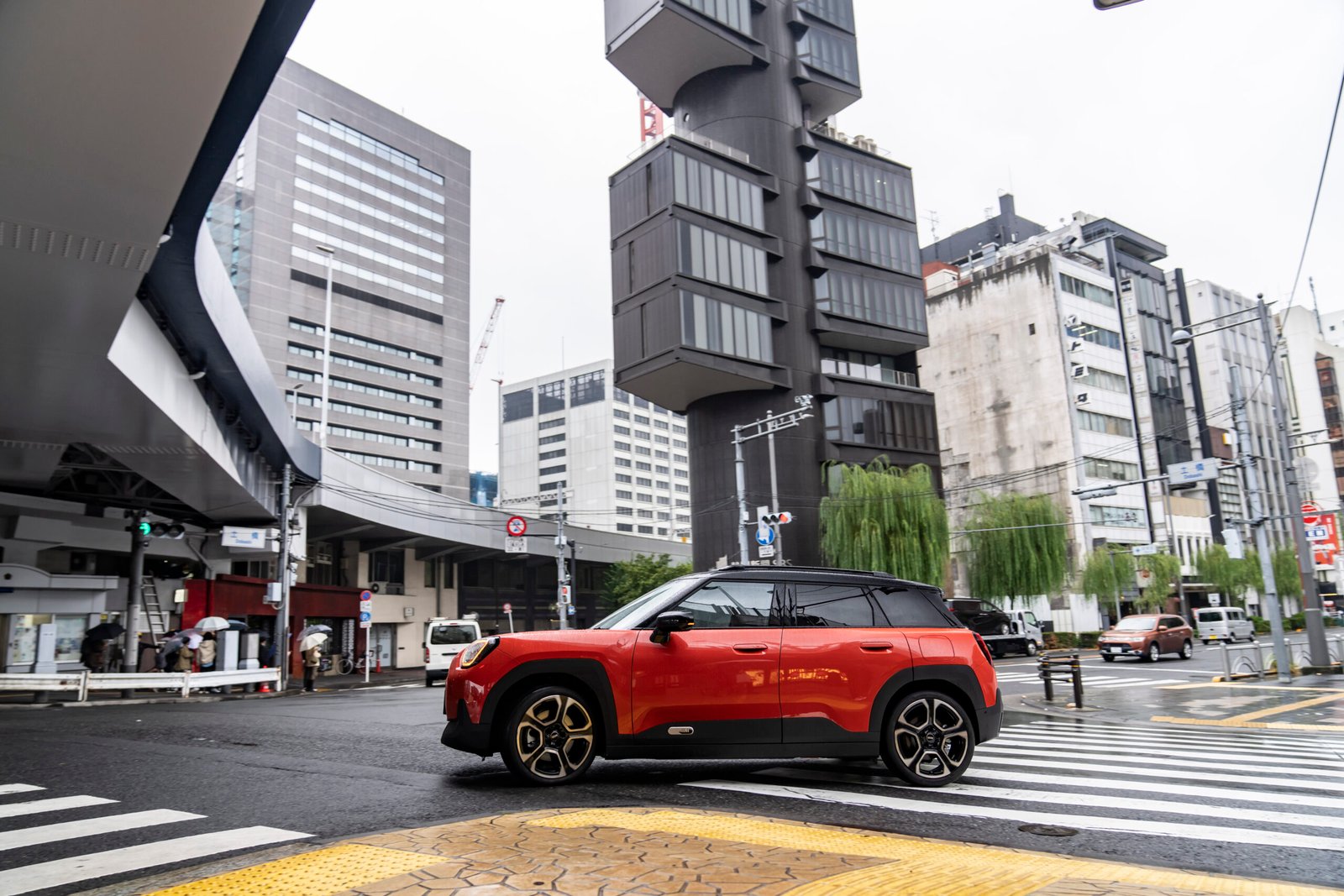
It’s designed for a world where silence is a baseline, refinement is assumed, and most driving happens in short, fragmented journeys. In that context, the absence of mechanical noise becomes less about loss and more about rebalancing. It allows other aspects of the car to define the experience.
And that brings the earlier question back into focus. If the original Mini’s character was an emergent property of its constraints, then perhaps the task for MINI now isn’t to recreate those old conditions, but to respond to new ones with the same clarity of intent.
Not to preserve the past in its exact form, but to preserve the thinking that made it meaningful.
By the end of the week, I stopped trying to measure the Aceman against the Mini I had in my head.
That comparison had been there from the start, quietly shaping the way I noticed things. The size, the weight, the absence of mechanical noise: all of it initially felt like distance. But the more time I spent with the car, the less useful that framing became.
Not because the differences disappeared, but because they started to matter less in the context of how the car actually felt to live with.
The Aceman isn’t small, light, or mechanically expressive in the way those older cars were. It reflects a different set of conditions, and it doesn’t pretend otherwise. And yet there’s still a sense of intent running through it. In the way it moves through space, in the way it responds cleanly without drama, and in the way it encourages a kind of attentiveness even at low speeds.
At some point, the question shifted. Not whether it matched the past, but whether it was doing something similar in a different language.
The answer isn’t entirely clear, and maybe it shouldn’t be. The more you try to define what MINI is in fixed terms, the more it resists it. The qualities we associate with it were never static. They emerged from a particular moment, then evolved as the conditions around them changed.
The Aceman doesn’t preserve those qualities unchanged, but it doesn’t abandon them either. It translates them, sometimes obviously, sometimes more subtly, into something that makes sense within the world it now occupies.
And maybe that’s what continuity looks like now. Not preservation, but intention. Not sameness, but recognition.
Because if there’s anything that carries through, it isn’t the dimensions or the drivetrain, or even the specific sensations we tend to fixate on. It’s the idea that a car like this should feel considered, engaging, and slightly more alive than the task it’s designed to perform.
And in that sense, even now, it still does.