In a world obsessed with what’s next, it is worth asking why we keep coming back to what has already been.
Every day, a new brand appears with a cleaner logo, a sharper pitch, and a promise to rethink everything that came before it. Faster, lighter, more efficient. Progress is framed as replacement, as though the only meaningful way forward is to discard what existed prior. The language is familiar, even if the products themselves are not. Reinvention has become a kind of cultural default.
And yet, some of the most compelling objects today feel as though they have resisted that cycle entirely.
They do not radically reinvent themselves every few years. They evolve, carefully and almost reluctantly, preserving something deeper than functionality alone. A silhouette, a feeling, a sense of continuity. They remain recognisable not because they are stuck in the past, but because they understand which parts were worth keeping.
Choosing something like that says something about you.
Not in an overt way, but in a quieter, more considered sense. It suggests a preference for familiarity over novelty, for objects that carry meaning beyond their immediate purpose. In a world increasingly dominated by disposable aesthetics and algorithmically generated trends, there is something deeply reassuring about products that already know exactly what they are.
Modern classic motorcycles occupy a particularly interesting space within that conversation because motorcycles, more than most objects, have always existed somewhere between transportation and identity. The bike someone chooses rarely comes down to pure logic alone. It says something about how they see themselves, or perhaps how they would like to.
That is why brands like Triumph continue to matter.
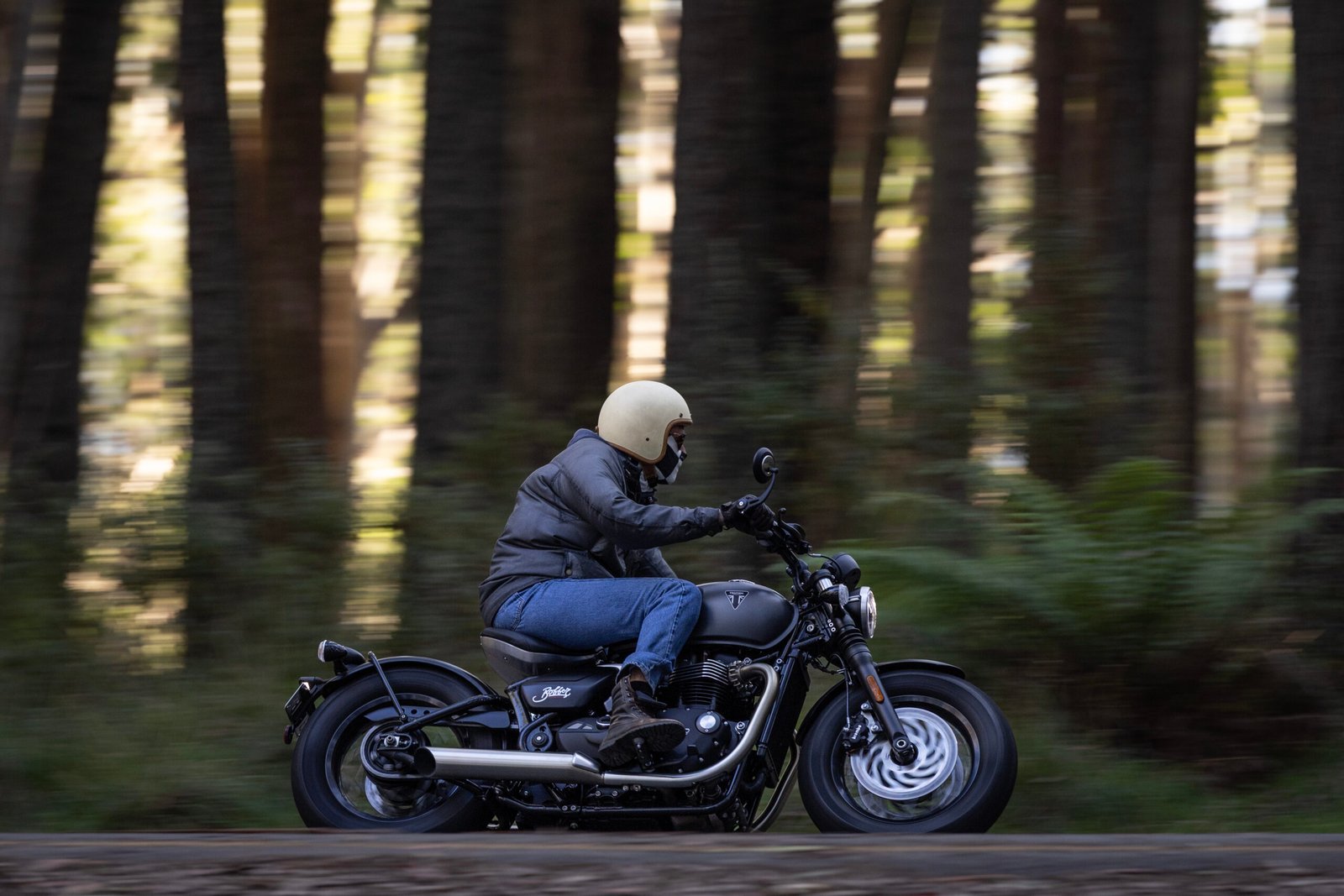
The Bonneville, first introduced in 1959, has become more than a motorcycle over the decades. It is now a cultural silhouette, one that has remained remarkably consistent through changing eras of engineering, fashion and technology. Tank, seat, engine, exhaust. The proportions still feel instinctively correct, even now. Not frozen in time, but refined carefully enough that the original intent remains intact.
Part of that endurance comes from the way Triumph has historically balanced evolution against restraint.
Post-war Britain produced motorcycles that carried a sense of optimism and freedom, particularly for younger riders looking beyond austerity and routine. Triumph quickly became tied to that energy, eventually embedding itself within broader cultural mythology through figures like Marlon Brando and Steve McQueen, before later finding relevance again through names like David Beckham and Jason Statham. The Bonneville’s appeal has never been solely mechanical. It has always existed slightly beyond that, as an object associated with individuality, rebellion, and understated cool.
What makes Triumph’s modern classics particularly compelling today is that they understand nostalgia alone is not enough.
There is no value in building a motorcycle that simply imitates the past. The challenge lies in preserving the emotional essence of something while quietly modernising everything beneath it. Better brakes, cleaner fuelling, improved reliability, electronics that make riding safer and easier without overwhelming the experience itself.
It is, in many ways, an exercise in restraint.
And perhaps more importantly, it is an increasingly difficult balancing act in a market that tends to reward excess. Bigger screens, more aggressive styling, and more power than most riders will ever realistically use. Modern classics push in the opposite direction. They prioritise feel over spectacle.
But there has also historically been a limitation to that world.
For a long time, Triumph occupied a slightly aspirational middle ground. The bikes were beautiful, culturally rich and deeply desirable, but often slightly out of reach for newer riders, younger riders, or those simply wanting an accessible entry point into motorcycling without immediately committing to a twenty-thousand-dollar purchase.
That is why the arrival of the 400 platform matters so much.
Not simply because the bikes are affordable, but because accessible motorcycles are how cultures sustain themselves. They create first experiences. First road trips. First commutes. First mechanical obsessions. They allow riders to buy into a philosophy and a design language early, rather than treating heritage as something reserved only for those with larger budgets and years of experience.
More importantly, Triumph has managed to do this without cheapening the experience itself.
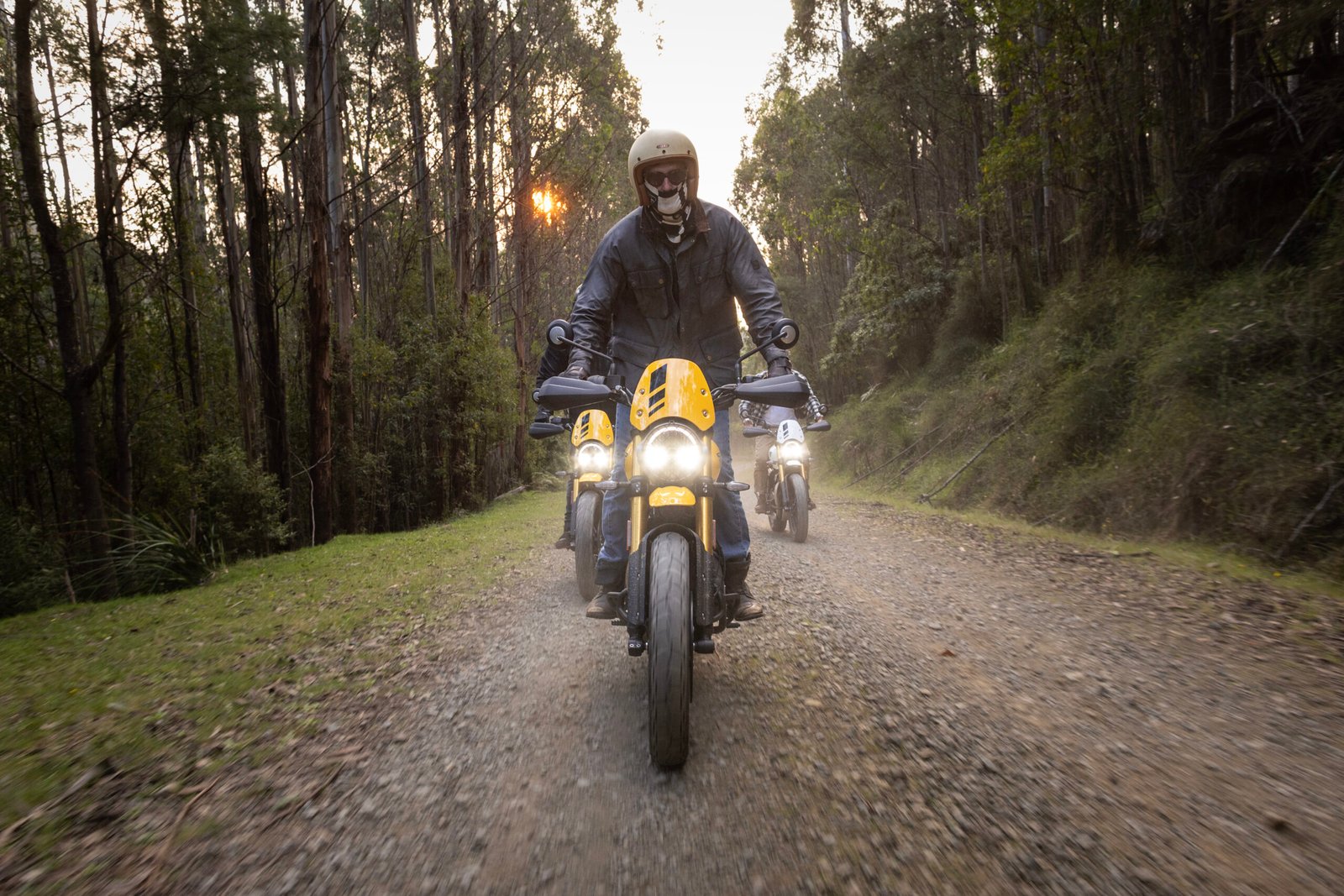
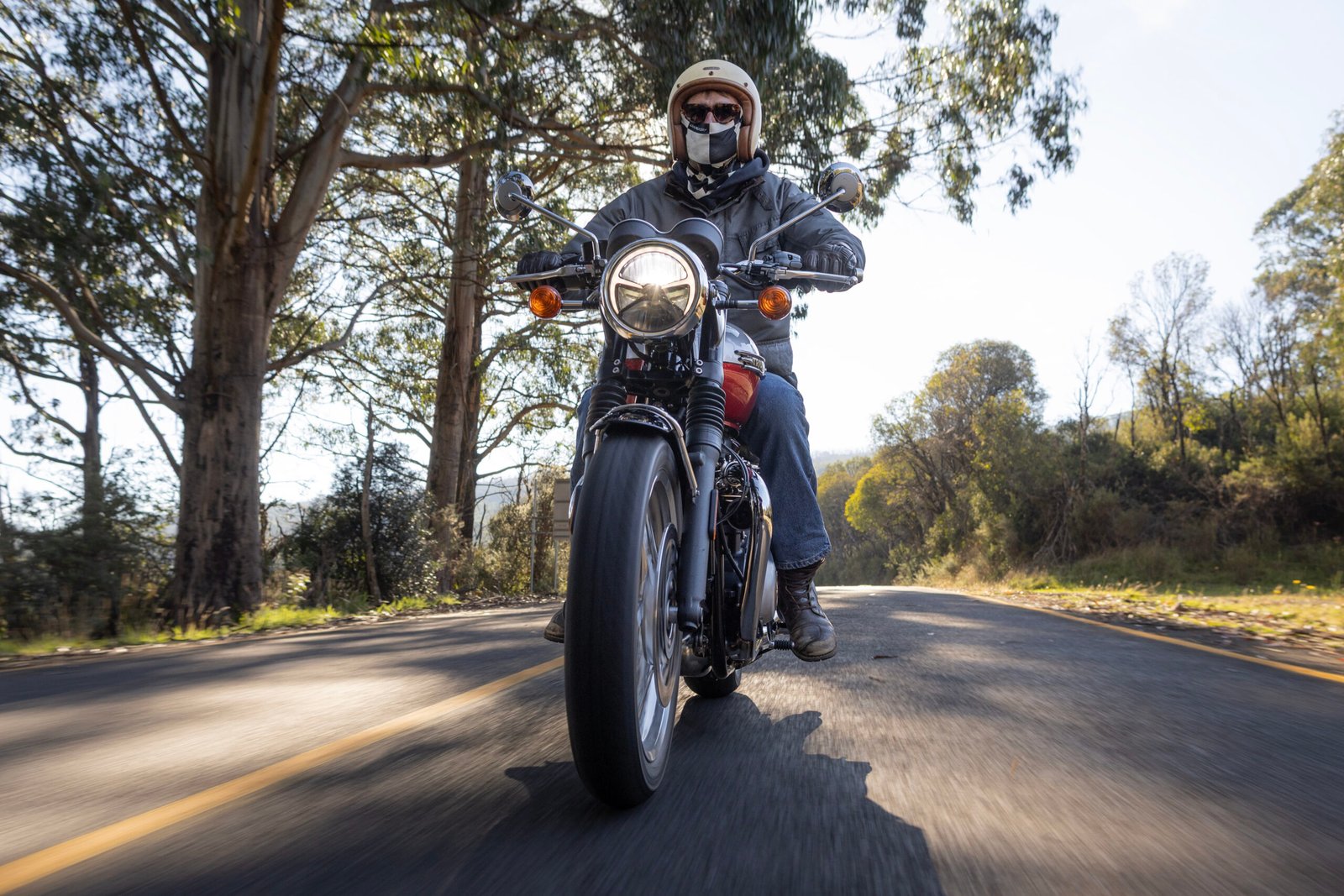
It was against that backdrop that Triumph Australia invited us down to Victoria to spend several days riding a cross section of the modern classics range through the roads surrounding Marysville and the Yarra Ranges, swapping between bikes as the terrain and weather shifted around us.