The Luxury of Restraint

Why the Ford Mach-E Makes the Case for Less

Black

The Luxury of Restraint: Why the Ford Mach-E Makes the Case for Less

29 May, 2026

Words by:

Cobey Bartels

The Mach-E Premium isn’t the fastest, the priciest, or the most powerful electric vehicle Ford makes. But, it might just be the best.

The whole electric proposition – at least as it has been marketed to the mainstream – is one of accumulation.

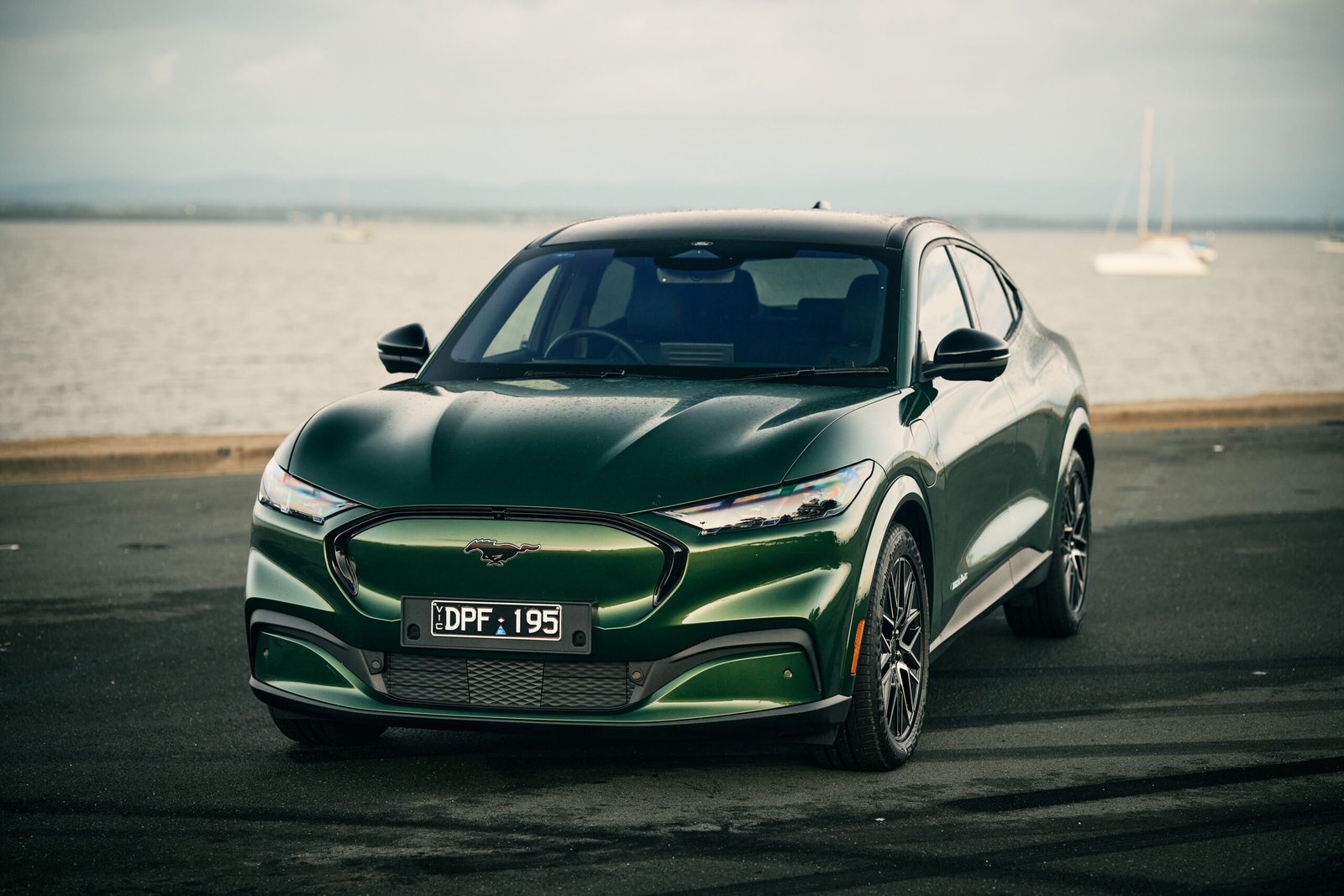
When the Mustang Mach-E first arrived, much of the conversation centred on what it wasn’t. To some, Ford had committed two unforgivable sins at once: attaching the Mustang name to an SUV, and replacing petrol with electrons. The reaction was immediate and, in many corners, predictable. But for those willing to look beyond the badge and the noise that inevitably accompanies any sacred cow being prodded, it became clear there was something more interesting taking shape. Not necessarily a Mustang in the traditional sense, but a genuinely compelling electric vehicle.

The irony is that much of the criticism arrived just as the electric car itself was entering a period of excess. More power, more range, more screens, more silence, more technology, which all means, paradoxically, more electrons. The modern EV offers endless possibilities, but it comes at a cost.

Brands compete on 0-100km/h times that nobody will ever use, in horsepower figures that exceed the output of yesteryear’s hypercars, and in battery packs that seem to grow with every new release.

It is, when you stop and think about it, a little backwards. The original argument for the EV was efficiency, to do more with less. Consume less. Be smarter. We have somehow ended up doing more with vastly more. And the cars themselves, for all their party tricks, have become curiously soulless. Numbed, sealed, sanitised, overdone, like expensive sensory deprivation tanks on wheels.

Which brings me to the Ford Mustang Mach-E Premium, and the considerably less interesting (but more expensive) Mach-E GT that I drove the week before.

I’ll save you the suspense. The cheaper one is better. Significantly so.
The GT is Ford’s novelty model, the car that competes with all the aforementioned ‘mores’. It has a preposterous 434kW/955Nm, will do 0-100km/h in 3.8 seconds, and requires enormous Brembo brakes and Pirelli P-Zero tyres to keep it from entering orbit. It is, on paper, magnificent. In reality, it’s a car that simply cannot put its power down, and makes little sense beyond ‘why not?’. It’s a lot of car for $98,490, but that’s beside the point. 

Stab the accelerator and all four tyres scramble for traction like a labrador on polished floorboards. Even on the move, it spins up its enormous treads like a remote-controlled toy car on a dirt patch. There’s torque steer, tyre squeal, considerable speed, and the constant, nagging suspicion that you’re sending far too much shredded rubber into the atmosphere.

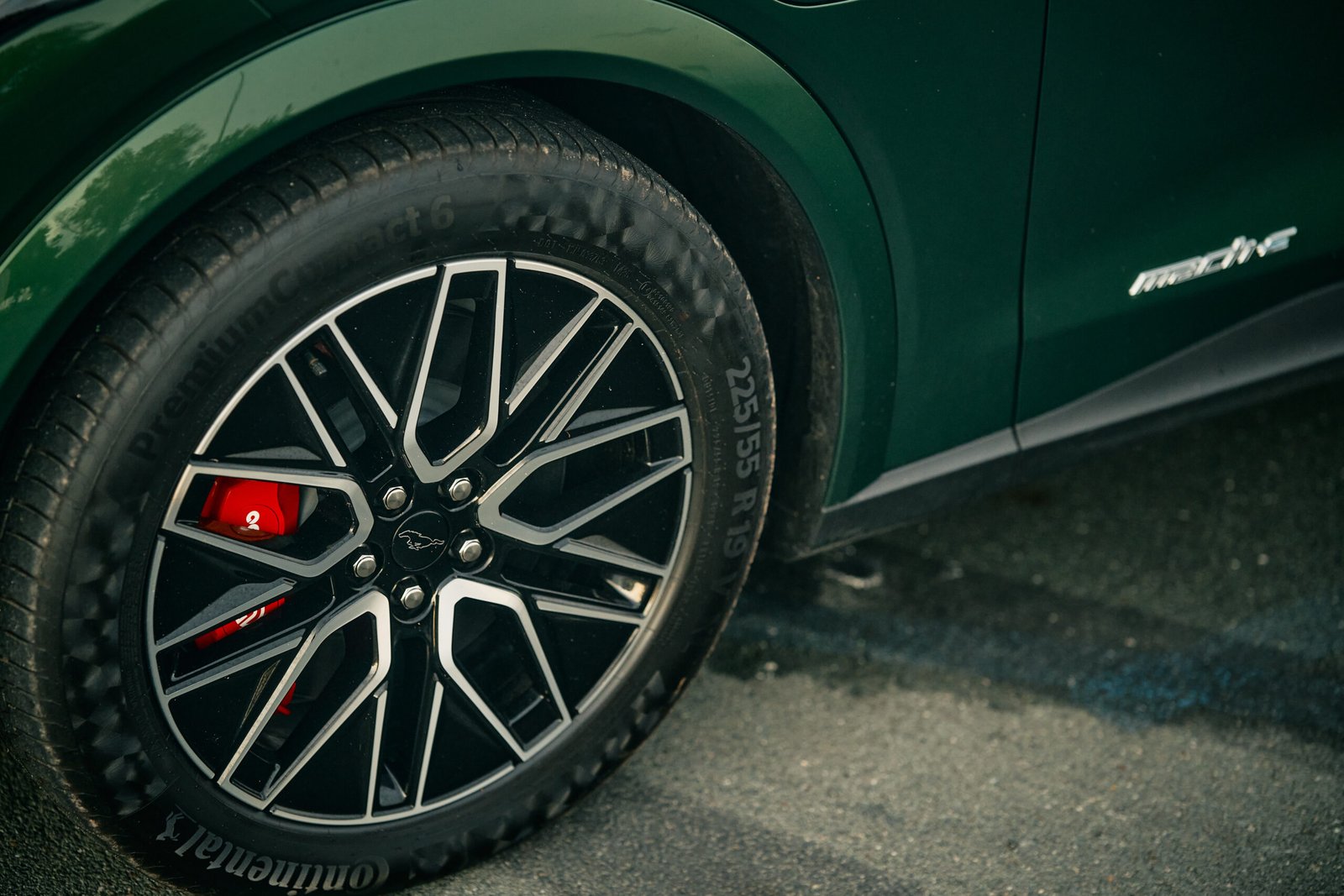
The Mach E Premium, by contrast, costs $80,490, makes 212kW/525Nm, drives only the rear wheels, and is the more enjoyable car by a considerable margin. It also makes genuine sense, as a sustainable mode of transport. 

The combination of moderate power and rear-wheel drive alone puts it ahead of so many of its electric competitors. Most of the world’s greatest driver’s cars have been, shock horror, moderately powered rear drivers. 

Lean on it through a corner and the Premium rotates. Properly. Not in the digital, simulated way some EVs allow, but in the analogue, communicative, slightly mischievous way a good rear-driven car always has. There’s an effortlessness to the way the back end loads up, and a clarity to the steering that the upstream GT, for all its weight and complexity, simply doesn’t possess.

The steering in the Premium is fast and light – almost too light at highway speed, where it can feel a touch nervous – but you know where the front wheels are at all times. The single-motor Premium gets to 100km/h in 6.1 seconds, which is fast enough. It’s not far off the petrol-V8 Mustang’s time. And because there’s no front motor, the nose is lighter, the steering more eager, and it offers an improved 600km driving range.

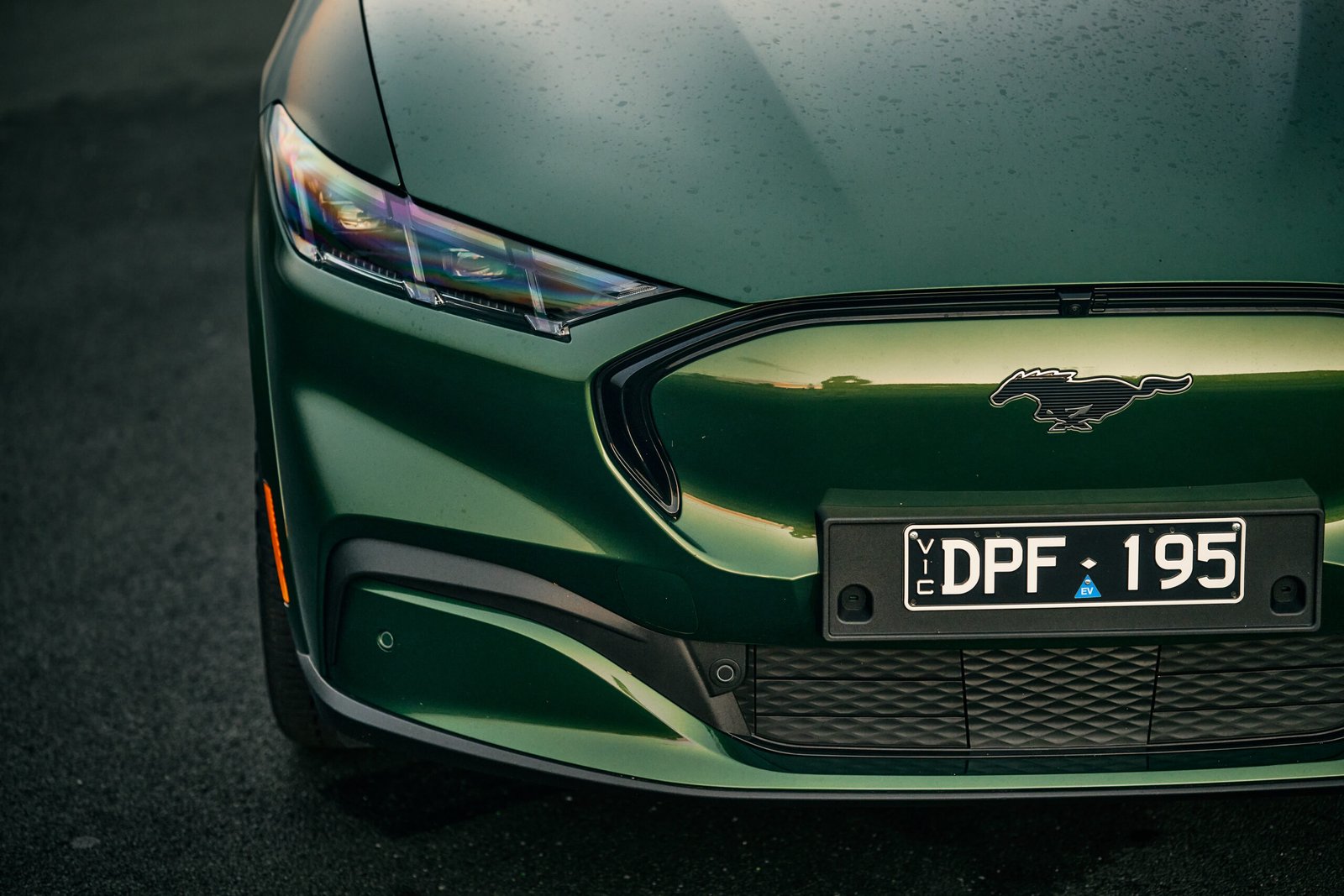
Then there’s how it looks. The Mach-E is, at its core, an act of design audacity, an interpretation of the most famous American sports car ever built, reimagined as a tall, electric, family-oriented box on wheels. It probably shouldn’t wear a pony badge, but it does share design themes with the Mustang…which counts for something.  

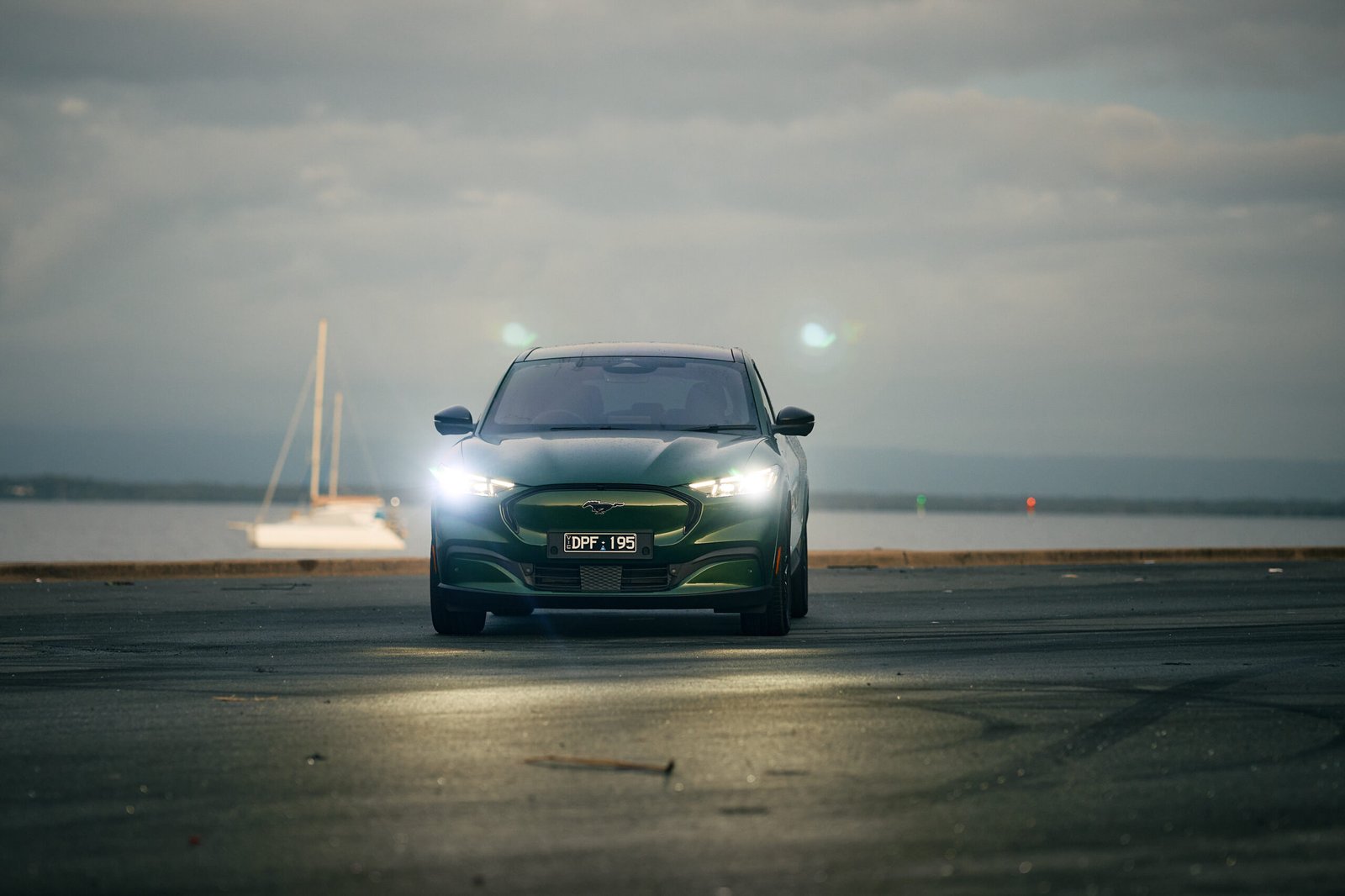
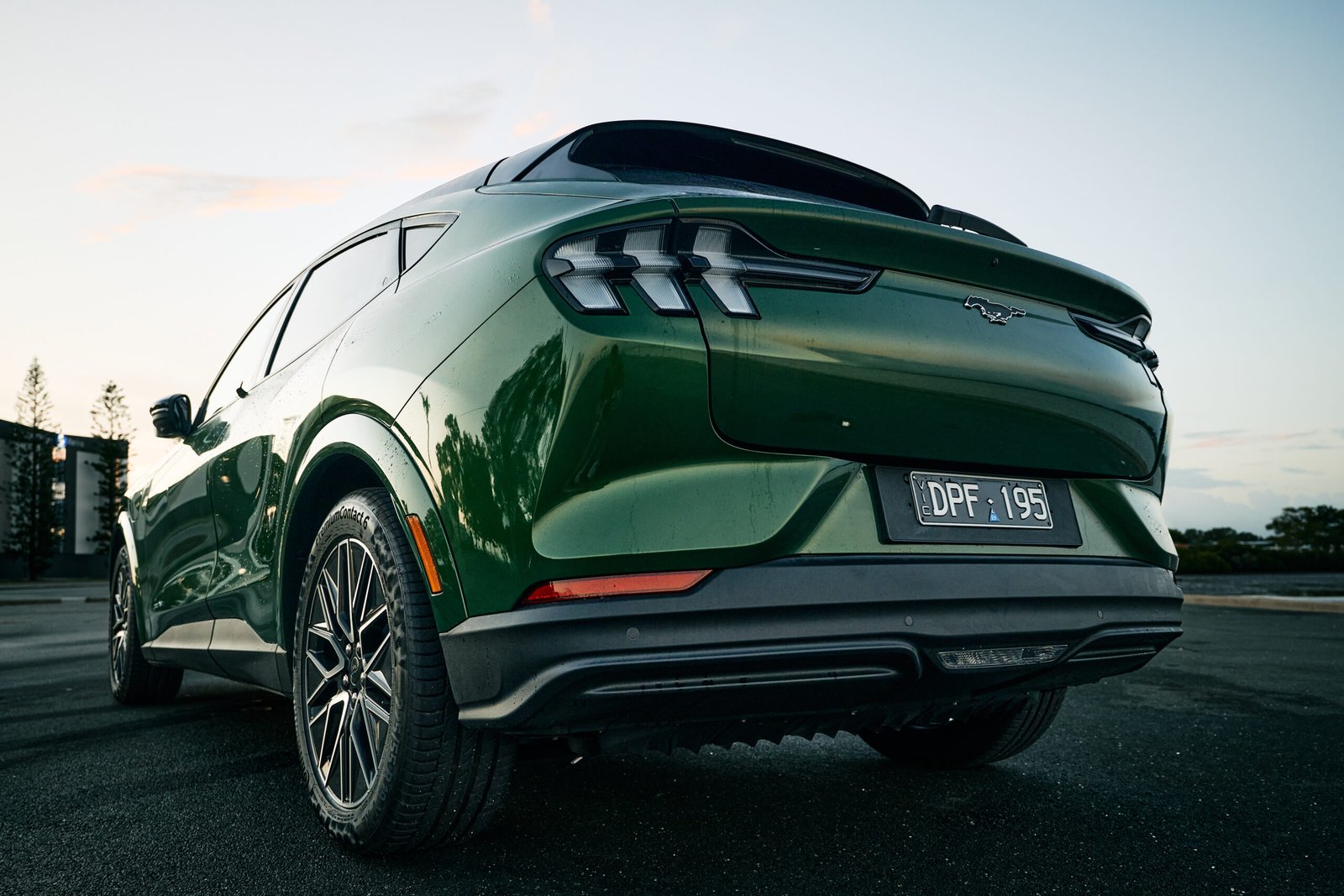
Jason Castriota, Ford’s design boss, calls them the family jewels: the tri-bar tail-lights, the long high bonnet, the cab-rear stance, the angry headlight brow, the muscular haunches. Every Mustang signature is here, slightly stretched, slightly elevated, deployed with restraint. The trick is the gloss-black surfacing along the roof and rocker panels, which optically lowers the car and tricks your eyes into seeing a coupé where there is, in fact, an SUV. From the right angle – three-quarter rear, ideally in low light – it actually looks like a Mustang. From the wrong angle, it’s a Mustang-esque SUV with unusual proportions, but it still looks good. 

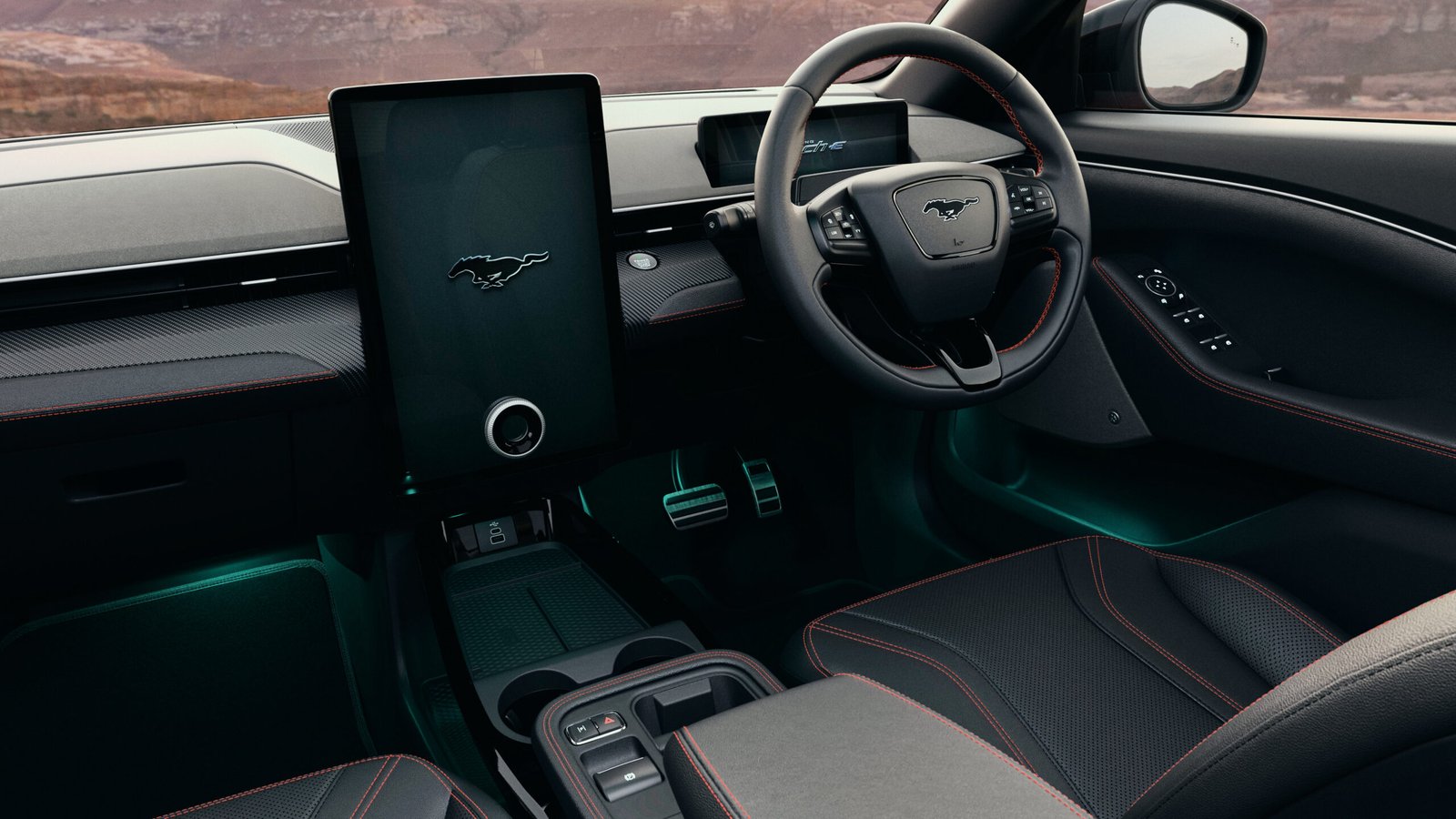
Inside, the Premium reaches for restraint where a lot of other EVs aim for theatre. This is one thing traditional carmakers do well, focusing on the entire vehicle rather than fixating on how much technology can be crammed into the cabin. The 15.5-inch portrait screen dominates, yes, but Ford lets you collapse it into a ‘calm screen’ that strips back the visual noise to little more than a clock. It’s also an infotainment display just about every current Ford model receives, so it’s familiar. 

After encountering a number of cars recently that yell at you for glancing down at the speedo, and lecture you about lane placement, the Ford shows restraint. It offers a relatively relaxing sensory environment, too. The artificial leather is convincing, the ambient lighting pleasingly subtle, the Bang & Olufsen sound system immersive. And there are physical knobs (rejoice). 

If the GT is the loud, conspicuous colleague who can’t quite hold his drink, the Premium is the friend who quietly buys the round, offers to drive you home, and is all round better company. It costs $18,000 less, goes 85 kilometres further on a charge, and is the more rewarding car in every situation that doesn’t involve a drag strip.

Which leaves us with one big question, the one that’s hovered over this car since its arrival. Should it be called a Mustang? Probably not. But here’s the thing, the Mach-E’s existence is part of the reason the actual Mustang coupé still has a V8 under its bonnet and probably will for a while longer. Ford doesn’t need two electric Mustangs. By allowing the Mach-E to bolster the Mustang’s sustainability credentials, the petrol pony gets to keep doing what petrol ponies do. 

The Mach E Premium is what an electric SUV looks like when a brand resists the temptation to keep adding things. It’s proof that an EV can have personality, and that’s because it’s slightly imperfect. 

Your next Read

As May approaches, so does the Cannes Film Festival, where the red carpet will soon …

There’s a little stretch of mountain road north of Brisbane, littered with undulating dippers, sharp …

A Journey of Discovery Sok’s path to becoming an artist was not straightforward. “Before pursuing …

There’s subtlety in the way a body breaks. It’s often quiet. A glitch. A missed …