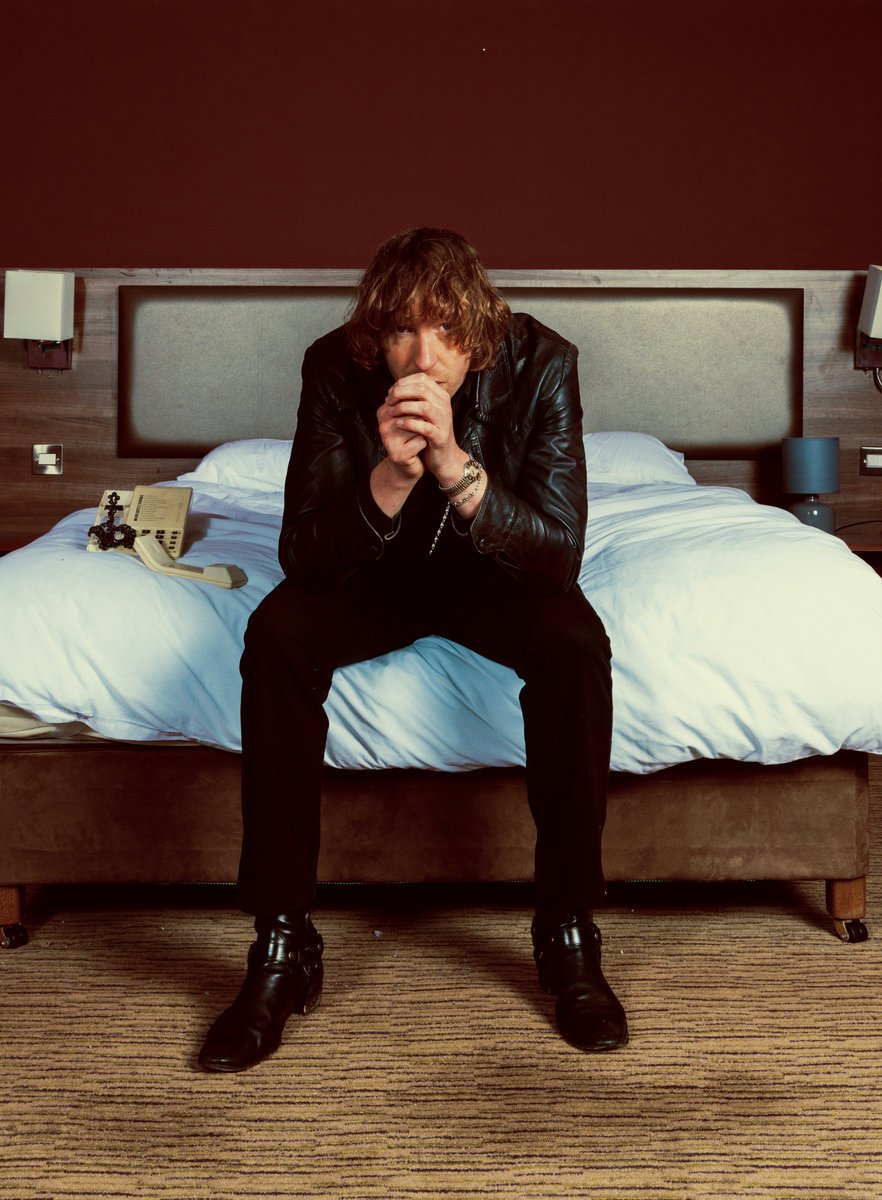
In conversation with Daniel Avery, on club culture, creative freedom and why the feeling still matters.

White

Daniel Avery and the Future of the Dance Floor

8 June, 2026

Words by:

Sarah Palmieri

Whether making the euphoric techno of Drone Logic, the ambient expansiveness of Illusion of Time, the widescreen electronics of Together in Static or the distortion-soaked rock of his most recent album Tremor, Avery keeps returning to the same emotional territory: not darkness for its own sake, but the warmth that can exist inside it.

“It’s a shame,” Daniel Avery says, before quickly correcting himself. “But I have faith in it.” He’s talking about club culture — more specifically, about what happens when a culture built on freedom becomes increasingly defined by categories. Genres turn into identities. Dance floors become content. Nights out become statements about who you are rather than chances to momentarily forget yourself. Avery has spent enough time inside clubs to watch these shifts happen in real time. Since the release of his breakthrough debut Drone Logic in 2013, he has evolved from a respected London underground figure into one of electronic music’s most distinctive voices, and yet despite more than a decade of international touring, critically acclaimed records and countless nights behind the decks, he remains sceptical of any attempt to overcomplicate what a dance floor actually is. “The beating heart and soul of club culture is very simple,” he says. “It’s tribalistic. It’s togetherness. It’s a gathering.”

It’s a surprisingly uncomplicated answer from someone whose career has rarely followed a straightforward path. Avery’s music has always existed in the spaces between worlds. Long before he became associated with techno, he was deep into My Bloody Valentine, Deftones, Smashing Pumpkins and the dense psychedelic textures of late-nineties alternative music. Ask him whether rock and electronic music felt like separate universes growing up and he seems puzzled by the premise. “I definitely didn’t put a line between any of those styles of music,” he says. “I just liked whatever felt good.” The Chemical Brothers and My Bloody Valentine occupied the same emotional terrain for him, different routes toward a similar destination, music that felt immersive and transportive and slightly disorienting. Looking back, he identifies a common thread running through all of it. “Warm music to get lost inside,” as he puts it. That impulse has shaped nearly every stage of his career.

When Drone Logic arrived in 2013, it felt like a techno record made by someone who had spent as much time staring at guitar pedals as drum machines. Critics heard echoes of acid house, shoegaze and post-punk inside its propulsive rhythms, and the album became one of the defining electronic releases of the decade, catapulting Avery onto international line-ups almost overnight. Success, however, came with an unexpected complication. “I suddenly went from no one knowing me to being an international techno DJ,” he says. “And it really screwed up my head for a few years.” For a time he found himself trapped inside a version of his own success. The industry had decided he was a techno artist, and he felt the pressure to fulfil that role. There were whispers from within the scene, questions about whether he belonged there. What eventually freed him was advice from mentors, particularly the late Andrew Weatherall, one of British dance music’s great iconoclasts, who moved between acid house, post-punk, dub and krautrock without apparent concern for consistency. Avery recalls another piece of advice he received around the same time: “However hard anyone tries, it’s impossible not to sound like yourself.” The lesson seems obvious until you realise how many artists spend entire careers resisting it.

Fabric, the club where Avery came of age, represented a similar kind of freedom. Opened in 1999 inside a former meatpacking warehouse near Smithfield Market, it became synonymous with adventurous programming and marathon sets, a place where house, techno, dubstep, electro and experimental music could coexist under the same roof on any given weekend. Residents like Craig Richards cultivated an atmosphere where curiosity mattered more than genre loyalty, and dancers often arrived with little idea of who they were about to hear. It was a scene built around discovery rather than branding, and the club’s temporary closure in 2016 was widely read as a cultural flashpoint, a symbol of the broader pressures facing British nightlife. That history probably helps explain Avery’s unease with where things have ended up. “I think the dance floor has been over-intellectualised in the past few years,” he says, and the observation is hard to dismiss. Dance music has never been more visible. DJs command audiences once reserved for rock stars, Boiler Room clips circulate endlessly, clubs that were hidden in warehouses now function as global brands. Visibility has brought opportunities, but it has also brought discourse attached to everything, every scene documented and debated and categorised until the experience itself risks becoming secondary.

Avery isn’t arguing for some mythical golden age, and he isn’t dismissing the new generation entering electronic music. His concern is simpler: the warehouse parties in Chicago, the birth of Detroit techno, the acid house explosion in Britain in the late eighties, the early days of New York’s queer club scene. None of those movements emerged as intellectual exercises. They emerged because people were searching for collective experiences unavailable anywhere else, and their power came from participation, not analysis. “I do firmly believe it has a real link to spirituality,” Avery says. “Almost religion.” The comparison might sound grandiose if similar language hadn’t appeared throughout club culture’s history, from sociologists comparing raves to secular rituals to Germany’s formal recognition of clubs as legitimate artistic institutions. I mention seeing Charlotte de Witte at Brooklyn Mirage and being struck by the gap between how society treats opera houses and how it treats dance floors. Avery laughs. Germany, he points out, comes closer than most to closing that gap. “People get their backs up about the scene sometimes,” he says. “But anyone can come. That’s the beauty of it.”

That openness is central to who he is as an artist, and it also informs his discomfort with increasingly rigid ideas around authenticity and belonging. The original spirit of acid house was radically inclusive. Anyone could walk through the door. But Avery is equally aware that escapism has its limits. As a younger man he was captivated by clubbing’s ability to make reality temporarily disappear. “I still believe in that,” he says. “But it is a fine balance.” The older he gets, the less interested he becomes in choosing between those worlds, the kinetic energy of the club on one side, silence and nature and solitude on the other, and the more drawn he is to the point where they intersect. Whether making the euphoric techno of Drone Logic, the ambient expansiveness of Illusion of Time, the widescreen electronics of Together in Static or the shadowy intensity of his most recent album Tremor, Avery keeps returning to the same emotional territory: not darkness for its own sake, but the peculiar warmth that can exist inside it. When he talks about Tremor, he references Massive Attack, Portishead, Nick Cave, Aphex Twin, David Lynch and David Fincher, artists who shared a fascination with ambiguity, whose work was unsettling but also strangely inviting. “Something about that late-’90s aesthetic just went in very deep,” he says.

As our conversation ends, he starts talking about films he’s seen recently, exhibitions he’s visited, long walks outdoors. He speaks with the enthusiasm of someone still surprised by art’s ability to shift how the world feels. “Anything that reminds us we’re here for something bigger than just work,” he says. “That’s what I’m into.” It feels like an unexpectedly fitting note from someone whose career has largely been devoted to building temporary worlds for people to disappear inside. Not an escape from reality exactly, more a reminder that another version of it is possible. Avery performs at Rising Melbourne this year, and if the conversation is anything to go by, a room full of people losing themselves in the dark is still exactly where he wants to be. The dance floor, at its best, has always offered that. Avery, despite everything that has changed around it, still believes it can.

Your next Read

For more than seven decades, Sydney Film Festival has occupied a defining place in Australian …

In a city like Melbourne, where heritage facades butt up against concrete ambition and pocket …

The brand did not emerge from a desire to disrupt skincare so much as a …

A Design in Harmony with Nature Mira Earth Studios is a testament to thoughtful, nature-focused …