First Australian Into Space

The Extraordinary Story Of Paul Scully-Power

White

The First Australian To Go To Space Very Nearly Wore His RM Williams Boots

22 August, 2026

Words by:

Cobey Bartels

TheModes sits down with Dr Paul Scully-Power, to talk about his enduring love of RM Williams boots, and, of course, his trip to space.

In the fifteen-or-so years I’ve been writing, or rambling, depending on who you ask, about close to any topic you could imagine, I’ve never touched on space travel. I guess the opportunity never came up. So, when the team at RM Williams mentioned, rather off the cuff, that they were photographing a NASA astronaut who had apparently attempted to wear their boots into space – an Australian no less – I had to ask the question. Can I speak with him? They asked him, he said yes, and here we are.

Paul is a world-renowned Australian oceanographer who, in 1984, wound up in space aboard the sixth flight of the Space Shuttle Challenger for NASA mission STS-41G. He was, as the title suggests, the first Australian to enter orbit. His resume is seemingly endless, having begun as an oceanographer – for which he achieved the equivalent of a Nobel Prize –  before working with the US Navy, NASA, the Pentagon, and, eventually, the White House. 

Across Paul’s extraordinarily impressive life, there have been a handful of constants. Among them his family, and, he tells me, his trusty RM’s. “I have four pairs… all vintage,” he says. “Two black and two brown; one of each colour has a leather sole and the other a rubber sole. They’re all I wear, because they’re a perfect fit.”
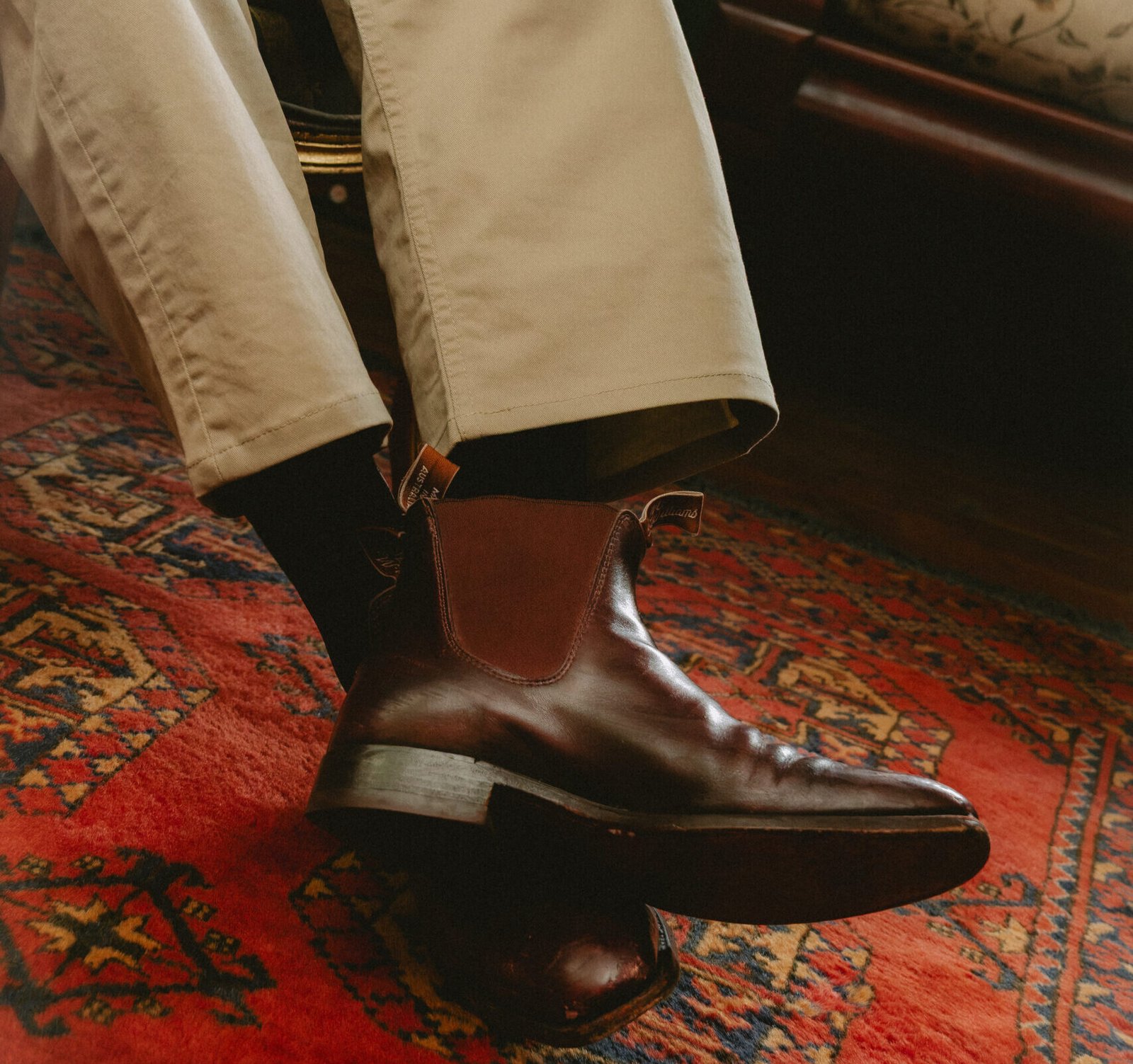
Paul’s RM Williams boots have remained a fixture across his incredible life, from his work at NASA to the White House.

In fact, he almost wore them into space. The same pair he completed his NASA training in. Apparently, though, the Space Agency decided they were not ‘space-approved’. “They’re comfortable, they work, and you don’t have to lace them up,” he says, rationalising why he chose to train in the slip-on boots. “But, everything that goes into space, especially in those days, has to be tested for what they call outgassing, and it was all too hard.”

He did, however, manage to enter orbit with a beard, which had never been done before and, to his knowledge, hasn’t been done since. “They said ‘you’ve got to shave’ because with the helmet there’s a seal and if that doesn’t work you can’t communicate or get oxygen,” he says. “I said, ‘well, I’m big on safety, give me the safety tests’. They threw ridiculous safety tests at me but I passed them all.”

Despite being the only Australian, and the only man with a beard, to go to space, Paul remains incredibly down to earth, downplaying the unlikelihood, and sheer enormity, of an oceanographer from Sydney joining a NASA mission. “I think it was the attitude that says, ‘I’m a go’er’, and that when you come to a fork in the road – take it,” he explains, in summing up his career trajectory.
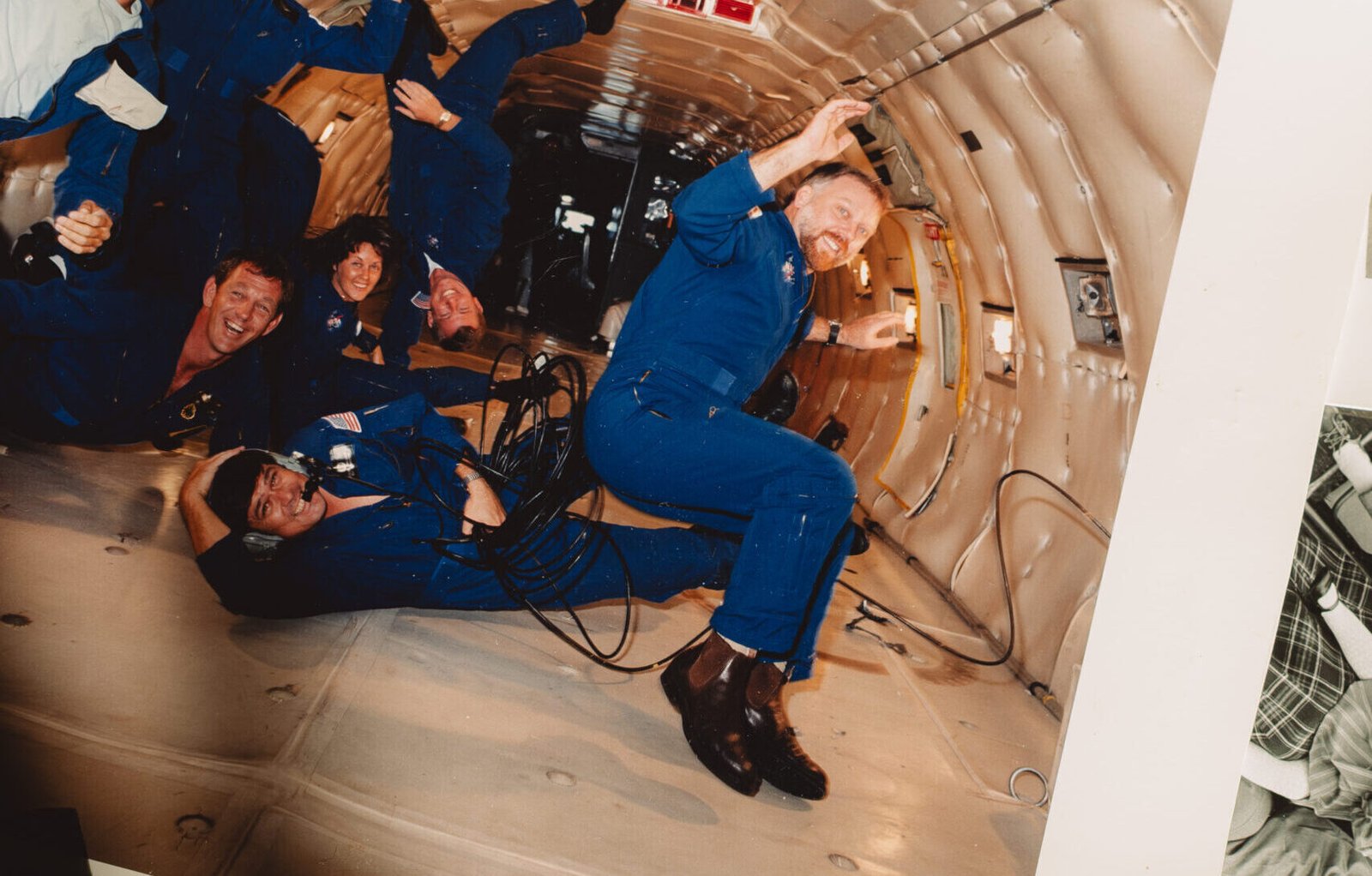
He remembers the exact moment he found out he’d been chosen for the mission. His first thought was that he’d better ask his wife Fran, with whom he had six children at the time. “The biggest thing was telling the family, because I didn’t know how they’d take it,” he says. “They took it well, so it was no problem at all!”

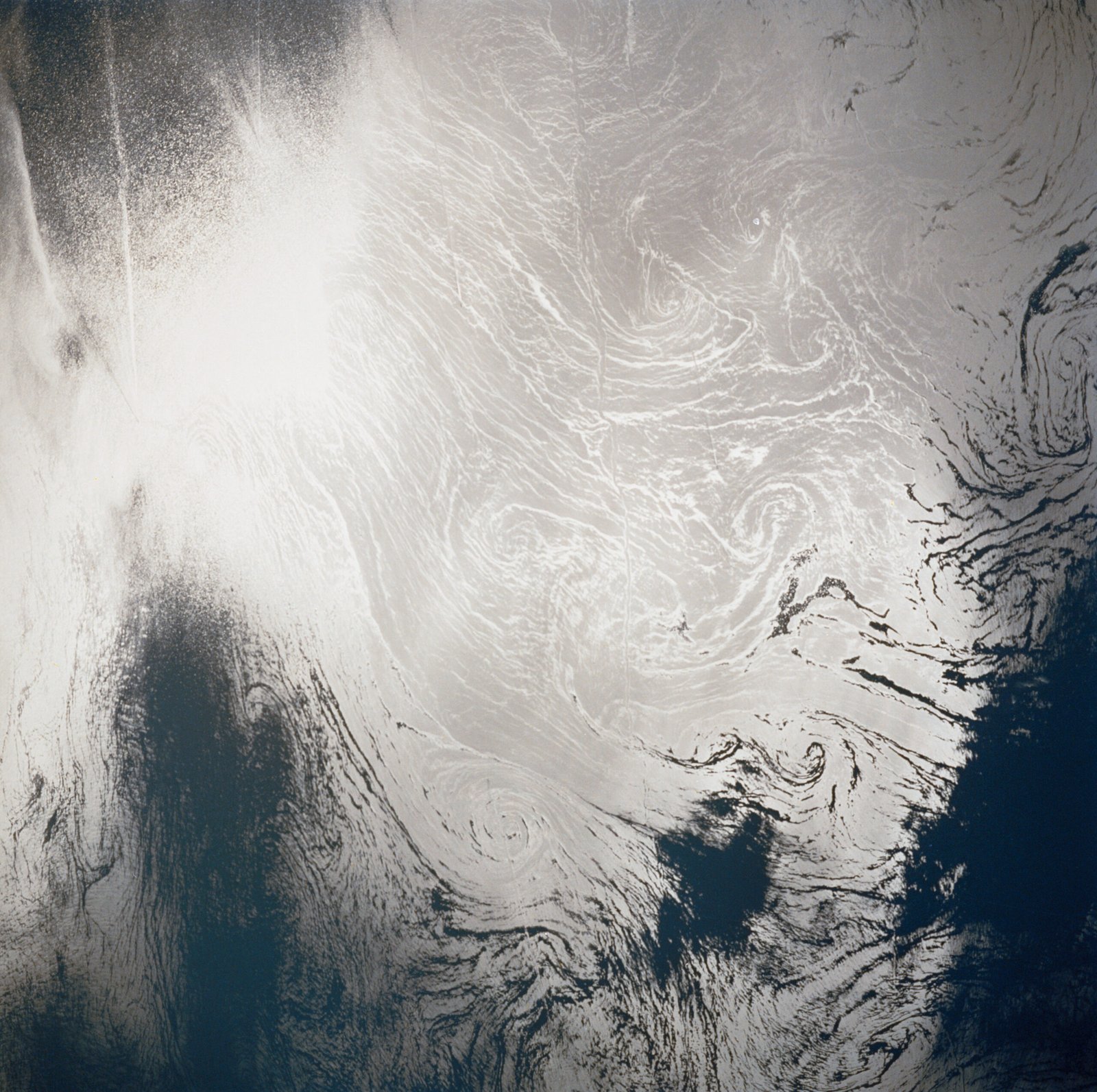
His official role aboard was as a ‘payload specialist’, but unofficially he was there to study the ocean from afar, testing his theories about swirl patterns. The payload gig is an arbitrary role used by NASA when it wants to take somebody along for a mission, he explains. I ask Paul if he actually did anything related to the Payload, and he’s quick to answer: “No, no – nothing at all. I was the payload!”

He did however prove the existence of enormous swirling sea surface patterns, called spiral eddies, and also that they are far more common than he had theorised. He’d measured circular eddies, but never spiral eddies, making this an entirely new discovery. “I’d seen a couple of photographs taken by other astronauts, which sort of indicated that they may be there,” he says. “But, when I got up there the big uncovering, if you will, was that they are fairly ubiquitous in the world’s oceans.”

The spiral eddies, resembling swirling oil slicks, as seen from space.

While the thought of going to space is undeniably terrifying for most of us, Paul was unfazed. “If you think about it,” he says, “it’s the only binary decision you’ll make in life because if you walk out the front door and you get in an accident, you might get hurt, you might go to hospital or you might die. Going to space, you either live or die, it’s pretty simple.” So calm was Paul on the day of take-off that during the pre-flight process, which had the astronauts buckled in, facing the sky for around four hours, he fell asleep. He’s also fairly sure he’s the first and only astronaut to take a pre-flight nap.  

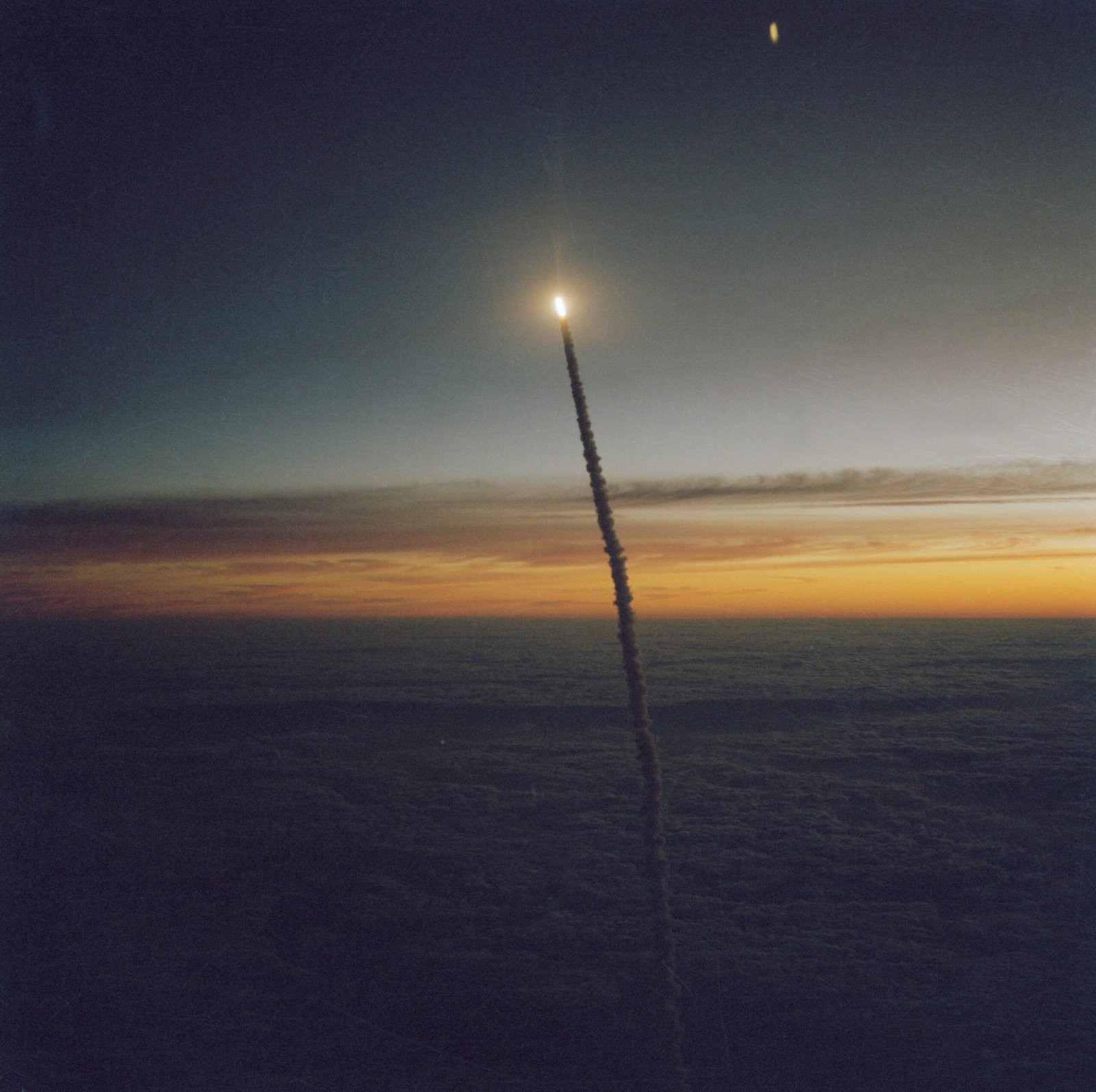
After taking off from the Kennedy Space Center in Florida, 15 minutes before sunrise on October 5, 1984, the Challenger climbed, propelled by its two solid rocket boosters, reaching space in eight and a half minutes. Shortly after, the crew settled into a 218-mile high orbit. Paul tells me that as radical as the sub-ten minute ascent aboard a literal rocket sounds, it “only pulled about two-and-a-half G’s, which is fairly trivial because I’ve pulled nine-and-a-half G’s in a fighter.”

A Florida dawn forms the backdrop for the climbing Space Shuttle Challenger for STS 41G.

Having never spoken to a NASA astronaut before, I wonder whether they’re all as nonchalant as Paul. But, he’s also the only astronaut that’s dozed off on the runway, so he may indeed be an outlier. 

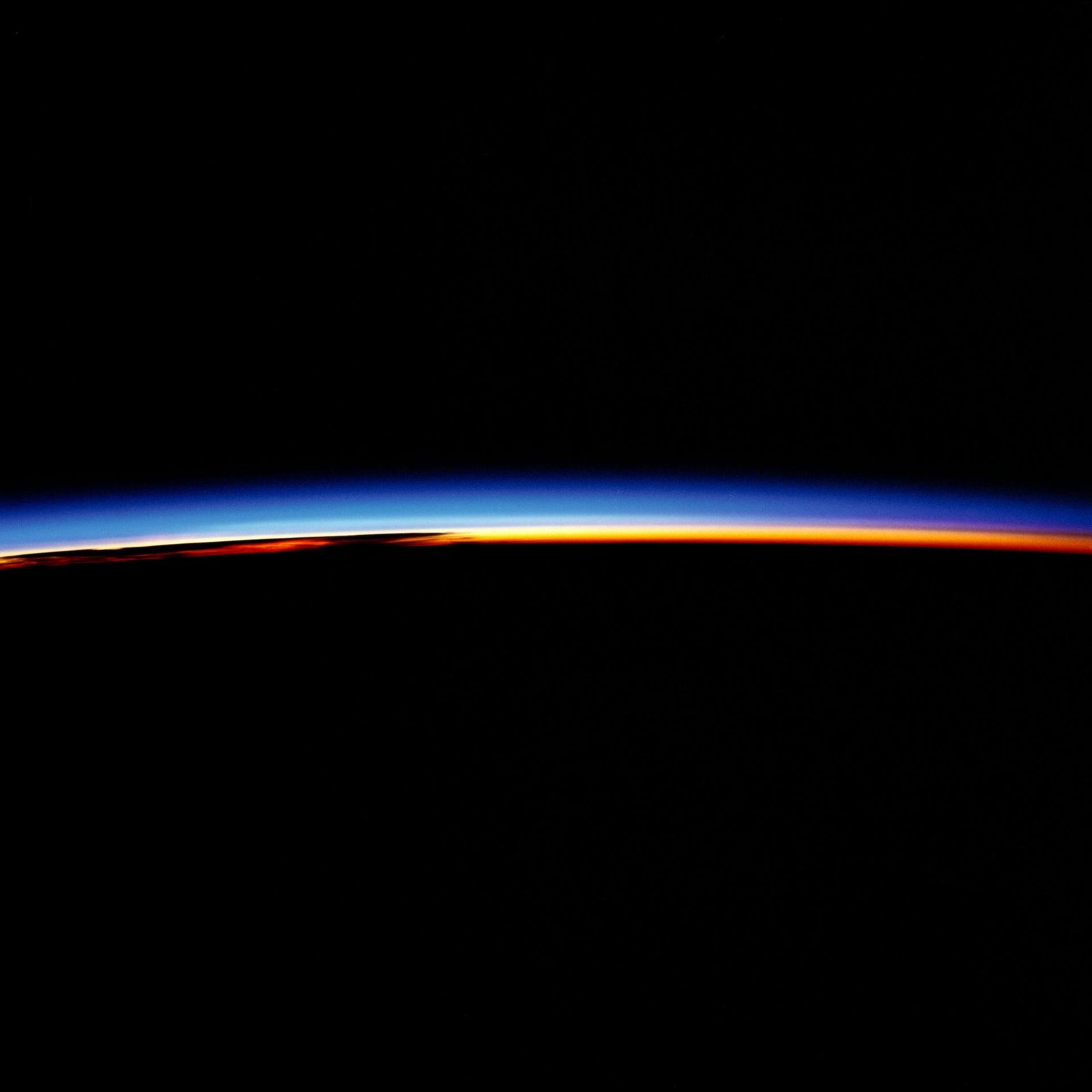
Once in space the crew experienced 16-dawns to every one on terra firma, capturing the spectacular colours – made up of various layers of the atmosphere surrounding the planet – with advanced imaging equipment never before sent to space. “It was the first shuttle Earth observation,” Paul explains, “Which means the orbiter flew upside down. We had the first synthetic aperture radar, which was high resolution…so it was the first earth measuring mission which is why I was on it.”

There were plenty of other firsts for 41G. It was the first flight to take seven crew members, and the first to include two women, one of whom became the first American woman to walk in space. And, the other Payload Specialist was the first Canadian to go to space.

While astronauts like Buzz Aldrin, Edgar Mitchell and James Irwin have famously spoken of spiritual awakenings once in space, experiencing a cognitive shift in perspective known as the ‘overview effect’, Paul was most impressed by the vivid clarity with which he was able to view his home city of Sydney. “Anything you’ve seen is two-dimensional” Paul says. “The view from lower orbit is absolutely three-dimensional. For example, over Sydney making out the Airport is trivial, making out the Harbour is trivial. I could actually, with the unaided eye, see the streets in Sydney and tell you which were the big buildings.” This is possible due to the vertical vantage point, Paul explains, allowing light to travel to your eyes without the obstruction of the atmosphere, which bends and scatters light when viewed horizontally from the ground.

Now more than ever, the concept of a borderless world seems unfathomable. Yet, Paul’s seen one. “You look at the world, especially Europe, and you can’t see the boundaries of countries, unless there’s a river or something, whereas when you go to school all the countries are coloured differently,” he says.

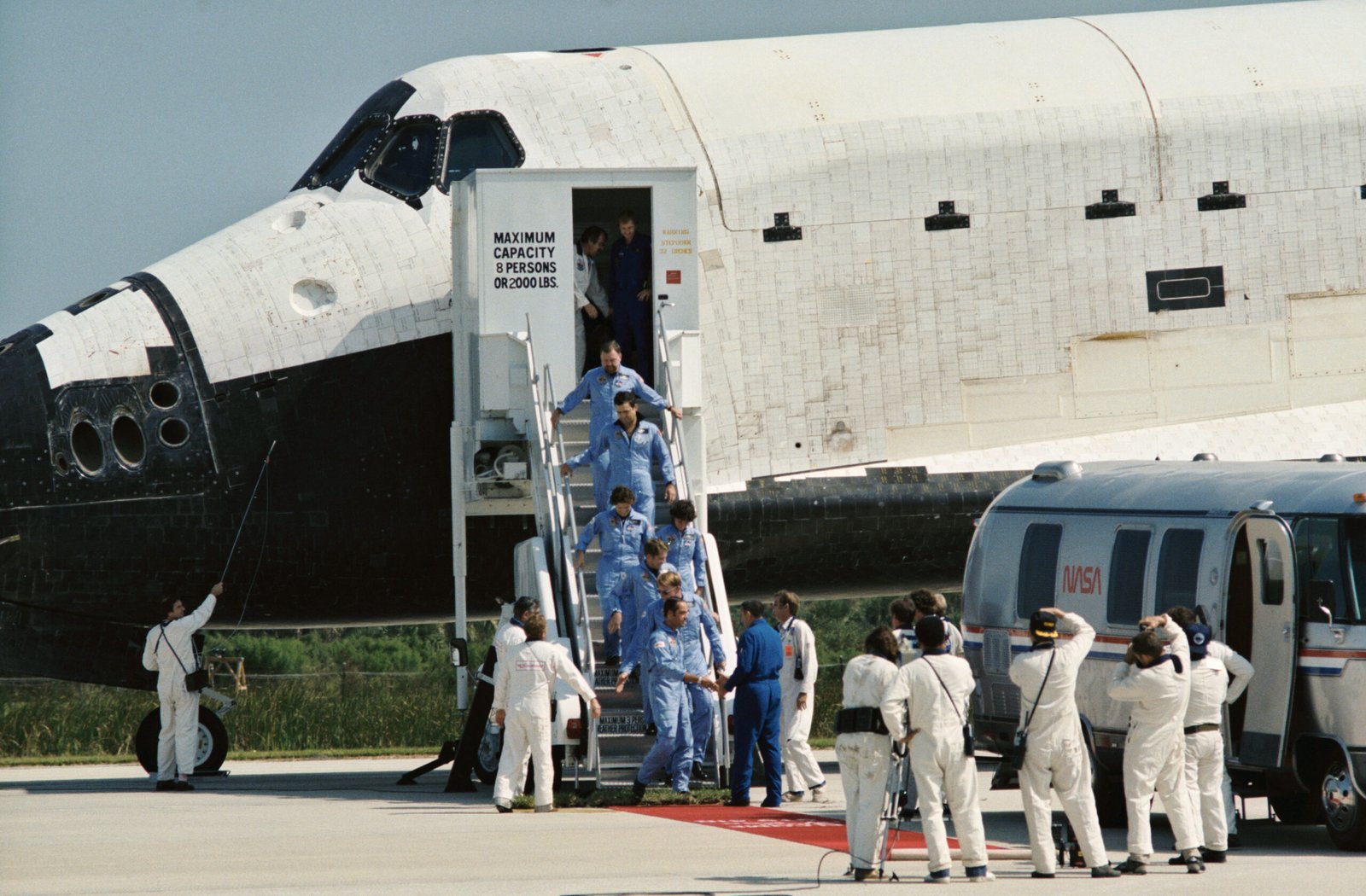
The 41-G crew leaves the orbiter after landing at Kennedy Space Center at the end of their mission. Astronaut Robert Crippen shakes hands with George W.S. Abbey, Director of JSC’s Flight Crew Operations, while the other crewmembers wait behind him. They are Jon McBride, David Leestma, Sally K. Ride, Kathryn Sullivan, Marc Garneau and Paul Scully-Power.

Paul and the crew travelled over 3.3 million miles across 133 Earth orbits, logging around 197 hours in space, before landing back at the Kennedy Space Center. Reintegrating to earthly life was fairly straightforward, Paul explains, helped along by a few beers on the way home. “We landed, got a quick medical, we hopped on a NASA plane and flew from the Cape to Houston,” he says. “They put lots of beer onboard so it was pretty easy.”

I find Paul as fascinating as I’d expected to, but not for the reasons I initially thought I would. He’s clearly incredibly intelligent, and accomplished, but he’s also disarmingly laid back. When he told me his success was likely the result of being a ‘go’er’, I assumed it was an answer offered out of equal parts humility and muscle memory. Something he says to regular people like me, and possibly has since 1984, to downplay going to space. Perhaps, though, the oceanographer from Sydney really did just land exactly where he needed to be, time and time again. From the opportunity with NASA, to his work at the White House, and the seemingly endless list of things he’s done since. And he did all of it, he reminds me, as a family man. One whose six children had perhaps the ultimate bragging right: their father was an astronaut. 

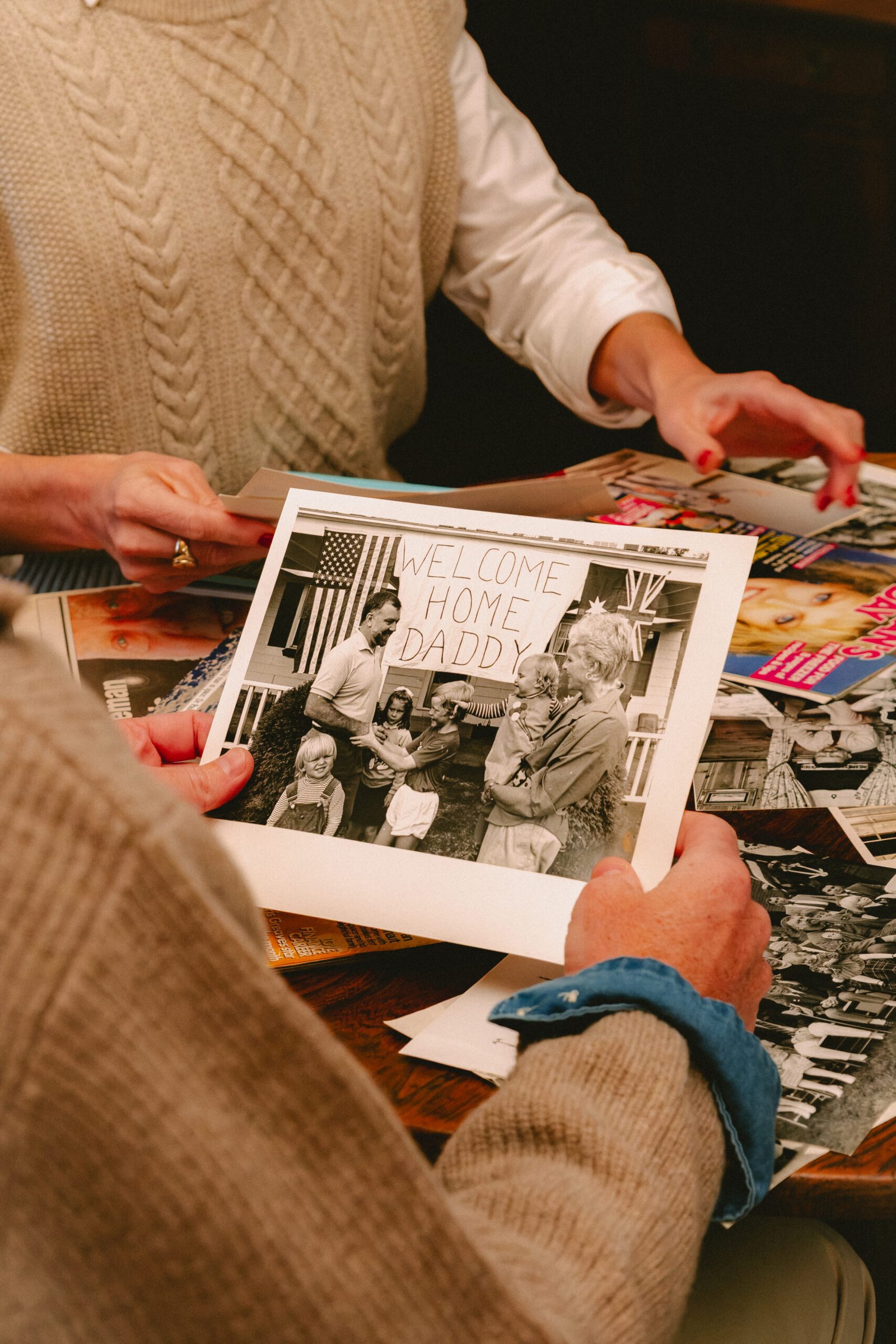
Paul’s reunion with his family, after returning from space, is a memory he cherishes.

On the eve of Father’s Day, I ask for his advice on parenthood, assuming a man that’s been to space has all the answers to life’s big questions. His response is refreshingly simple. “I think you have to educate them,” he says, “and then be firm if you have to be.”

Since Paul’s trip aboard the Challenger, 42 years ago, around 330 other people – only one of whom was Australian – have gone to space with NASA. None, to his knowledge, or to my research, had a beard, trained in RMs, and fell asleep before take-off. 

It’s a trifecta unlikely to be contested. 

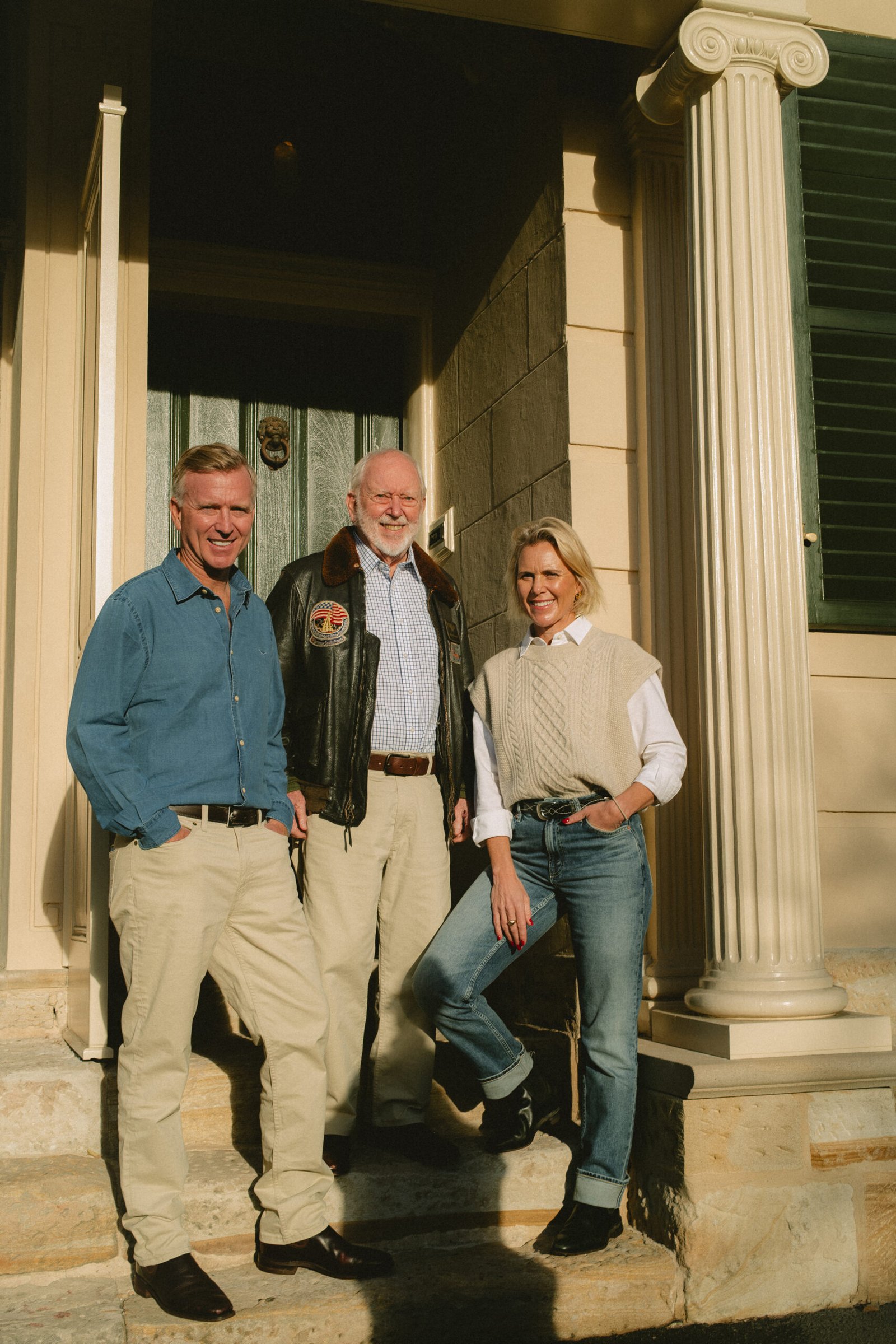
Paul Scully-Power, with two of his children, Tara Scully-Power and William Scully-Power.

Your next Read

A New Material in a Classic Design Ceramic, a material known for its durability and …

The most important thing about luxury, I’ve come to think, is in the detail. The …

The Genesis of a Design Visionary Reflecting on his roots, Dale Hardiman shares, “Adam and …

There’s a tendency, when talking about cars with any real history behind them, to mistake …