De Durgerdam: Amsterdam, Elsewhere

White

De Durgerdam: Amsterdam, Elsewhere

13 October, 2026

Words by:

Justin Jackie

Just 15 minutes from central Amsterdam, De Durgerdam turns a centuries old fishing inn into a quietly luxurious escape where contemporary design, local history and village life overlap.

Fifteen minutes is not usually enough time to feel as though you have left a city behind. In Sydney, it might barely get you clear of the inner suburbs. Yet one minute I was sitting canalside having lunch at Kikkie van de Prinsensluis, the next I was in an Uber heading towards De Durgerdam, passing a little row of timber houses, boats and open water that seemed to belong to an entirely different version of the Netherlands.

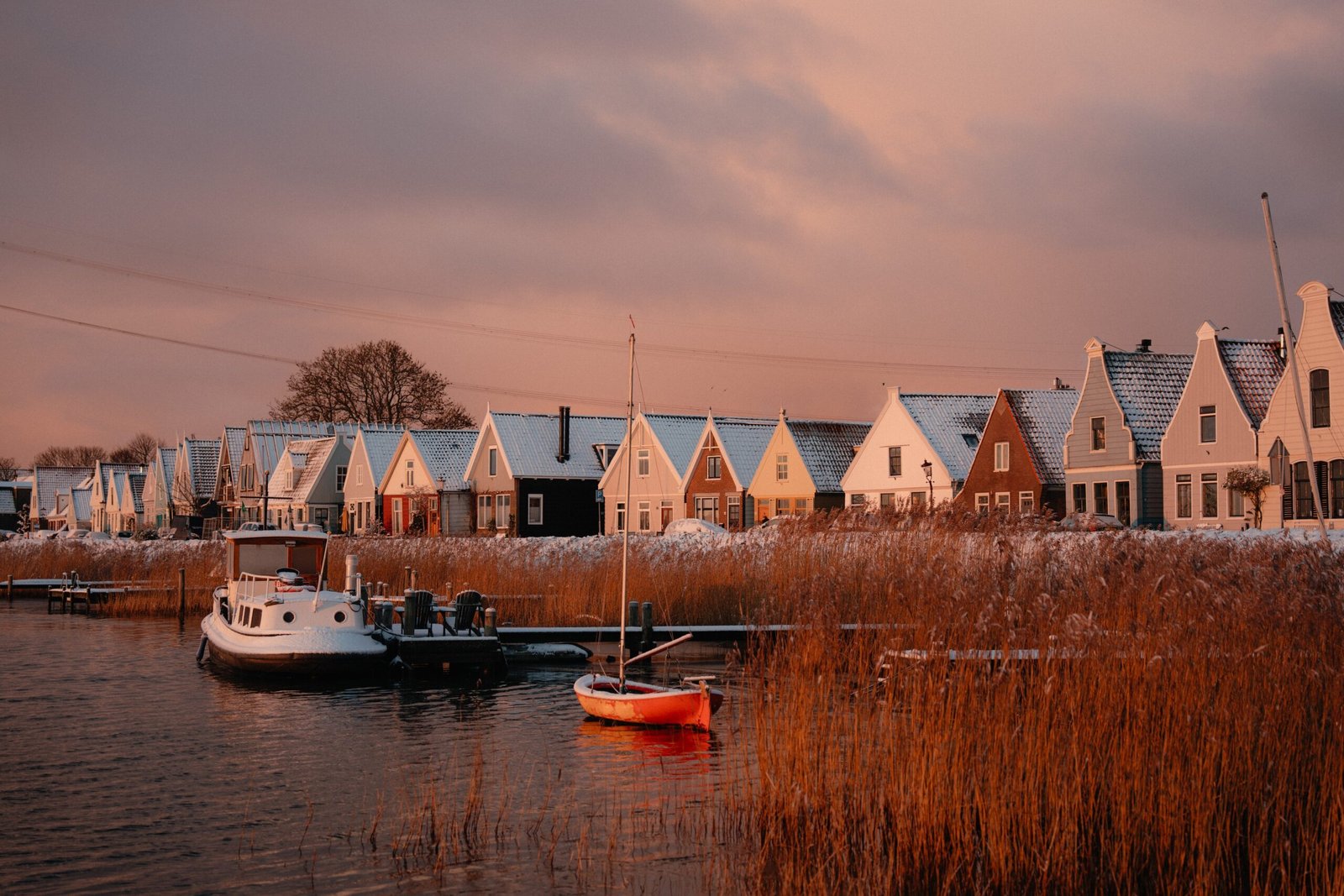
That almost comical change of scenery is De Durgerdam’s first trick. The hotel sits only around six kilometres east of central Amsterdam and, in good traffic, the trip from the city can genuinely take about 15 minutes. The transition is quick enough to be slightly jarring. There are reminders that Amsterdam has continued to grow outwards, with newer apartment blocks and high-voltage infrastructure occasionally appearing across the landscape, but Durgerdam itself seems to have resisted much of that momentum. Along the waterfront, people still walk dogs, work on boats and chat across garden fences. The change of pace is enough to give you whiplash.

Calling it a rural escape would be overselling the fantasy. Durgerdam feels semi-rural rather than remote, and that distinction is part of its appeal. You can still sense the city is close, yet the village has a pace and visual identity that feel distinctly separate from it. It is Amsterdam, technically, but not the Amsterdam of canal rings, bicycles stacked against bridges and overcrowded museums.

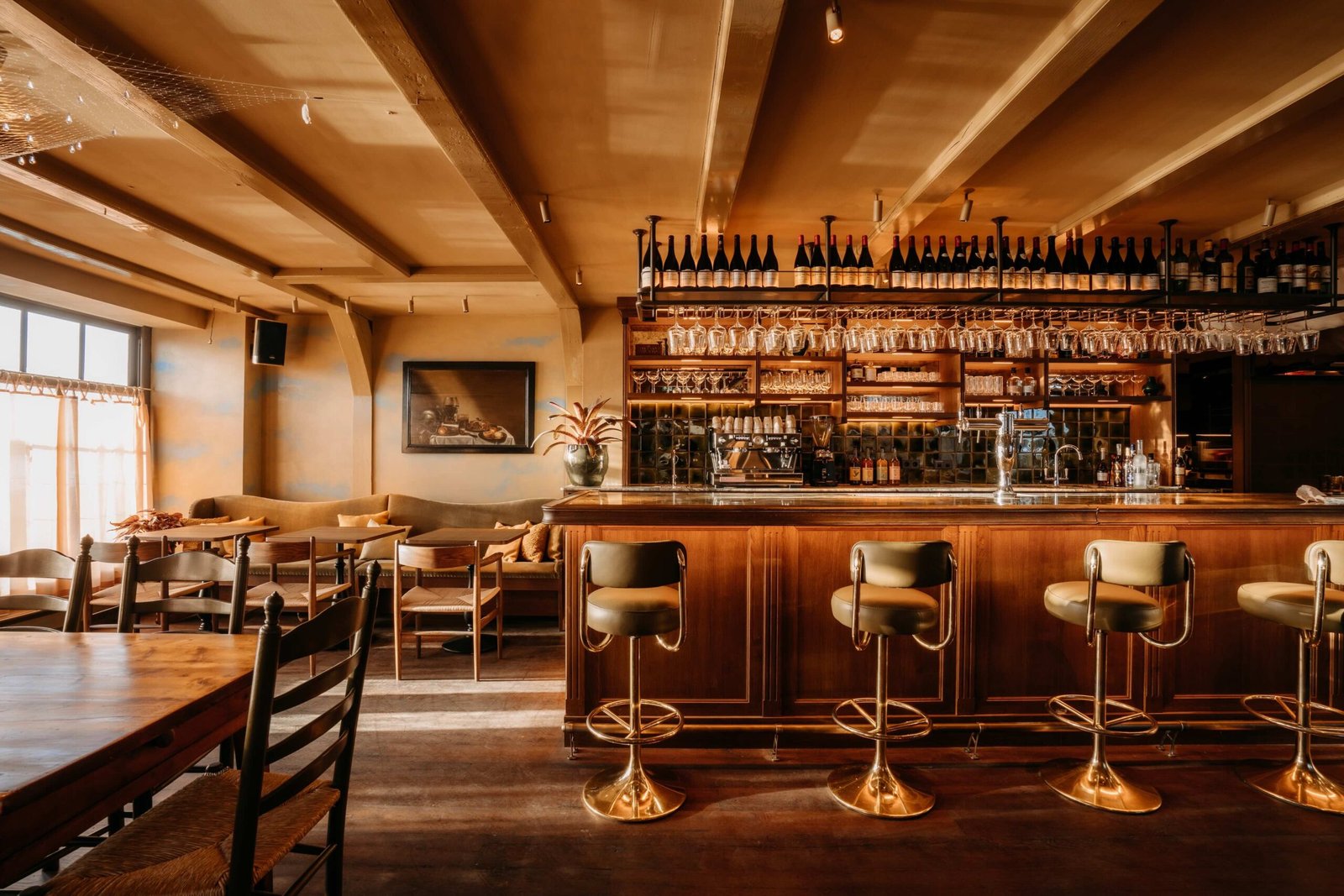
De Durgerdam occupies a building that has been welcoming people in some form since 1664. Over the centuries, it has operated under names including Prins te Paard, De Oude Taveerne and, more recently, Zuyderziel, while Durgerdam itself grew from a fishing and trading settlement. The hotel that opened in 2023 is small, with 14 rooms including three suites, restaurant De Mark downstairs, a drawing room and wine nook tucked into the building, and the IJmeer, the freshwater lake bordering the village, directly outside.
None of this history would matter much if it had been restored badly. Old inns and fishermen’s cottages have become irresistible raw material for boutique hotels, and the formula can go wrong in two directions. Either the building is polished until almost nothing old remains, or every historical detail is exaggerated until the result resembles a very expensive theme park. De Durgerdam somehow lands between those two extremes.

Amsterdam-based Aedes began the restoration in 2019, dismantling much of the 17th century structure and effectively putting it back together while retaining as much significant material as possible. Buro Belén, the local design studio responsible for the interiors, then worked with those existing layers rather than trying to erase them. You notice the philosophy before you know the story behind it. Timber bears old marks, nails and imperfections remain visible, and the original staircase leading from De Mark towards the upstairs rooms has been worn down by generations. It is clearly a contemporary hotel with serious money and attention behind it, but the building has not been renovated to the point of losing its essence.

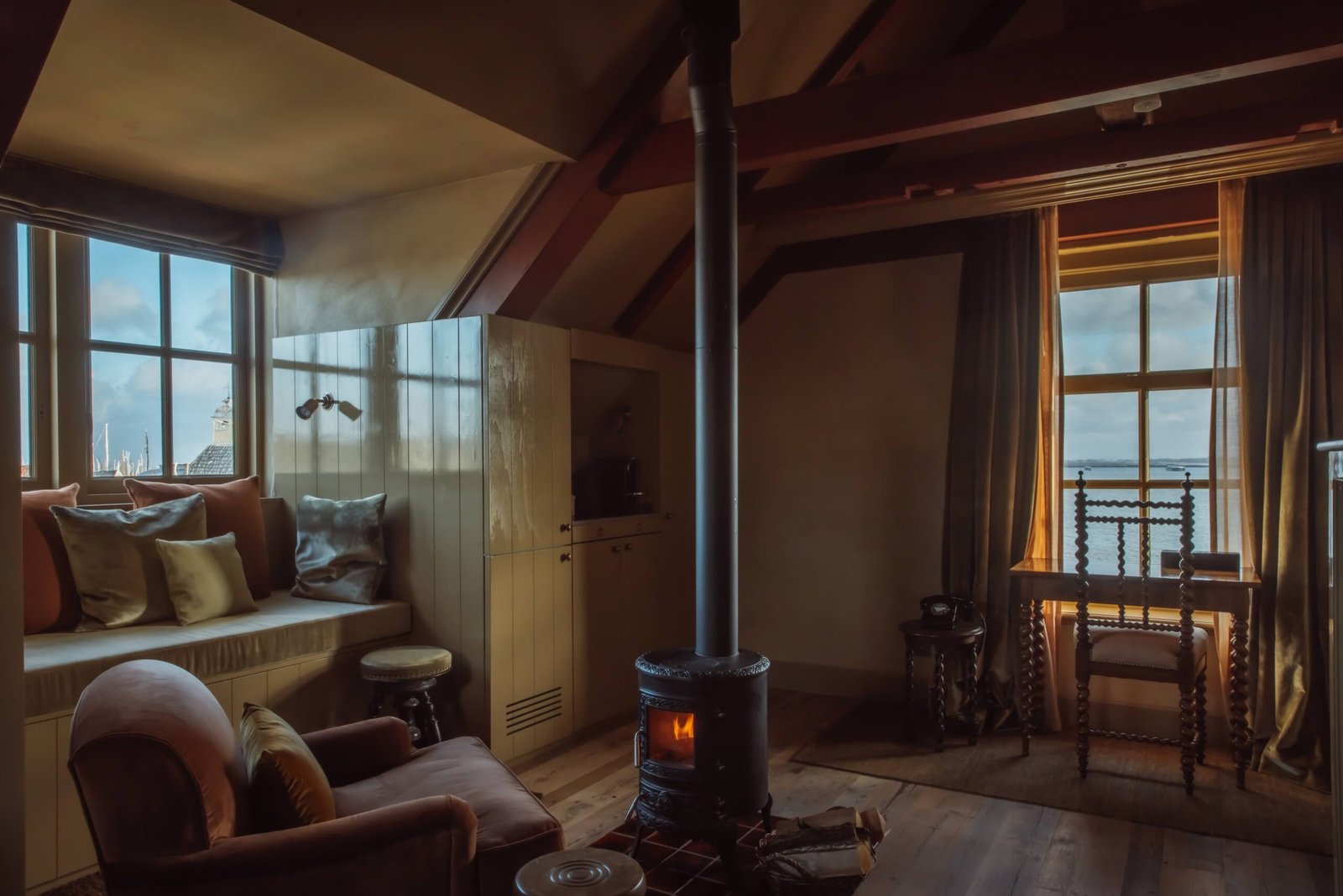
That staircase was one of the first details I noticed. It functions almost as a bridge between the public and private parts of De Durgerdam. Below it are the restaurant, kitchen, glasses and the chatter of prep for the night’s service. Above it, the old house becomes quieter and more intimate. My room was one of the three suites in the historic main building, looking towards the rear of the property and surrounding greenery rather than directly over the lake.

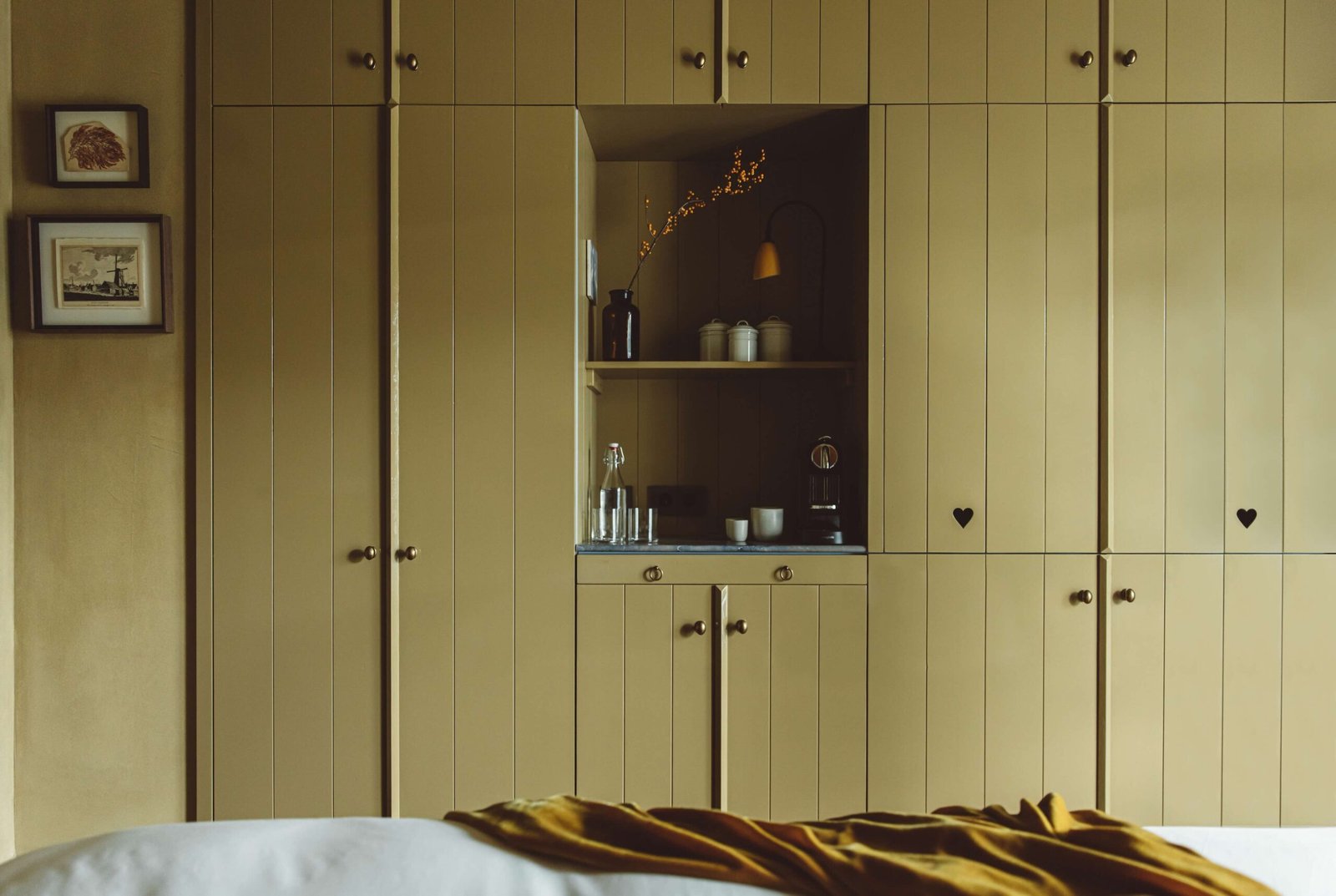
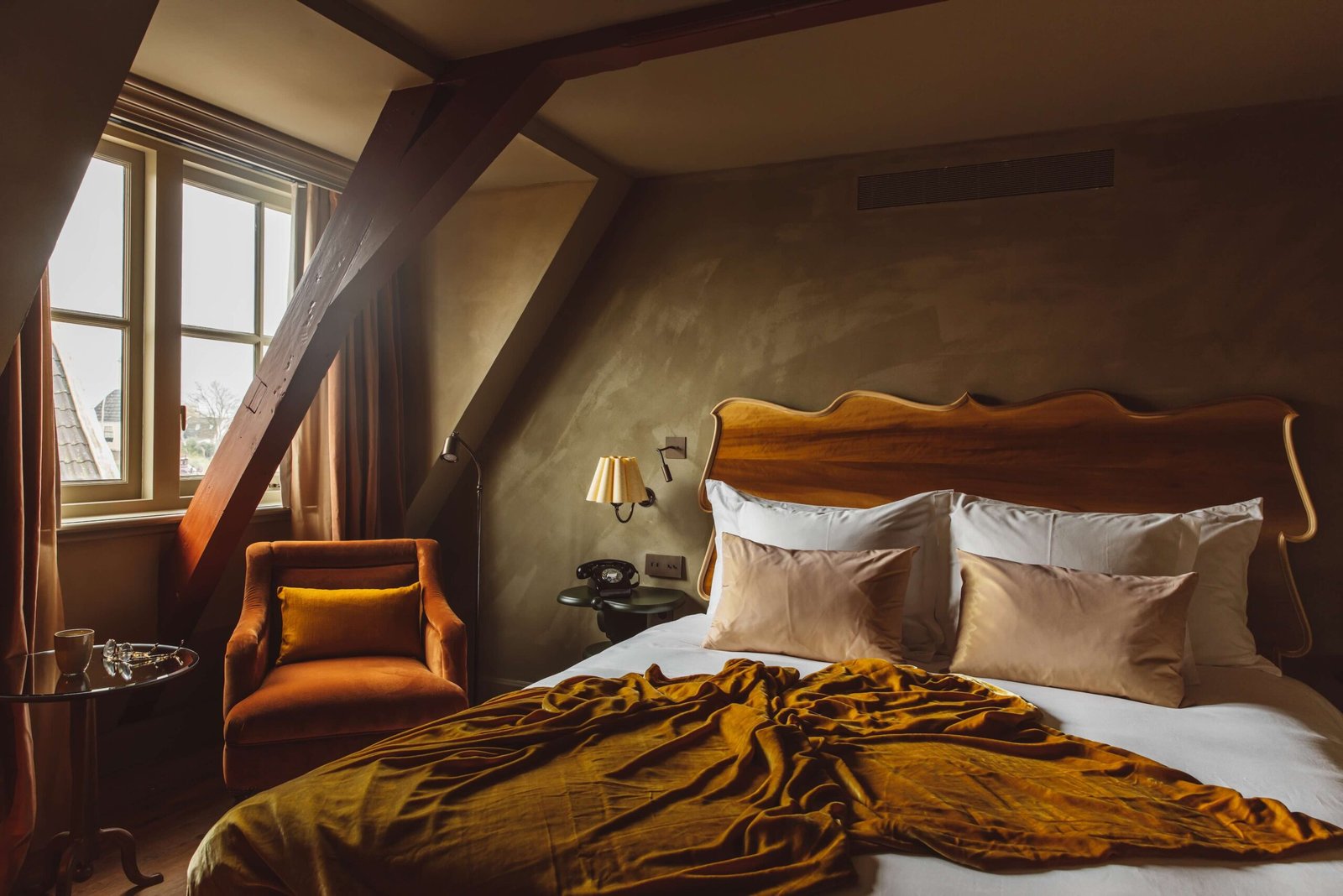
Inside, the same restraint continues. A headboard made from local tulipwood curves and ripples in reference to the surrounding water, while the bathroom combines stone with bespoke tiles from Royal Tichelaar Makkum, the oldest ceramics company in the Netherlands. A silk velvet throw is draped loosely across the bed, reflective and slightly fluid rather than showroom perfect, and artwork sits comfortably among the furniture instead of looking as though it arrived in the final week of fit out. Hanging near the entrance was a sky blue raincoat made in collaboration with Amsterdam fashion house KASSL Editions, something that makes perfect sense in a village defined by life around the water, but would look equally at home making a statement on the streets of Amsterdam.

The room is warm without becoming twee, which is a more difficult balance than it sounds. There is a tendency for places chasing cosiness to drift towards a kind of highly styled nostalgia, full of objects designed to tell you repeatedly that the building is old. De Durgerdam rarely does that. Instead, the history is absorbed into the material choices. Brick reds reference the colour of traditionally tanned sailcloth, flax fibres recall the rope making that supported the local fishing industry, earthenware tiles reference those used around the old Zuiderzee, and carved timber and painted joinery draw on regional craft traditions.
You do not need to know any of that to enjoy the place. In fact, one of De Durgerdam’s strengths is that it does not insist on explaining itself. The design becomes richer once you understand the references, but it works first as a comfortable, unusually tactile hotel. The creak of the staircase, the warm light, the smell coming from the kitchen and the slightly irregular surfaces do more to establish a sense of place than a paragraph of historical waffle ever could.

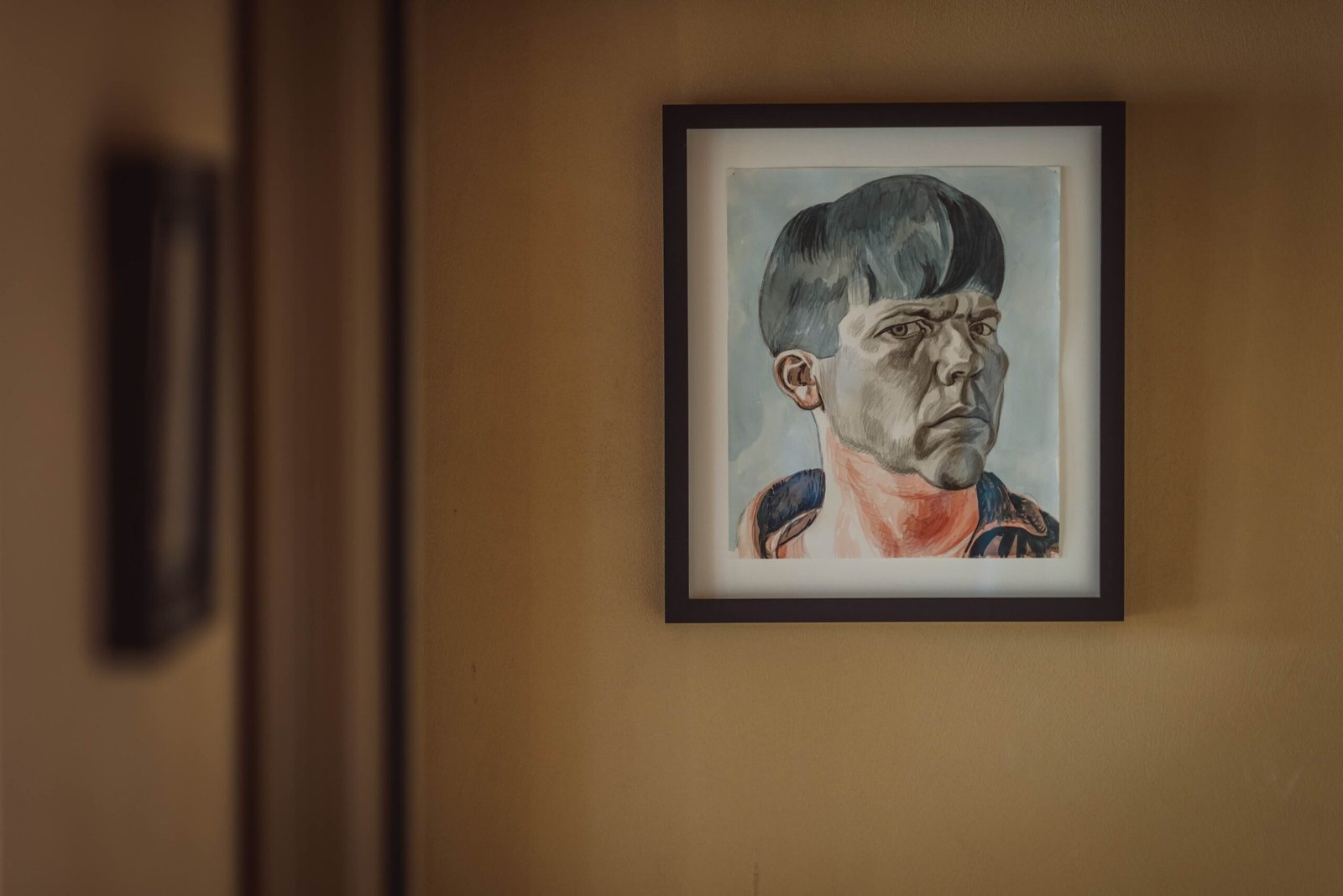
The art is treated with similar confidence. There are close to 100 works across the property, curated by Aedes founder Paul Geertman with Willem Baars and Freddy Insinger, spanning artists from the 17th century through to contemporary names including Jacqueline de Jong, Glenn Brown and Lucio Fontana. Each room has its own selection, effectively making the bedrooms small private galleries.

What I liked most was how little De Durgerdam talks about being an art hotel while you are actually staying there. There are hotels that nail their entire identity to a collection as a shortcut to cultural credibility, occasionally distracting from the fact that there is not much substance underneath it. Here, you slowly notice that the art is consistently good and unusually cohesive, that somebody clearly has an eye for it, and then discover how extensive the collection actually is. Nothing feels tokenistic.

De Mark, downstairs, follows much the same philosophy. The restaurant takes the Dutch idea of gezelligheid, warmth, conviviality and the pleasure of spending time together, as a starting point, but again it does not feel as though a concept is being pushed across the table at you. There is an open kitchen, a substantial wine list and a seasonal multi course menu that makes liberal use of local produce, fire, fermentation and preservation. On the menu around the time of my stay were dishes built around Dutch tomatoes, yellowtail, chanterelles, North Sea cod and other ingredients that made geographical sense rather than simply reading as luxury shorthand.

I should qualify any enthusiasm here by saying that I am not particularly useful as a conventional fine dining guide. My natural territory is somewhere between street food and a low key wine bar, and there are only so many avant garde descriptions of sauces and tweezer arrangements I can handle before wishing somebody would just bring out a pizza. Yet De Mark was entirely up my alley. The cooking had the technique and confidence you would expect from a serious restaurant, but dinner never became a performance you were expected to admire.

Much of that came down to the staff. Damon was one of the first people I spoke to after arriving and was back on service at De Mark that evening. The restaurant had just come off an unusually busy stretch, and our quieter night, perhaps 10 or 15 diners, most of whom seemed to be locals rather than hotel guests, left enough room for the staff to stick around for a chat. Ajax were playing Willem II that evening, so conversation moved between football, Australia, the hospitality scene back home and what living in Amsterdam looks like in 2026. One of the women working that night was a Willem II supporter, which gave the room some extra banter as the score unfolded.

The service throughout the stay had that rare combination of polish and emotional intelligence. It did not feel casual because nobody cared. It felt casual because the staff were good enough to know when formality would improve the experience and when it would simply get in the way. Damon could move from talking through dinner to having a laugh as though you were catching up with a mate, without the service ever becoming sloppy. The best hospitality operators make that balance look obvious, even though anyone who has spent time around restaurants knows it rarely is.

Breakfast the following morning became the moment that pulled most of the different threads of De Durgerdam together. I ate outside in the morning sun as breakfast came out over several plates rather than one oversized order. A brief sunshower moved across the lake, the umbrella went up and, sometime during all this, an older man wandered past carrying a bucket. I said hello and asked what he was doing. He was on his way to feed his chickens.

His name was Hennie Koopman. He had lived in Durgerdam for decades and, as it turned out, was the man responsible for the small bottle of Fisherman’s Borrel that had been waiting in my room. The drink is made locally from a secret recipe and draws on the old tradition of fishermen carrying something warming with them onto the water. Koopman, who was born in Amsterdam during the German occupation, also gave me a small book about Durgerdam’s chapel, written with his daughter Jade, tracing the building’s unusually broad role in the village over the centuries.

The chapel has functioned as a religious building, meeting place, village hall, schoolmaster’s home and civic centre, but what comes through most strongly is its role as a kind of fixed point in a settlement defined by water and constant change. That morning encounter also made something clear about the hotel. De Durgerdam borrows heavily from the village’s history, but the village itself is not an historical exhibit. The fishermen have largely gone, the Zuiderzee has long since been transformed into freshwater lakes and Amsterdam has crept steadily closer, yet Durgerdam is still a place where people live, keep boats, walk dogs, raise chickens and recognise each other along the waterfront.

That matters because the distinction between drawing inspiration from a place and consuming it as an aesthetic can be thin. De Durgerdam could easily have become an immaculate fantasy of Dutch coastal life assembled for affluent visitors. Instead, its strongest moments tend to come when hotel and village overlap naturally. The little borrel in the room is more interesting after meeting the neighbour who makes it. The weathered materials have more meaning after walking past houses and boats carrying similar traces of age. Even the restaurant makes more sense when you realise locals appear genuinely happy to use it rather than treating it as territory surrendered to tourists.

There is substance behind the restoration environmentally, too. Aedes says the project took the protected building from a G to an A+ energy rating while retaining and reusing existing materials wherever possible. The hotel is gas free, uses air source heat pumps, rooftop solar and LED lighting, while its Hydraloop system reuses around 150,000 litres of water a year. The more compelling sustainability story, though, is arguably the simplest one. Instead of demolishing an old structure or stripping it down until only the facade remained meaningful, the project has tried to extend the life of a building that has already been used for hospitality for centuries.

De Durgerdam is not a resort, and pretending otherwise would undersell what makes it good. There is no enormous spa complex or endless programme of activities waiting to fill a week. You can swim in the IJmeer, cycle into Waterland, take a boat, wander around the village, settle into the drawing room or spend an indecent amount of time eating and drinking at De Mark, but for most visitors I suspect one or two nights is the ideal rhythm. Stay longer and you either need to embrace doing very little or begin using it as a base for exploring the surrounding region.

Autumn and winter may well be when the place makes the most sense. The summer terrace and lake are obvious draws, but the darker months suit the low light, timber, red earth tones, old staircase and subterranean drawing room. If I owned a knitted turtleneck, De Durgerdam is the sort of venue that would somehow convince me to dig it out, order a Scotch and spend several hours downstairs pretending this was something I did regularly.

For people living in Amsterdam, De Mark already works as a destination on its own, but adding a night upstairs turns a good meal into a convincing escape without the effort normally involved in escaping anywhere. For international visitors, the proposition may be even stronger. Changing hotels midway through a stay is usually the sort of logistical inconvenience I would tell someone travelling from Australia to avoid. Amsterdam has enough good neighbourhoods and enough good hotels that there is little reason to repack a suitcase simply for variety.

De Durgerdam is one of the rare exceptions because the contrast is the experience. Spend several days in central Amsterdam, then move out here for a night or two and the same city suddenly feels as though it has another face entirely. You are close enough that the move is almost absurdly easy, but far enough away in mood that it feels like a second destination.

It was not until I arrived in Groningen later that day that I reached into my jacket pocket and found the De Durgerdam room key still sitting there. Maybe it was a Freudian slip, maybe just poor checkout etiquette. Either way, it felt like an appropriate end to a place that had been surprisingly difficult to leave behind.

Your next Read

There’s a little stretch of mountain road north of Brisbane, littered with undulating dippers, sharp …

Let’s be honest, Sydney has to be Australia’s flashiest city, and that’s coming from someone …

There is an assumption baked into modern design culture that progress must look like replacement. …

Aston Martin has unveiled its most audacious road car yet, with the hyper-exclusive Valiant, but …