BMW Art Cars and the 40-Year Legacy of the M3

Black

BMW Art Cars and the 40-Year Legacy of the M3

1 April, 2026

Words by:

Justin Jackie

For more than fifty years, BMW’s Art Car program has invited artists to transform racing machines into moving works of art. As the brand celebrates forty years of the M3, the model that once emerged from the rigid logic of touring car regulations continues to prove that engineering, culture and motorsport can share the same canvas.

Racing cars are rarely treated as objects of contemplation. They are built to do one thing exceptionally well: move quickly through space. Every surface exists for a reason. Air must be displaced, brakes must cool, tyres must sit within the bodywork. When a racing car’s brief competitive life ends, it usually disappears into a workshop, a private collection, or a quiet corner of a museum. Its job is done.

Occasionally, though, something unusual happens.

There is an old idea in aesthetics, most famously discussed by the philosopher Immanuel Kant, that beauty often emerges not from freedom but from structure. In his Critique of Judgement, Kant described certain forms as possessing what he called “purposiveness without purpose”, objects whose shapes feel coherent and satisfying even though they were never designed with beauty in mind.

Racing cars are almost perfect examples of this phenomenon. Their forms are dictated by aerodynamics, mechanical necessity and regulation. Engineers respond to rules about weight, airflow and dimensions. Every surface is solving a problem. And yet, when those constraints align, something unexpectedly elegant can appear.

Motorsport is full of these quiet accidents. Machines built entirely for performance sometimes cross an invisible line and become cultural objects.

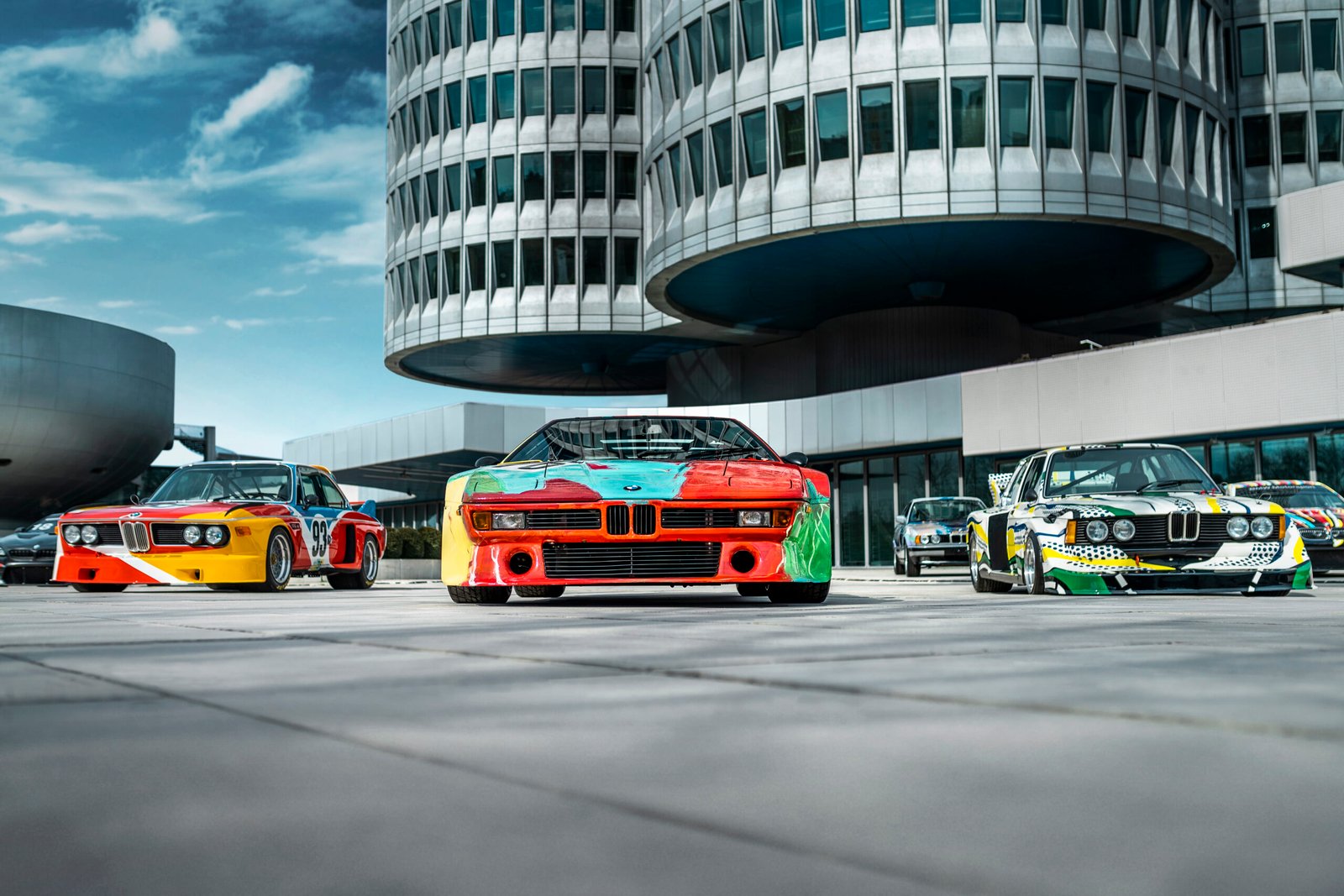
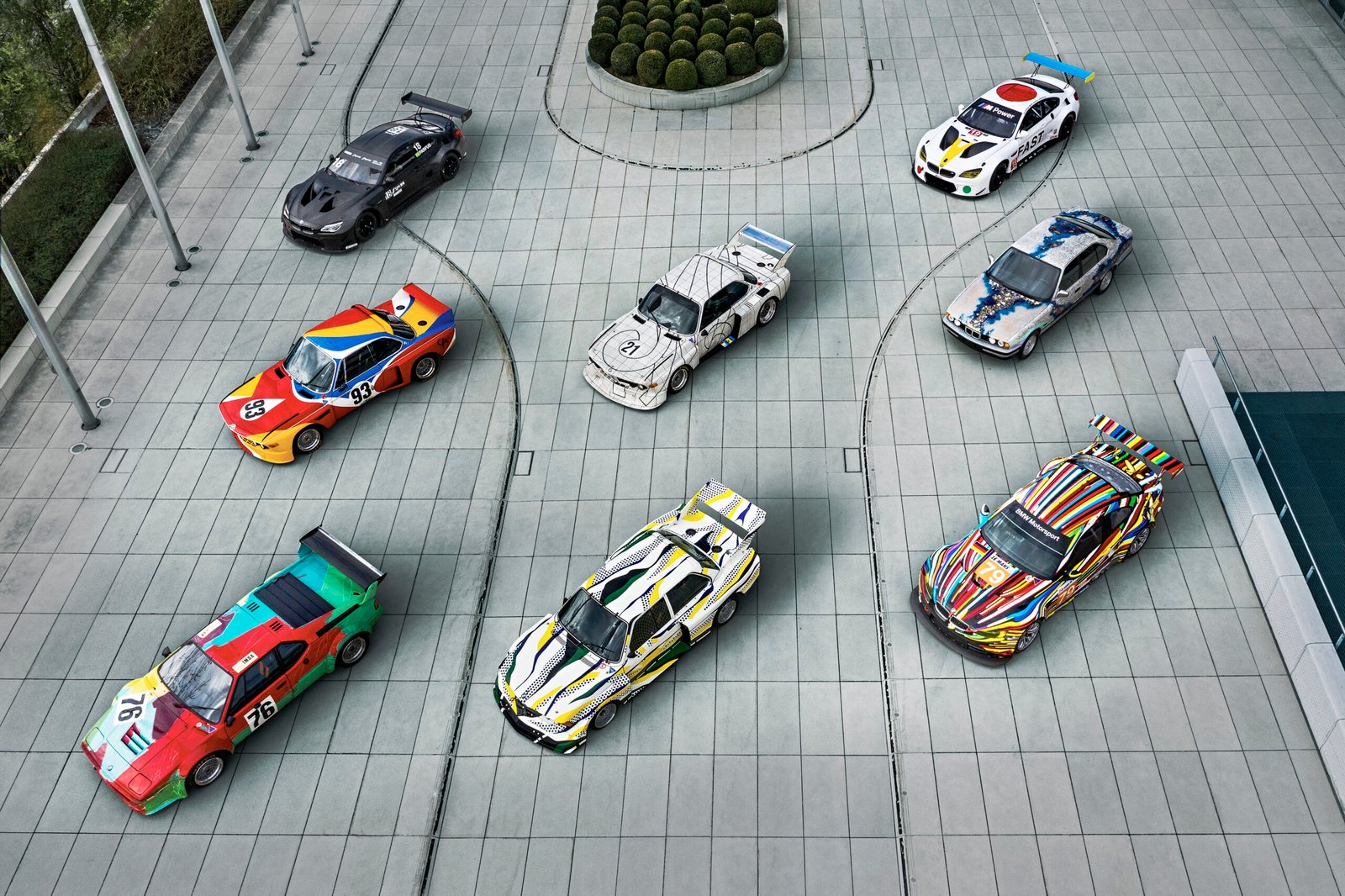
Few programmes illustrate that phenomenon better than BMW’s long-running Art Car project, a cult initiative that celebrated 50 years of success late last year.

The idea began almost accidentally in 1975 when French racing driver and auctioneer Hervé Poulain asked American sculptor Alexander Calder to paint a BMW entered in the 24 Hours of Le Mans. Calder responded by covering the BMW 3.0 CSL in sweeping bands of colour that flowed across the car’s bodywork like a moving sculpture.

The car retired early from the race, but the visual impact was immediate. What had begun as an experiment soon evolved into a project that invited contemporary artists to reinterpret racing machines as canvases.

Over the following decades artists including Frank Stella, Roy Lichtenstein, Andy Warhol and Jenny Holzer would all approach BMW’s racing cars through their own visual language.

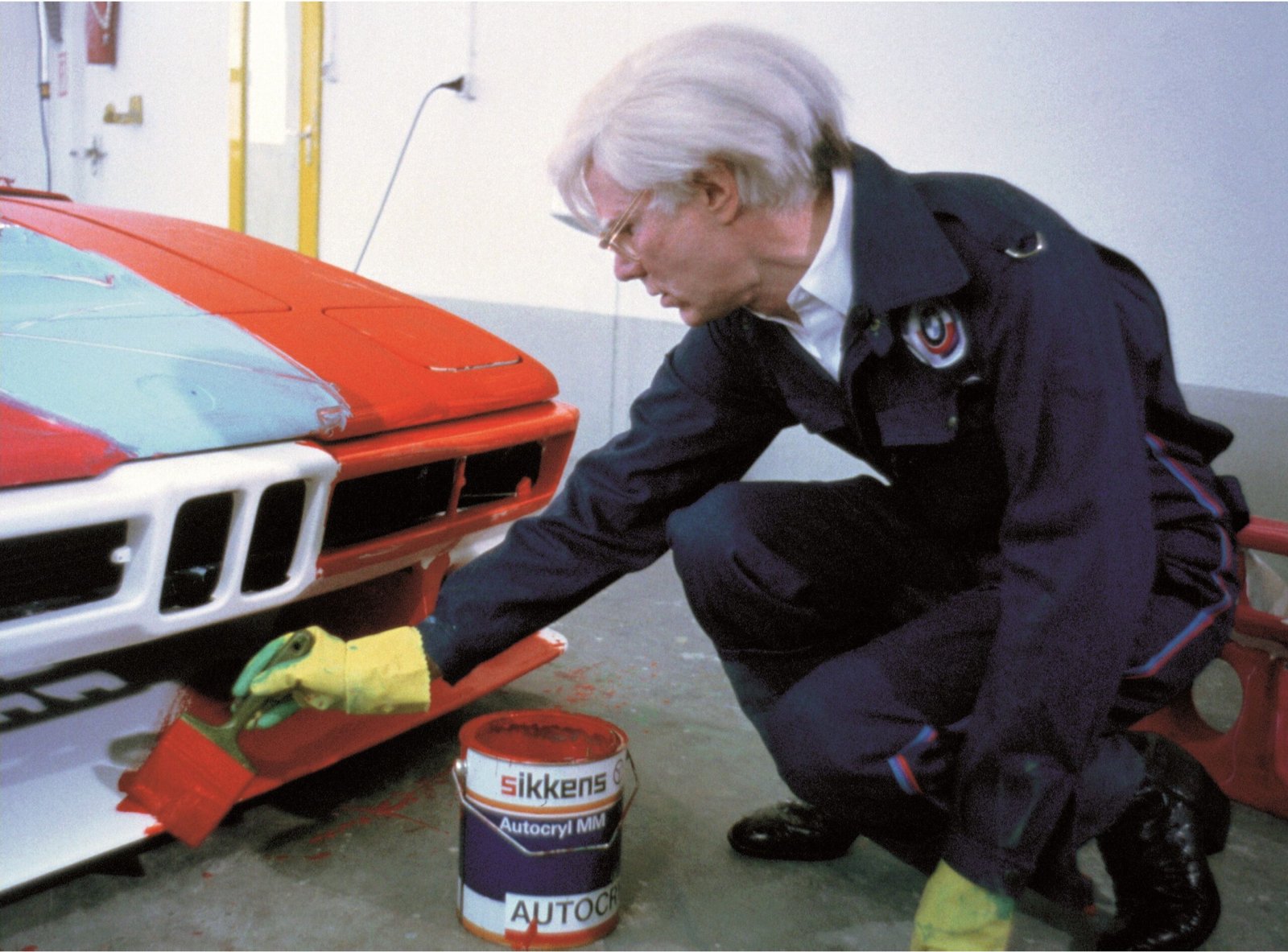
Warhol’s contribution in 1979 became one of the most famous. Rather than carefully planning the design, he approached the BMW M1 like a canvas in motion, dipping his hands into paint and applying broad strokes directly to the car’s bodywork. The process reportedly took less than half an hour. When the car raced at Le Mans that year it finished sixth overall, making it one of the few Art Cars to compete seriously rather than exist purely as a visual experiment. Warhol later remarked that he had tried to paint “the speed itself”.
What made the Art Cars unusual was that they were not liveries in the conventional sense. Racing liveries are graphic solutions designed to communicate sponsors at high speed. They exist primarily as advertising.

The Art Cars initiative asked artists to engage with the car itself as an object. With its surfaces, its movement and the strange spectacle of a machine built for competition carrying a piece of contemporary art around a race circuit.

By the mid-1980s the project would encounter one of the most compelling canvases it would ever see.

That canvas was the BMW M3.

The original M3 arrived in 1986 as a homologation special developed to satisfy the regulations of Group A touring car racing. Manufacturers were required to produce 5,000 road-going versions of their race cars, and BMW began with the practical architecture of the 3 Series before reshaping it for competition.

Wheel arches were pushed outward to house a wider track. The rear window and C-pillar were reworked to smooth airflow. The front and rear bodywork were tightened and sharpened, while a motorsport-derived 2.3-litre four-cylinder engine produced 192hp at a stratospheric 6,750rpm.

The result was a compact sedan that looked unusually purposeful, its squared shoulders and flared arches clearly revealing the racing machine beneath while offering race-winning performance in a road-going platform.

These changes gave the M3 something few competition cars possess: clarity of form.

Many racing machines become visually chaotic as aerodynamic elements accumulate. The E30 M3 remained remarkably legible. Its widened arches created large, confident surfaces while the underlying symmetry of the 3 Series remained intact. Even at speed the car’s proportions were easy to read.

For artists, this mattered.

A cluttered racing shell leaves little room for interpretation. The M3’s clean, angular geometry offered something closer to a sculptural object. Colour could stretch across its arches. Lines could follow the movement of its bodywork. Patterns could wrap around the car without being broken apart by vents or ducts.

In other words, the M3 was not only a successful machine both on and off the race track. It was a surprisingly good canvas.

That fact feels particularly fitting today as the BMW M3 celebrates forty years since its introduction.
By the late 1980s the meeting point between engineering and art had reached Australia. This coincided with the beginning of the M3 revolution.

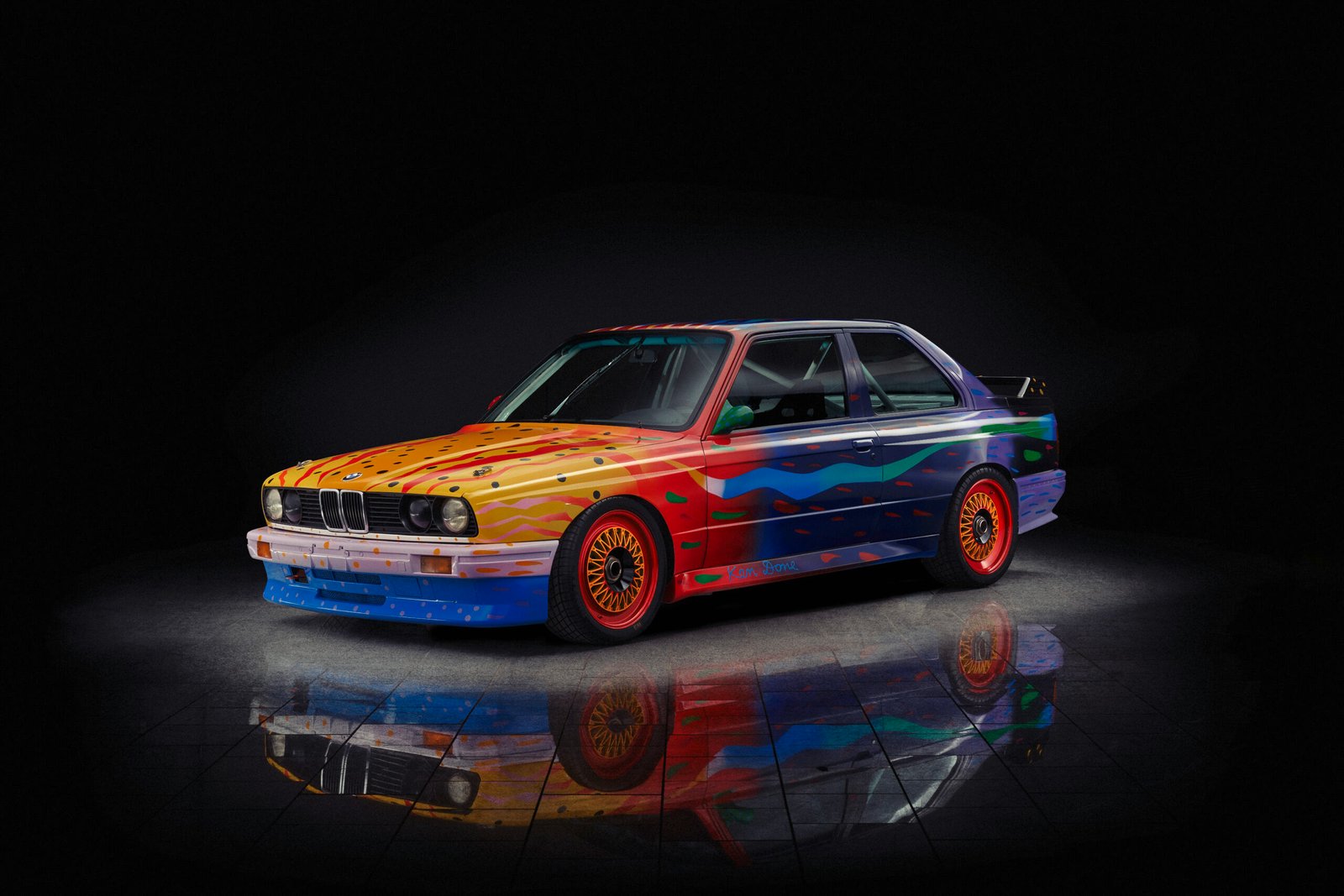
In 1989 BMW invited two Australian artists to reinterpret the E30 M3, each bringing a completely different visual language to the same race-inspired platform.

The first was Sydney painter Ken Done.

By that time Done had already become one of the most recognisable figures in Australian visual culture. His paintings were filled with bright colour and sweeping gestures celebrating the harbour, the coast and the light of the Australian landscape. Critics sometimes dismissed the work as exuberant or commercial, but the public embraced it. Few artists captured the brightness of Australian life with such immediacy.

Placed onto the widened arches and confident surfaces of the M3, Done’s palette suddenly found a new kind of movement. The flowing bands of colour stretched across the bodywork like brushstrokes carried at speed. An abstract rendition of parrots and parrot fish, Done said at the time: “Both are beautiful and move at fantastic speed. I wanted my Art Car to convey the same impression.”

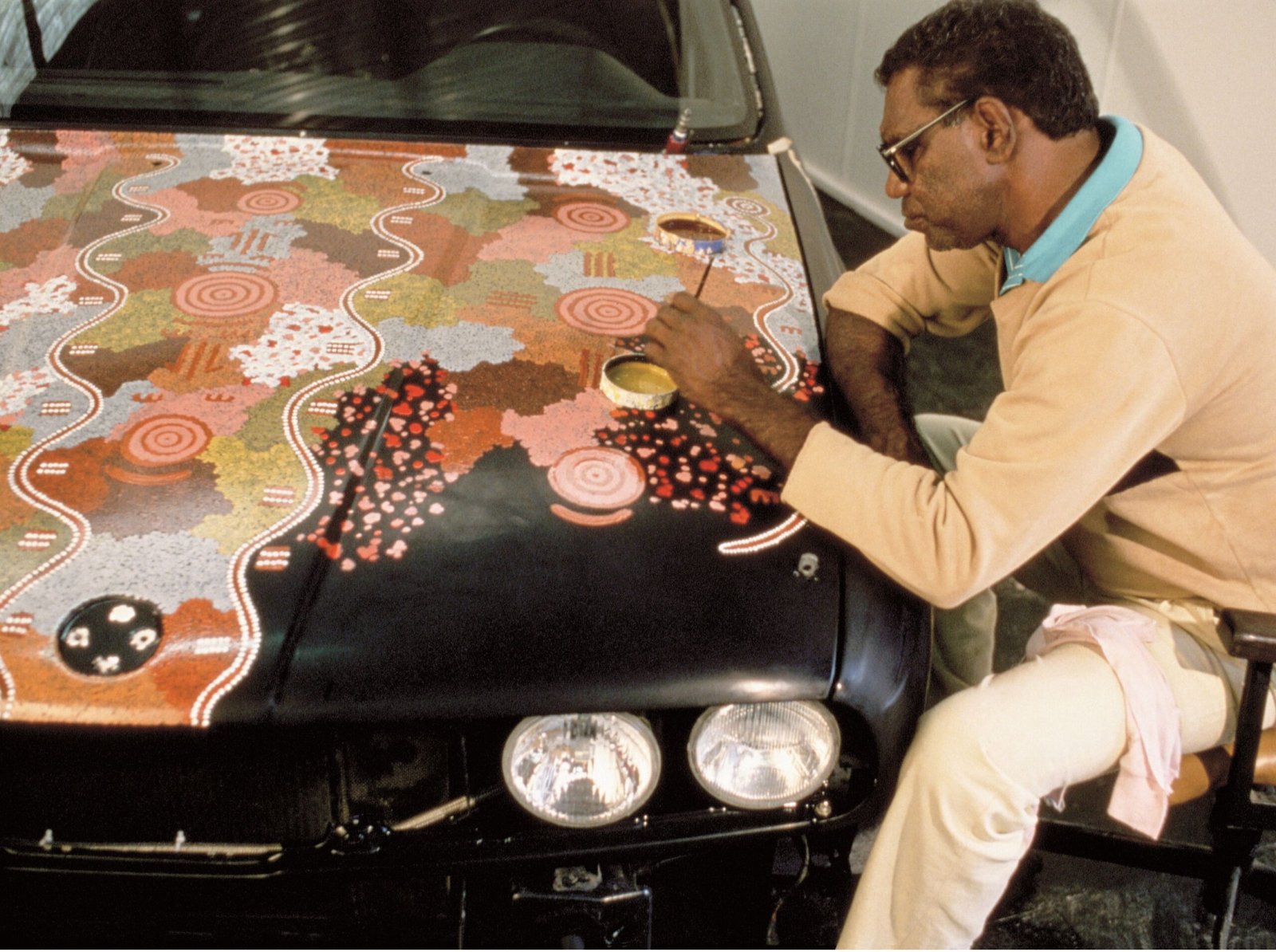
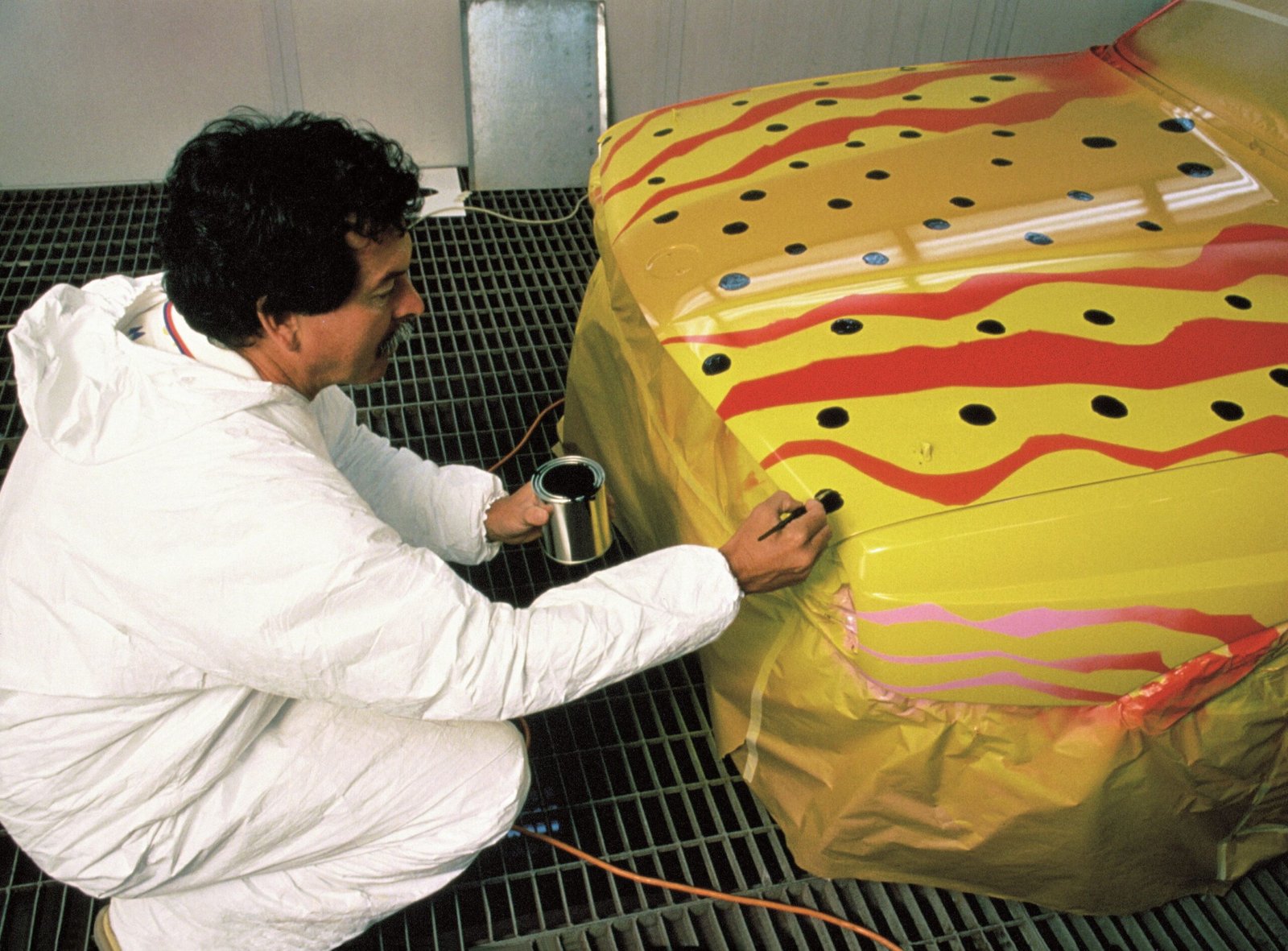
Alongside Done’s interpretation, BMW commissioned a second Australian Art Car from Indigenous artist Michael Jagamara Nelson.

Where Done’s work celebrated contemporary Australian colour and landscape, Jagamara Nelson brought a visual language shaped by the traditions of the Western Desert art movement. His paintings used intricate dot patterns and symbolic forms connected to ancestral stories and the mapping of land. Applied to the geometric surfaces of the M3, those patterns transformed the racing car into something closer to a moving cultural landscape.

“The car is a landscape as if viewed from an airplane. I have included water, the kangaroo and the possum,” Jagamara Nelson shared after spending seven days transforming the black M3 into a movable expression.

Seen together, the two cars revealed something remarkable about the M3 itself. The same engineered form could carry two entirely different artistic languages. One expressive and immediate, the other deeply symbolic and rooted in tradition. Both responding to the same sculptural object produced by the rigid logic of motorsport engineering.

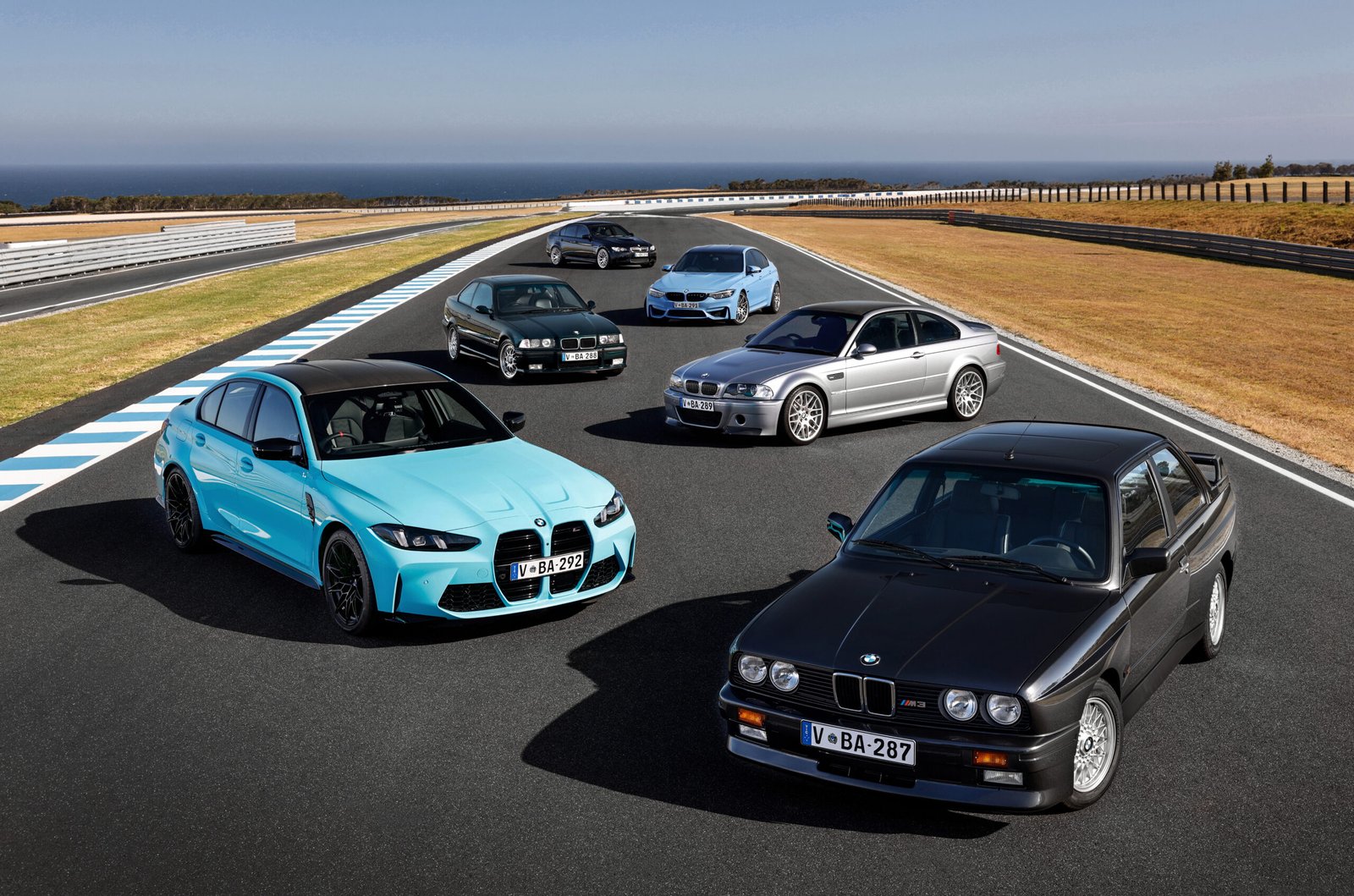
Over those four decades the M3 has evolved through several distinct generations. The original E30 established the formula as a homologation special built to dominate touring car racing. It succeeded immediately, winning championships across Europe, Australia and the United States and becoming one of the most successful homologation race cars ever produced.

Later generations refined the idea rather than replacing it. The subsequent E36 generation broadened the model’s appeal as a road car, softening its razor’s edge characteristics slightly while maintaining its balance. The E46 would later become one of the most celebrated driver’s cars of the modern era, its high-revving straight-six and precise chassis earning near-mythical status among enthusiasts. It could also be daily driven, again broadening the appeal of the M3.

Subsequent models grew faster, more powerful and technologically complex, reflecting the expectations of twenty-first century performance cars. Yet the basic idea has remained remarkably consistent: a compact sedan shaped by motorsport thinking.

Australia has developed a longstanding love affair with the M3, with 9,830 M3 examples delivered locally (as of Feb 2026), or almost half of all the M cars ever sold here. This is no doubt due to the model’s early cultural involvement in a nation already hooked on rear-driven, front-engined performance.

While the model is no longer a homologation requirement, it remains in many ways a reflection of BMW’s motorsport commitment, just as it was when the E30 M3 was first revealed to the world.

Now, as BMW looks to the future of the M3, the model will also become a cleaner representation of the brand’s sporting ambitions. The seventh generation will introduce a fully electric variant alongside a petrol model. Just as the E30 M3’s 16-valve, 2.3-litre four-cylinder engine reshaped touring car racing in the late 1980s, the incoming quad-motor electric model intends to usher in a new era of innovation for the nameplate.

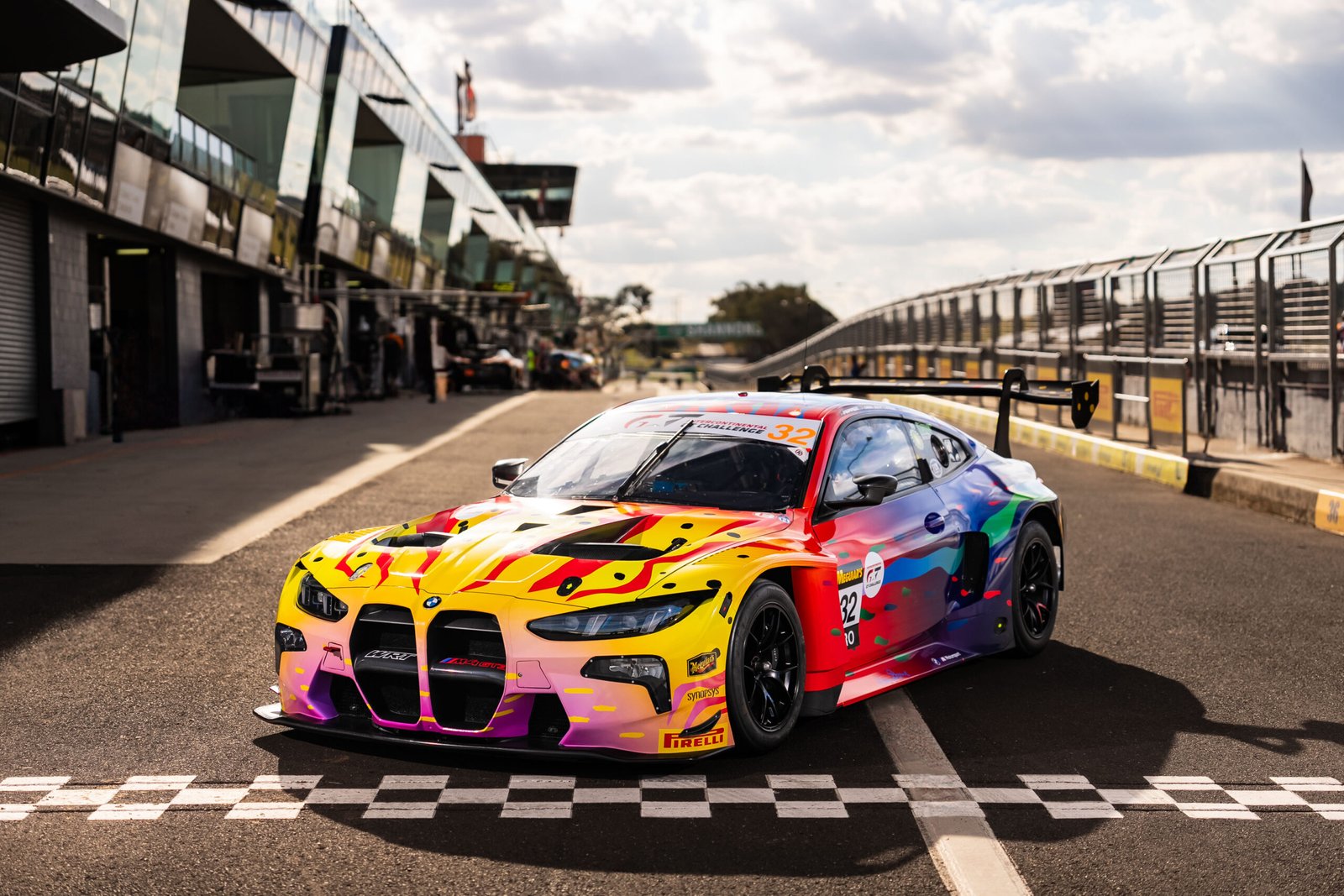
More than three decades after Ken Done first translated his unmistakable palette onto the bodywork of a Group A BMW M3, that unlikely meeting point between art and motorsport returned to Mount Panorama.

At this year’s Bathurst 12 Hour a modern BMW endurance racer belonging to Team WRT appeared on the grid wearing a livery inspired by Done’s original Art Car. The interpretation was contemporary rather than literal, adapting Done’s sweeping colour fields to the far more complex surfaces of a modern GT machine shaped by decades of aerodynamic development. It celebrated both 50 years of the Art Car and 40 years of the M3.

Mount Panorama has long been a stage for memorable BMW machinery. The circuit has hosted everything from Group C touring cars of the early 1980s to modern GT endurance racers. One of the most famous arrived in 1985 when the black-and-gold JPS BMW 635 CSi stormed to victory in the Bathurst 1000 under the control of Jim Richards and Tony Longhurst. Its combination of brute speed and elegant proportions made it one of the most striking touring cars ever to climb the mountain.

BMW’s presence at Bathurst has appeared in many forms since then. The E30 M3 would later become a touring car favourite around the world, while modern BMW GT machines continue to tackle the circuit’s long straights and punishing elevation changes during the Bathurst 12 Hour.

The modern iteration of Done’s expression, adorning the #32 BMW M4 GT3 EVO, spent moments of the thrilling endurance race in the lead before a collision in the final stages of the event saw it finish in 12th place. Team WRT’s #46 sister car, however, achieved a third-place podium finish.


Seen circulating around the mountain, the return of Ken Done’s colours carried a quiet sense of continuity, regardless of the result. Motorsport is usually obsessed with progress. Each generation of racing machinery replaces the last with something faster, lighter and more efficient. Designs evolve, technologies advance and old cars gradually disappear into history.

Yet certain ideas have a way of returning.

The sight of Done’s colours moving once again across Mount Panorama suggested that some moments in motorsport culture have a longer life than the machines that first carried them.

Both the M3 and the Art Car programme were born from the rigid logic of racing regulations. Neither was created with cultural significance in mind. Yet both gradually moved beyond their original purpose. One became an icon of performance car design. The other became one of the longest running collaborations between contemporary art and motorsport.

Kant might have recognised the pattern. Objects shaped entirely by purpose sometimes acquire a different kind of meaning over time.

Out of a set of racing regulations came a car whose shape proved powerful enough to inspire artists, and enduring enough to remain instantly recognisable forty years later.

Sometimes the most interesting cultural objects appear not through deliberate design, but by accident.


Your next Read

Last weekend, I ended up at Golden Plains, a big shroomy music festival in Meredith. …

There is an assumption baked into modern design culture that progress must look like replacement. …

If you’ve ever spotted a faceless surfer god riding a cosmic wave on a t-shirt, …

TAG Heuer released its first-ever mechanical split-seconds watch last year, in what is arguably the …