Why Triumph’s Modern Classics Matter More Than Ever

Black

Why Triumph’s Modern Classics Matter More Than Ever

12 May, 2026

Words by:

Justin Jackie

In a world obsessed with reinvention, Triumph’s modern classics offer something increasingly rare: continuity, familiarity, and a quieter connection between rider, object and identity.

In a world obsessed with what’s next, it is worth asking why we keep coming back to what has already been.

Every day, a new brand appears with a cleaner logo, a sharper pitch, and a promise to rethink everything that came before it. Faster, lighter, more efficient. Progress is framed as replacement, as though the only meaningful way forward is to discard what existed prior. The language is familiar, even if the products themselves are not. Reinvention has become a kind of cultural default.

And yet, some of the most compelling objects today feel as though they have resisted that cycle entirely.

They do not radically reinvent themselves every few years. They evolve, carefully and almost reluctantly, preserving something deeper than functionality alone. A silhouette, a feeling, a sense of continuity. They remain recognisable not because they are stuck in the past, but because they understand which parts were worth keeping.

Choosing something like that says something about you.

Not in an overt way, but in a quieter, more considered sense. It suggests a preference for familiarity over novelty, for objects that carry meaning beyond their immediate purpose. In a world increasingly dominated by disposable aesthetics and algorithmically generated trends, there is something deeply reassuring about products that already know exactly what they are.

Modern classic motorcycles occupy a particularly interesting space within that conversation because motorcycles, more than most objects, have always existed somewhere between transportation and identity. The bike someone chooses rarely comes down to pure logic alone. It says something about how they see themselves, or perhaps how they would like to.

That is why brands like Triumph continue to matter.

The Bonneville, first introduced in 1959, has become more than a motorcycle over the decades. It is now a cultural silhouette, one that has remained remarkably consistent through changing eras of engineering, fashion and technology. Tank, seat, engine, exhaust. The proportions still feel instinctively correct, even now. Not frozen in time, but refined carefully enough that the original intent remains intact.

Part of that endurance comes from the way Triumph has historically balanced evolution against restraint.

Post-war Britain produced motorcycles that carried a sense of optimism and freedom, particularly for younger riders looking beyond austerity and routine. Triumph quickly became tied to that energy, eventually embedding itself within broader cultural mythology through figures like Marlon Brando and Steve McQueen, before later finding relevance again through names like David Beckham and Jason Statham. The Bonneville’s appeal has never been solely mechanical. It has always existed slightly beyond that, as an object associated with individuality, rebellion, and understated cool.

What makes Triumph’s modern classics particularly compelling today is that they understand nostalgia alone is not enough.

There is no value in building a motorcycle that simply imitates the past. The challenge lies in preserving the emotional essence of something while quietly modernising everything beneath it. Better brakes, cleaner fuelling, improved reliability, electronics that make riding safer and easier without overwhelming the experience itself.

It is, in many ways, an exercise in restraint.

And perhaps more importantly, it is an increasingly difficult balancing act in a market that tends to reward excess. Bigger screens, more aggressive styling, and more power than most riders will ever realistically use. Modern classics push in the opposite direction. They prioritise feel over spectacle.

But there has also historically been a limitation to that world.

For a long time, Triumph occupied a slightly aspirational middle ground. The bikes were beautiful, culturally rich and deeply desirable, but often slightly out of reach for newer riders, younger riders, or those simply wanting an accessible entry point into motorcycling without immediately committing to a twenty-thousand-dollar purchase.

That is why the arrival of the 400 platform matters so much.

Not simply because the bikes are affordable, but because accessible motorcycles are how cultures sustain themselves. They create first experiences. First road trips. First commutes. First mechanical obsessions. They allow riders to buy into a philosophy and a design language early, rather than treating heritage as something reserved only for those with larger budgets and years of experience.

More importantly, Triumph has managed to do this without cheapening the experience itself.

It was against that backdrop that Triumph Australia invited us down to Victoria to spend several days riding a cross section of the modern classics range through the roads surrounding Marysville and the Yarra Ranges, swapping between bikes as the terrain and weather shifted around us.
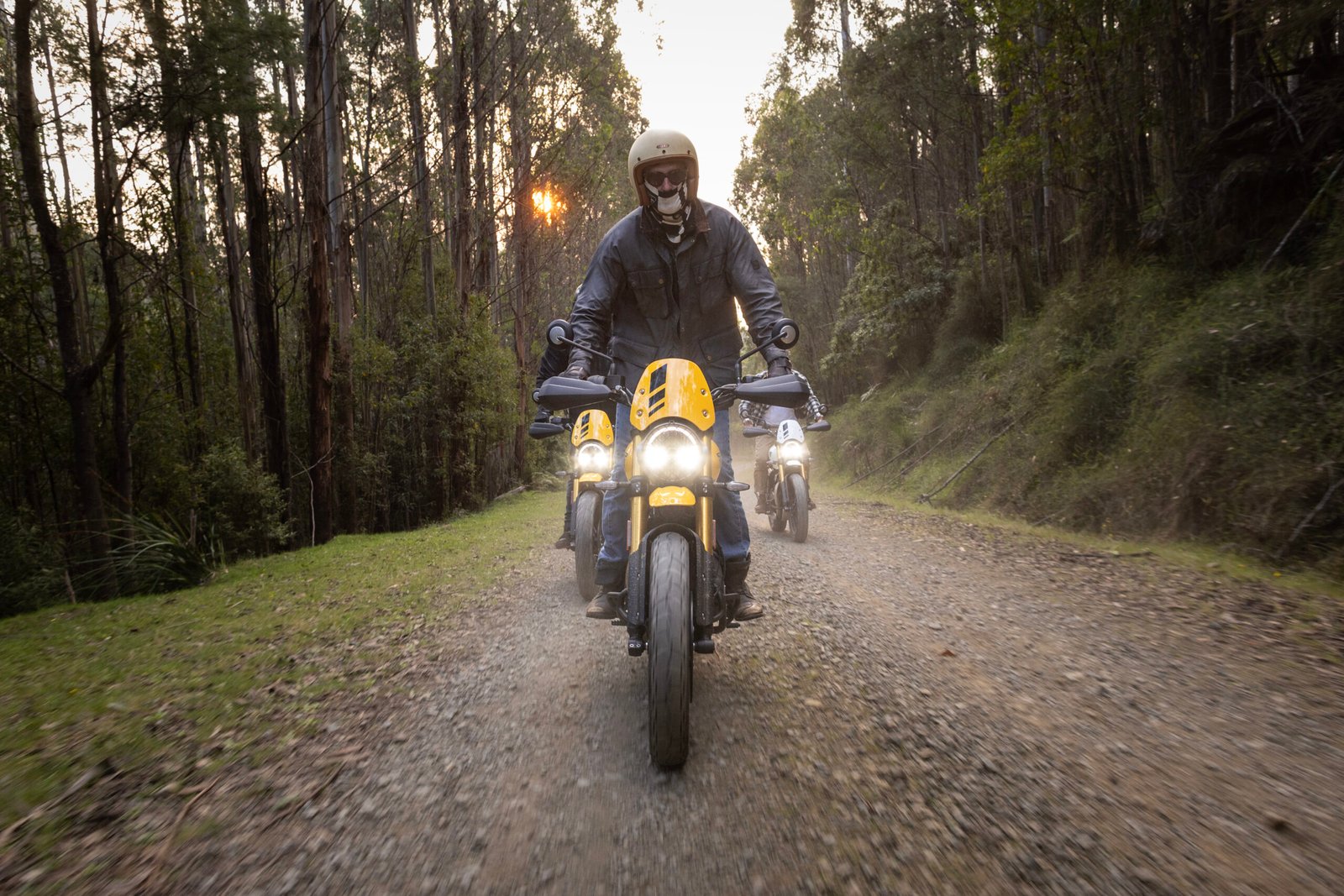
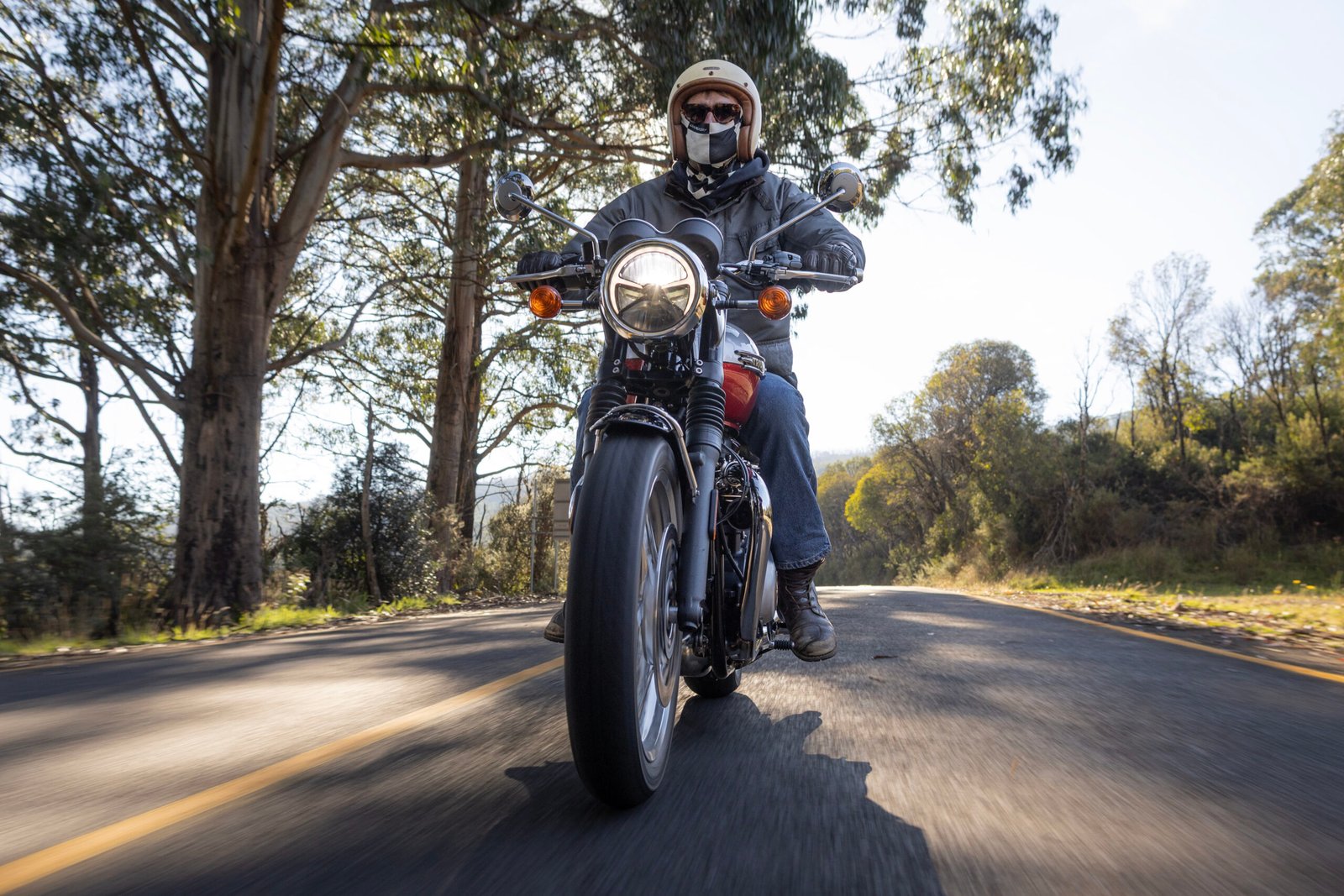
The launch itself felt refreshingly understated. No excessive theatrics, no overwhelming technical presentations attempting to convince us of something before we had experienced it ourselves. Just a collection of motorcycles, a route stretching between Marysville and Warburton, and enough time in the saddle to properly understand what separated each bike from the next.

Out there, the philosophy behind the range became much clearer.

What Triumph seems to understand particularly well is the concept of invisible technology. Modern conveniences are present everywhere throughout the bikes, but rarely in ways that disrupt the overall experience. Ride modes, traction control, LED lighting, ABS, and improved rider aids. All necessary, all genuinely useful, yet integrated carefully enough that they never dominate the aesthetic or emotional character of the motorcycle itself.

The technology exists to support the ride, not redefine it.

That balance arguably reveals itself most clearly in the Scrambler 400 XC.

At $10,490 rideaway (promo pricing until June 30, 2026), it is one of the more approachable entry points into the Triumph ecosystem, particularly for LAMS riders and younger audiences. But what immediately stands out is how little it feels like a compromise in pursuit of accessibility.

The ergonomics are excellent. At 190cm, I never once felt cramped or folded awkwardly onto the bike, which is not something that can be said for many smaller-capacity motorcycles. Too often, entry-level bikes feel like reduced versions of something else, scaled down physically as much as mechanically. The 400 XC avoids that almost entirely. It simply feels like a smaller Triumph.

Visually, it may also be one of the strongest-looking LAMS motorcycles released in recent years. There is confidence in the proportions and detailing without the bike slipping into self-seriousness. The design language feels consistent with the broader modern classics range rather than diluted for affordability’s sake. Hand guards, wire-spoked wheels, the taller stance and purposeful silhouette all contribute to something that feels properly resolved as an object.

On the road, the 400 XC feels honest about what it is.

Heavier riders will inevitably find themselves wanting a little more torque climbing longer mountain sections, particularly when carrying speed uphill. But there is also something inherently enjoyable about that limitation. Squeezing everything out of a slightly underpowered motorcycle often proves far more engaging than riding something excessively powerful at a fraction of its capability. Most bikes in this category will spend their lives commuting anyway, navigating cities, shorter trips and daily routines rather than chasing outright performance figures.

The Scrambler understands that reality.

Pushing harder downhill began to reveal some of the bike’s boundaries. There were moments where additional front brake feel and bite would have been welcome, particularly as speeds increased through tighter sections. The side stand also felt slightly quirky throughout the launch, occasionally failing to disengage as intuitively as expected and never quite leaning the bike over enough when parked. Small things, certainly, but noticeable precisely because so much else about the bike feels carefully considered.

And yet none of it meaningfully detracts from the broader achievement.

Because the 400 XC succeeds where many entry-level motorcycles fail. It does not merely act as a stepping stone toward the “real” bikes higher up the range. It feels complete in its own right, while simultaneously opening the door into a much larger culture surrounding the brand itself.

Further up the range, that philosophy simply evolves into different forms.

The Bonneville T120 remains the purest expression of the entire concept. The engine alone communicates almost everything that makes the bike work. Effortless torque, just enough vibration to remind you of the mechanical character beneath you, and a soundtrack that feels entirely natural rather than engineered for effect. Nothing about the bike feels forced. It carries itself with the kind of confidence that only comes from not trying too hard.

The material finishes only reinforce that feeling. Brushed metal surfaces, thoughtful detailing and proportions that appear likely to age gracefully rather than date quickly. The Bonneville seems to improve with age, not unlike many of the objects that inspired it originally.

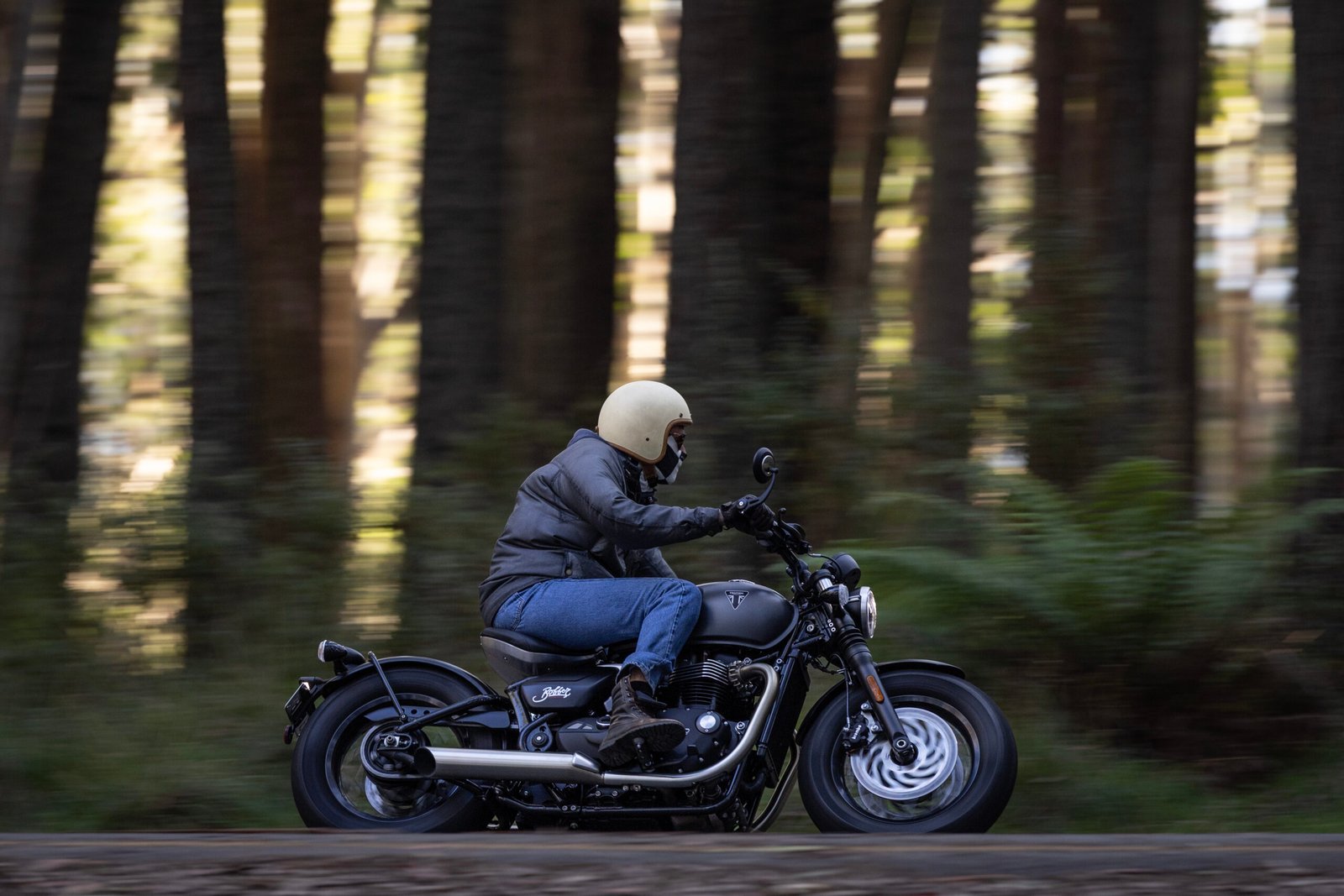
The Bobber shifts the emphasis slightly more toward theatre and form, yet remains surprisingly usable once underway. Despite appearances, comfort levels are far better than expected, while the engine’s flexibility allows it to pull cleanly up mountain roads almost regardless of gear selection. It feels like a motorcycle built around a strong visual idea that somehow still manages to function brilliantly in practice.

The Speedmaster sits furthest toward the cruiser end of the spectrum. Relaxed, low-slung and clearly optimised for longer highway stretches, it delivers one of the more comfortable experiences in the range once settled into open roads. In tighter sections, however, the ergonomics begin to feel slightly less natural, particularly for taller riders. It is perhaps the most acquired taste within the lineup, but intentionally so.

And that individuality is important.

Not every modern classic needs to solve the same problem in the same way. Each bike within Triumph’s range offers a slightly different interpretation of the broader philosophy, whether through accessibility, nostalgia, comfort or visual expression. What unites them is the understanding that motorcycles are emotional objects first and rational purchases second.

And perhaps part of the appeal lies there too, in the quiet sense of community these bikes carry with them.

Modern life has become increasingly individualised, yet people continue searching for forms of belonging. Run clubs, film photography, vinyl records, neighbourhood cafés filled with familiar faces. Beneath all of them sits the same desire for continuity and shared language in an era that often feels fragmented and temporary.

Modern classics tap into something similar.

Not in an overtly tribal sense, but in the understanding that certain objects naturally attract certain people. The Triumph community already exists long before a new rider arrives. The bikes simply provide an entry point into it. A shared appreciation for design, ritual, mechanical character and a slower, more considered relationship with the objects we choose to live alongside.

It would be easy to dismiss modern classics as style exercises or compromises lacking the outright performance and technological aggression of more contemporary machines. But that framing misses something much more significant.

These bikes are not compelling because of what they lack.

They are compelling because of what they retain.

In a landscape increasingly defined by rapid reinvention, modern classics offer continuity. Not nostalgia for its own sake, but a recognition that some ideas were right the first time. That preserving familiarity can sometimes feel more radical than endlessly chasing the next thing.

And perhaps that is why they resonate so strongly right now.

Because in a world constantly trying to become something new, there is something quietly reassuring about objects that already know exactly what they are.

Your next Read

The brand did not emerge from a desire to disrupt skincare so much as a …

I’ll admit the cruise collection is not my natural territory. The premise can feel excessive, …

The pop-up House of Q experience is hidden behind a secret door, located within what …

From past Palme d’Or winners to first-time Cannes debuts, we’ve curated a list of films …