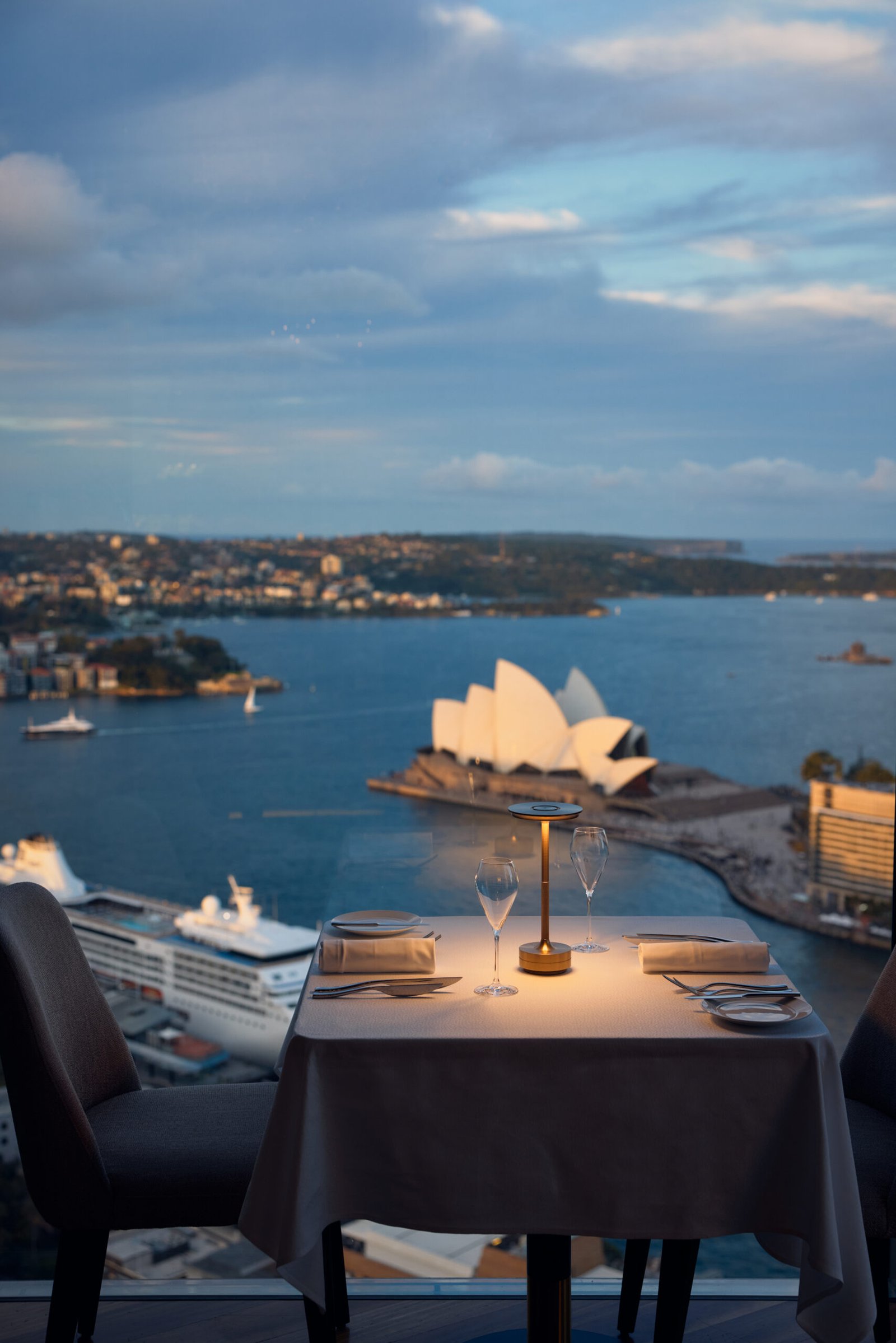
Arriving on the 36th floor, we began the evening at Blu Bar, where swirled carpet and slick-backed waiters felt delightfully out of step with the world below. “Miss Palmieri, welcome,” the host announced, a small hymn to the old-school hospitality I so often crave, before escorting us to a corner seat overlooking one of the best views I’ve ever seen of Sydney Harbour.
As someone who spends a fair amount of time romanticising the finer things outside of Australia, the view arrived as a timely reminder of the beauty sitting right here at home. If making the trip up for Fashion Week had felt like an effort, that feeling disappeared somewhere between the rain rolling across the windows, the city lights flickering below, and a martini and Boulevardier double-parked in front of me.
So let me say this first: if you’re looking to rediscover what’s special about your own backyard, try seeing it from the clouds. Distance has a funny way of improving your perspective. Or perhaps that was the cocktails. Either way, it worked.
Once the glassware was cleared, we wandered next door to Altitude, a grand, sprawling two-tier dining room with enormous glass windows, clothed tables, and a crowd I’m not sure I could have found anywhere else. There was fur. There were crucifixes. It was The Sopranos on one hand and true-blue Australiana on the other. I couldn’t quite put my finger on the vibe, and that was precisely what made it so refreshing. In a city where dining rooms can often start to blur into one another, this felt gloriously difficult to categorise.
We took our seats, and the set menu began to roll. Head Chef Jason Phi Huynh had put us on a seven-course signature menu at $195, our gateway deeper into the ’90s haven I’ve been teetering on the edge of.
If you’re wondering what exactly “’90s dining” means, cast your mind back. This was the era of Martha Stewart entertaining empires and Huey teaching Australians that butter was less an addition and more the star ingredient. Restaurant luxury meant lobster, cream, towers of seafood, and something flambéed for good measure, food that sat somewhere between a Manhattan power lunch in Sex and the City and the celebratory dinners that occasionally pulled the Friends cast out of Central Perk and into white-tablecloth territory. Nobody was talking about fermentation projects or whether the wine was made by a guy named Luca in a shed. Dining was glamorous, indulgent, and unapologetically excessive.
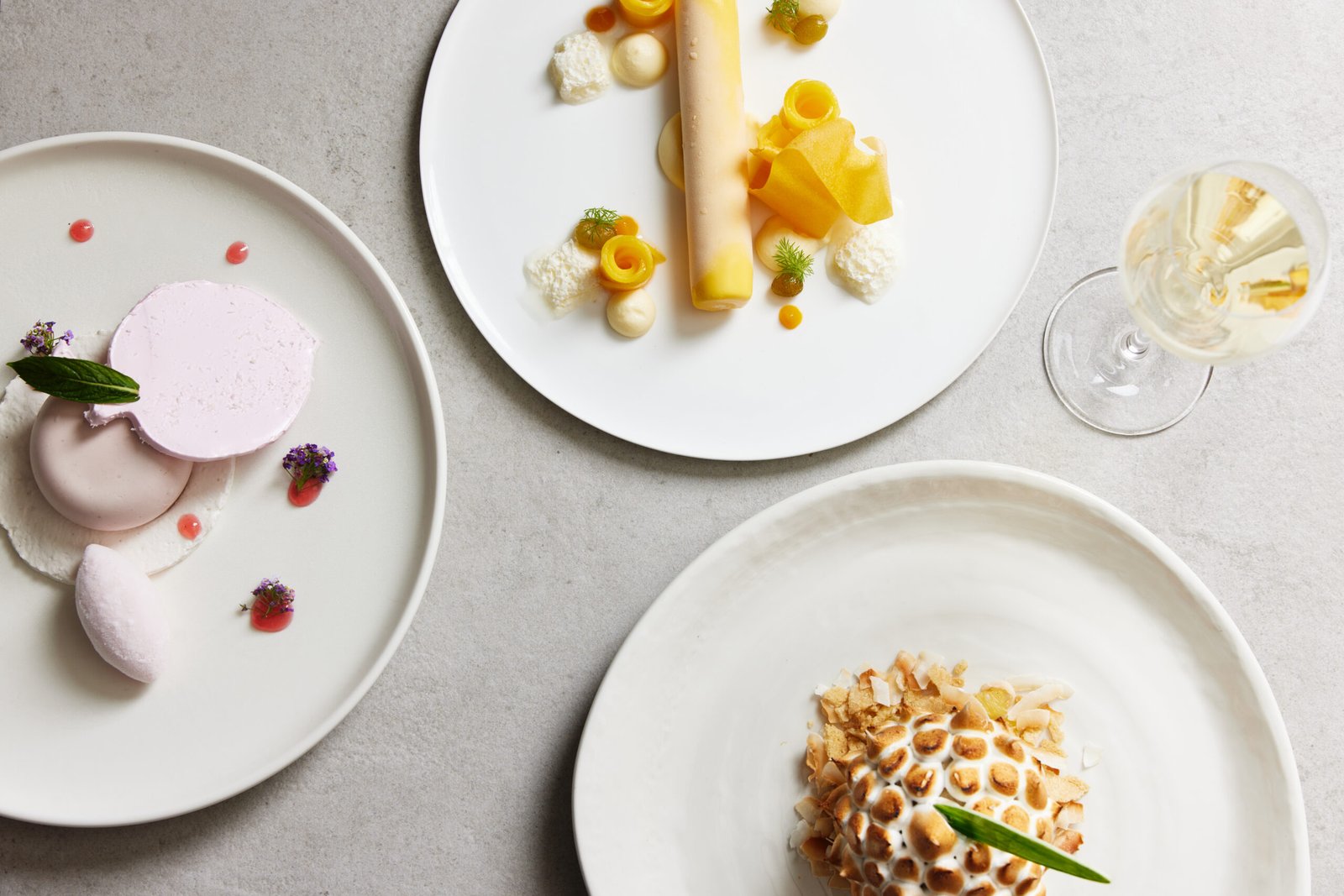
We began with East 33 Sydney rock oysters, followed by abalone Rockefeller-style and tuna tataki, then seafood pasta and Australian wagyu. For a palate cleanser, arguably the most underrated course on any menu, there was rhubarb granita, followed by a meringue that served as the pièce de résistance.
Each course ticked off a particular brand of luxurious indulgence that defined the 90’s, plated with swooshes, dots, and flourishes that hummed with the excess of the Manhattan dining scene in its Wall Street prime. My mind kept returning to photographs of Le Bernardin in its heyday, when the great Eric Ripert was still running the pass.
It was a menu that understood the pleasure of occasion, of ordering the richer thing, of leaning into hospitality’s more glamorous side without apology. About having an experience and embracing all the frills that hospitality at this scale can bring, whether that’s chandeliers or hair combs sitting in a marble bathroom. We were stepping back in time, to a forgotten end of the spectrum, one washed out by minimalism, exposed brick, a dining culture that currently feels a little too cool to care.