Seven Films to Have on Your Radar

Black

Melbourne International Film Festival 2026 Watchlist

11 July, 2026

Words by:

Sarah Palmieri

MIFF's 74th edition lands August 6–23, and the lineup is already stacked with festival winners. Here are seven films, many of which have travelled the Cannes, Berlin and Sundance festival circuit, worth building your schedule around.

As Melbourne settles into its chilling stretch of winter, the Melbourne International Film Festival rolls back into town. With a sprawling selection of films from Australia and across the globe, many fresh off their premieres at Cannes, Berlin and Sundance earlier in the year, it’s one of our best film festivals. It brings with it a chance to gather your friends, hop from one cinema to the next, and spend a couple of weeks steeped in the best of film, discussion and the general culture of cinema.

Now, these festivals can also be overwhelming, and MIFF’s full 2026 program has only just landed. Running August 6 to 23 across Melbourne and regional Victoria, with MIFF Online extending it nationally into the following week, this is the festival’s 74th edition. 

Here’s a list of films worth watching out for so far.

Yellow Letters, directed by İlker Çatak

This political drama follows Derya, a well known actress, and her husband Aziz, a university drama professor, as their comfortable life in Ankara collapses overnight. After both are targeted for dismissal by the state (each receiving an arbitrary “yellow letter” informing them they’re out of a job), the couple are forced to move to Istanbul to live with Aziz’s mother while they wait out a trial contesting the sackings. Their 13 year old daughter Ezgi gets caught in the fallout as the marriage buckles under the financial and political pressure.

Starring Özgü Namal and Tansu Biçer, with Leyla Smyrna Cabas as Ezgi, the film is Çatak’s follow up to his Oscar nominated The Teachers’ Lounge, and it took out the Golden Bear for best film at this year’s Berlinale, the first time in over two decades a German production has won the festival’s top prize.


Minotaur, directed by Andrey Zvyagintsev

Russian director Andrey Zvyagintsev’s first film in close to a decade, Minotaur is a tense, bleak political thriller loosely reworking Claude Chabrol’s The Unfaithful Wife, transplanted into a Russian provincial city in 2022, right as the invasion of Ukraine begins. It follows Gleb, a successful company director whose carefully managed life starts to unravel under mounting business pressures and the discovery that his wife Galina is having an affair.

Winner of the Cannes Grand Prix, this is Zvyagintsev’s first feature made entirely outside Russia (it was shot in Latvia, since filming in Russia itself wasn’t an option), and it marks his return after a brutal stretch that included a near fatal bout of Covid and exile to France following the invasion.


The Airport Chaplain, directed Bonnie Moir

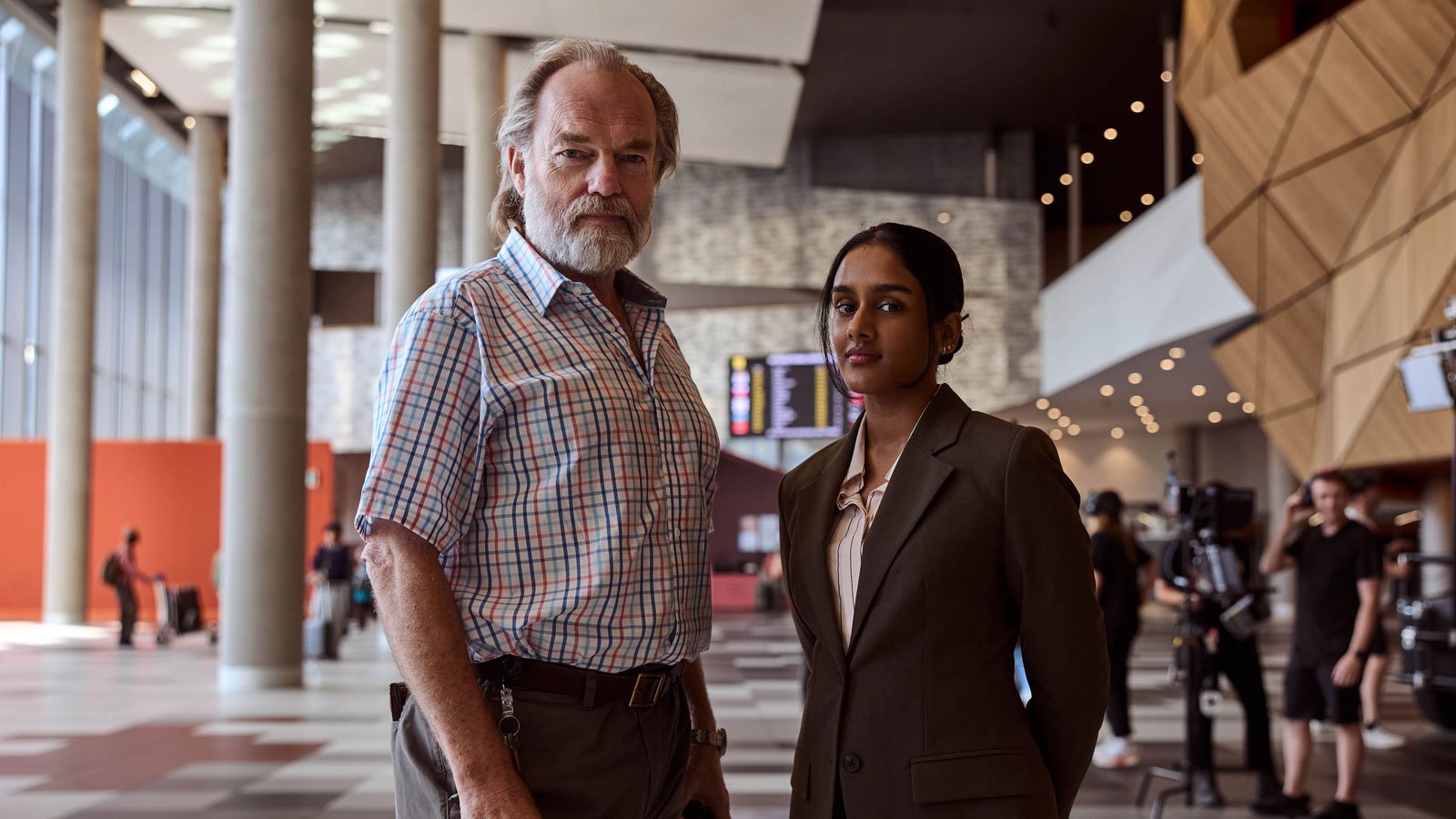
Directed by Bonnie Moir, with an all star Australian cast led by Hugo Weaving and Shabana Azeez, alongside Claudia Karvan and Thomas Weatherall, the three-part SBS series follows a rule bending airport chaplain who oversteps every boundary going to help the passengers and workers who cross his path. The tactic comes much to the frustration of an ambitious new terminal manager keen to have him gone. It’s written by award winning screenwriter Elise McCredie (Stateless), co-created with producer Jude Troy, and inspired by Troy’s own encounter with Melbourne Airport’s real life chaplain.

La Bola Negra, directed by Javier Calvo and Javier Ambrossi

A story told through three gay men across three different eras (1932, 1937 and 2017), whose desires and fates intertwine, all orbiting one of Federico García Lorca’s last, unfinished works. Javier Calvo and Javier Ambrossi (the duo behind Paquita Salas, known in Spain as Los Javis) share the Cannes award for best director for this one. It stars Spanish singer-songwriter Guitarricadelafuente in his acting debut, alongside Miguel Bernardeau and Carlos González, with Penélope Cruz and Glenn Close rounding out the cast in supporting roles.


The Only Living Pickpocket in New York, directed by Noah Segan

When John Turturro is the lead, not much can go wrong. In actor turned director Noah Segan’s Sundance premiered feature, an ageing career pickpocket who’s been working the subways and streets of New York since the ’80s gets tangled up in a theft gone very wrong, forcing him into a race across the city to fix his mistake before it costs him everything, including the ability to keep caring for his ailing wife. The cast is stacked enough to make any film lover blush (myself included): Steve Buscemi, Giancarlo Esposito, Tatiana Maslany, Jamie Lee Curtis and Will Price all circle Turturro’s performance, which reviewers out of Sundance and Berlin have called one of the best of his career.


Coward, directed by Lukas Dhont

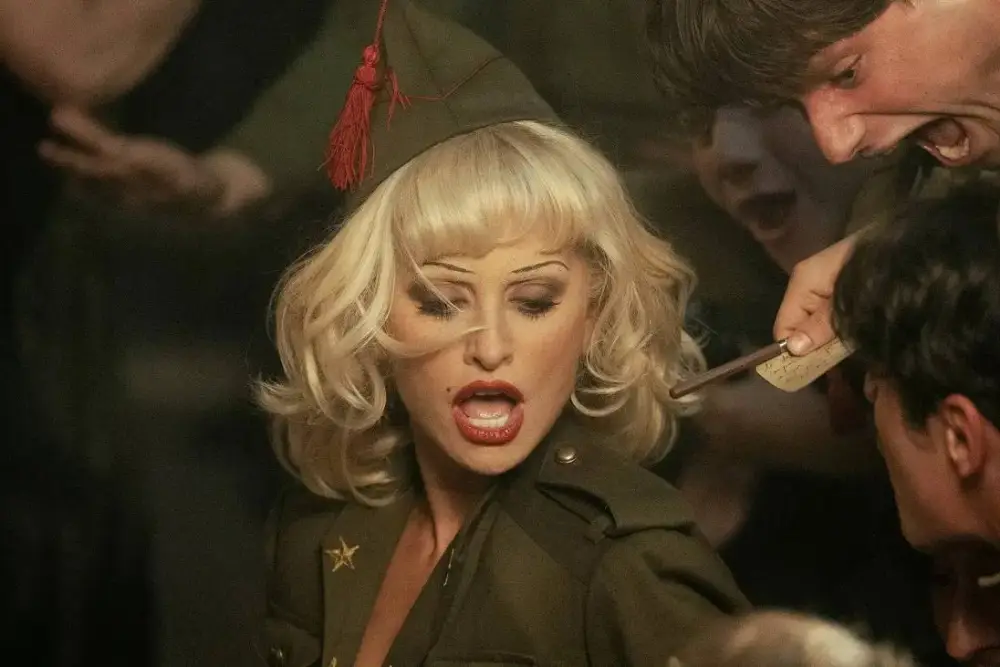
Belgian filmmaker Lukas Dhont follows his Oscar nominated Close with Coward, a First World War set drama that played in Cannes competition this year to a lengthy standing ovation. Cannes director Thierry Frémaux called it a work of “pure cinema”, and Dhont has described it as a film about love and death, and about how something beautiful can grow even in the darkest moments. Inspired by archival photographs of soldiers staging cross-dressed theatrical shows behind the front lines, it follows two young conscripts, Pierre and Francis, whose relationship becomes an unlikely refuge from the brutality around them. It didn’t ultimately take home the Palme d’Or (that went to Cristian Mungiu’s Fjord), but it was one of the most talked about titles of this year’s festival.


All of a Sudden, directed by Ryusuke Hamaguchi

If you’ve seen Drive My Car, which won Best International Feature at the Academy Awards and took out prizes at Cannes in 2021, you already know Hamaguchi works in a very specific and drawn-out emotional register. His latest, All of a Sudden, is his French language debut, shot largely in Paris with some scenes in Kyoto, and stars Virginie Efira and Tao Okamoto, who shared the Best Actress prize at this year’s Cannes. Loosely based on the book When Life Suddenly Takes a Turn: Twenty Letters Between a Philosopher with Terminal Cancer and a Medical Anthropologist, it follows a French nursing home director trying to introduce a more humane model of aged care, and her growing friendship with a Japanese theatre director who is dying of cancer. The bridge between the two women, and between the film’s French and Japanese sensibilities, is Humanitude, a real care philosophy that puts the dignity of the patient at the centre of treatment.

Your next Read

MINI’s latest JCW range is as comprehensive as its ever been, since the performance-focused sub-brand …

There is a kind of uneasy recalibration that happens to a person when a pub …

Last weekend, I ended up at Golden Plains, a big shroomy music festival in Meredith. …

They speak to the soul, offering a connection to a culture that thrives on the …