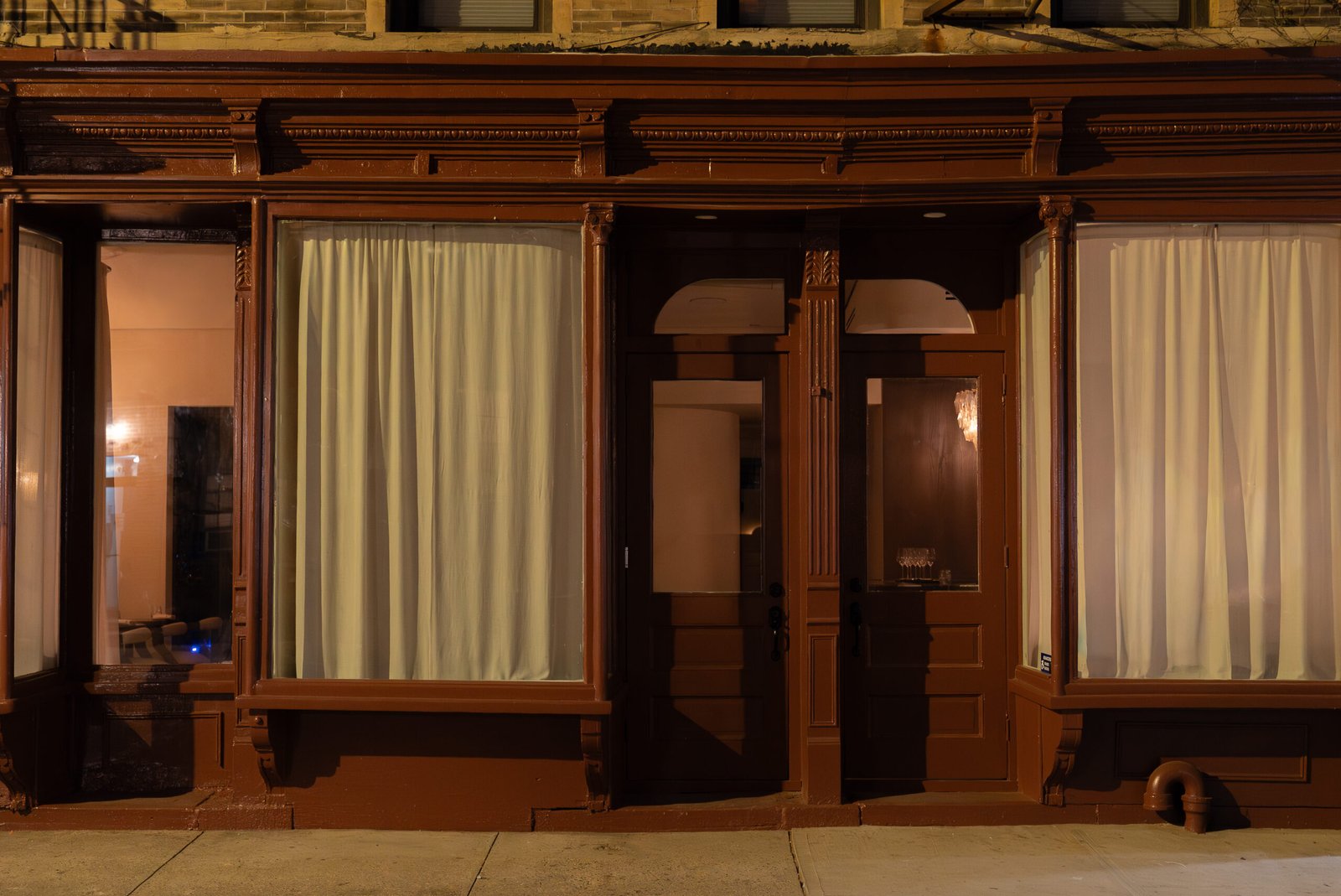
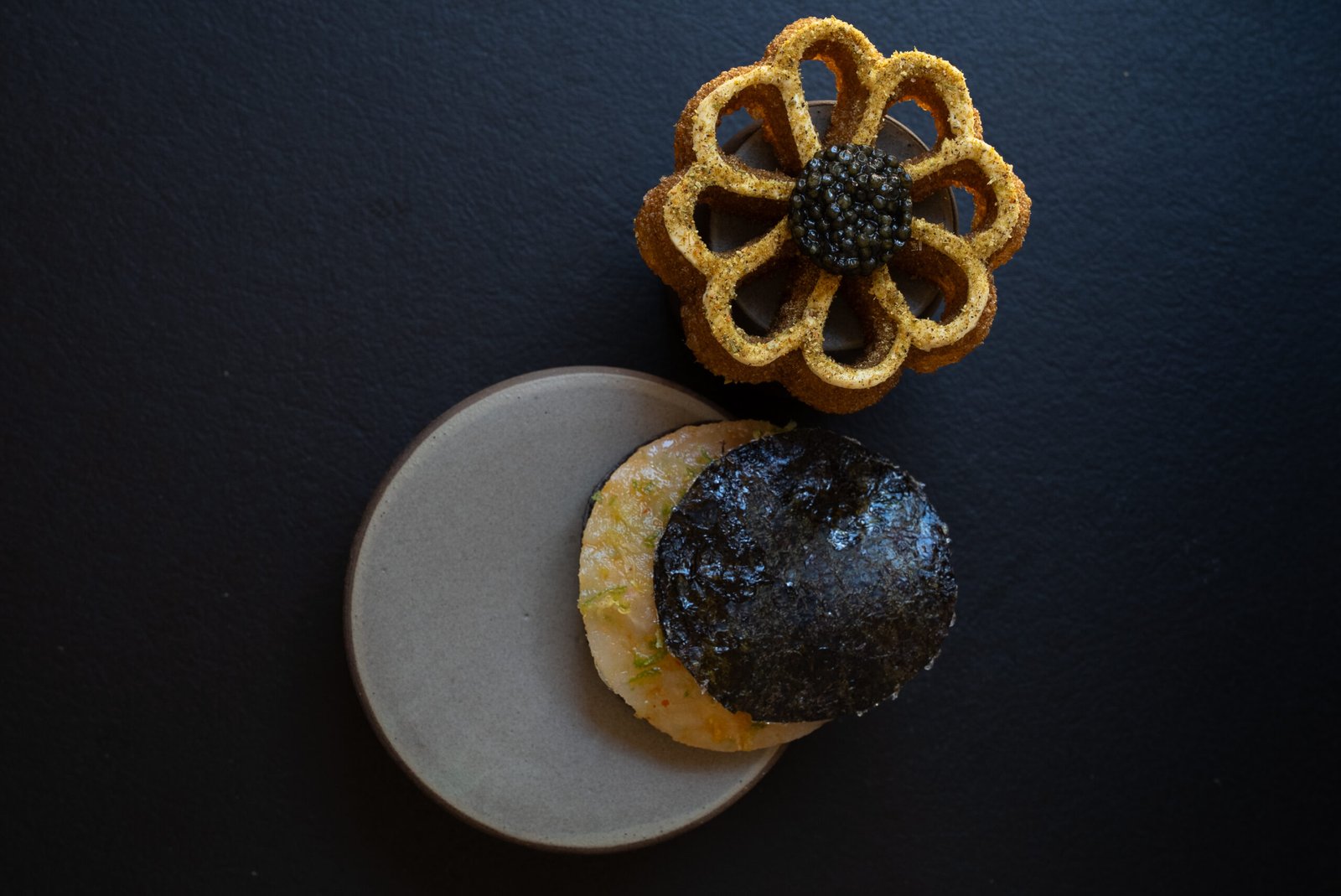
Today, on Jones Street in the West Village, the same cobble strip immortalised on the cover of Bob Dylan’s The Freewheelin’ Bob Dylan, Cardoso shares that childhood nostalgia at Cynthia. In a dimly lit dining room, the dish arrives as the introduction to a seven-course tasting menu, with, of course, a little more chutzpah than Cardoso was having with her family back in Brazil. “That first course is a corn custard with sheep’s milk foam on top and caviar,” she says.
The restaurant is built around sustainability while embracing the highest potential of dining. It’s a decision that could be easy to dismiss, given that restaurants everywhere now seem to champion whole-animal butchery, root-to-stem vegetables, and zero-waste cooking, while serving imported luxury ingredients on freshly pressed white tablecloths. The difference between the two is taking these ideas on as a marketing campaign vs’s treating them as simple common sense, the way Cardoso saw it growing up.
“That level of consciousness allows us to make these delicious dishes with very seasonal ingredients, without charging people $300. Because that’s not the goal. The goal is I want the guest to experience Cynthia.”
It’s a thoughtfulness that perhaps used to be more on trend than it is right now. In May, the Michelin Guide stopped giving out its Green Star, awarded to restaurants that meet environmental and ethical standards, a decision that caused a heap of backlash. The star had previously gone to the likes of Dan Barber’s Blue Hill at Stone Barns and Atelier Crenn in San Francisco. Chef Daniel Humm’s Eleven Madison Park, despite all the headlines it garnered for going plant-based in support of sustainability in June 2021, including former New York Times critic Pete Wells writing, “In tonight’s performance, the role of the duck will be played by a beet, doing things no root vegetable should be asked to do,” never received the Green Star. Perhaps that’s why the restaurant steered away from its plant-based menu and brought the duck back last October.
“I think the future of fine dining is not utilising more,” she says. “It’s being more thoughtful of how we utilise the ingredients. And that’s the missing piece that’s created this gap, right? Because when you think about the tasting menu, when you think about fine dining, you think about unapproachable. And that’s the mindset that we want to debunk. We want to make fine dining approachable. We want to make it affordable.”
In Minas Gerais, where Cardoso grew up, her love for food evolved in the heart of culinary Brazil, a cuisine built around dairy, beans, pork, corn and vegetables grown close to home. Pão de queijo, frango com quiabo, feijão tropeiro and doce de leite are common recipes shaped by the land, the seasons, and generations of families who make extraordinary meals from otherwise ordinary ingredients.
For Cardoso, who was raised by her single mother, food at this point wasn’t something she thought of as a career. It was an expression of affection. “Even though she wasn’t saying it, we knew that she had just got home from work and there she was standing in the kitchen cooking for us,” she says of her mother, who travelled between Brazil and the United States as a cleaner. “I think that was her way of expressing her love and care.”
At 14, Cardoso moved to New York with her family. She arrived with no English, facing a high school and a city that were both physically and culturally far from how she grew up.
“I had my mindset that I had to move to New York in order to seek a better life,” she says. “And I knew if I stayed in Brazil, my options were very limited.”
Like so many immigrants before her, she found belonging inside restaurants. Hospitality gave her a community built around the service of food and the same passion she learned from her mother. Today in the city, it’s clear how much that passion has shaped its culinary scene. Despite being vulnerable to the force of US politics and ICE’s reprisals across the country, the industry continues to rely heavily on immigrant labour, something Cardoso believes deserves far greater recognition.
“Later in my career, I want to start a nonprofit that helps undocumented workers, because they’re the ones that keep this industry alive,” she says.
She worked her way through New York’s most celebrated kitchens: Le Cirque, nearly four years at the three-Michelin-starred Per Se under Thomas Keller, then executive sous chef at Brooklyn Fare. This year, she expanded into TV as a runner-up on season 23 of Top Chef.