There are probably more sensible ways to spend a freezing Wednesday morning in Victoria than riding a 400cc motorcycle through intermittent sleet. But standing outside a Triumph pop-up on Brunswick Street in Fitzroy, surrounded by a slightly unusual collection of motorcycle journalists, content creators and a comedian, sensible didn’t seem particularly important.
The whole thing had already felt a little different from the usual motorcycle launch. Triumph had put us up at The Standard X around the corner, where the presentation and dinner the night before felt more like something you might expect from a design brand than the familiar routine of a motorcycle manufacturer. Afterwards we wandered down Brunswick Street to the pop-up, and by the following morning the formalities had largely disappeared. We were just a bunch of people trying to work out how many layers we could fit underneath motorcycle jackets before heading out of Melbourne for the day, and the motorcycles waiting for us seemed particularly well suited to the occasion.
The Tracker 400 and Thruxton 400 are the newest additions to Triumph’s rapidly expanding 400cc family, joining the Speed 400 and Scrambler 400 X and XC. If you were being cynical, you could look at the specifications and assume Triumph had simply found two more outfits for the same motorcycle. Both use the same 398cc single-cylinder engine, here given a revised camshaft, timing and engine tune that lifts peak power from 40 to 42PS and lets it spin another 1,000rpm. Both make the same 37.5Nm of torque, use six-speed gearboxes, ride-by-wire throttles and four-piston radial front brake calipers, and there are only three kilograms separating them on the scales. Yet parked together in Fitzroy, they already felt like very different propositions.
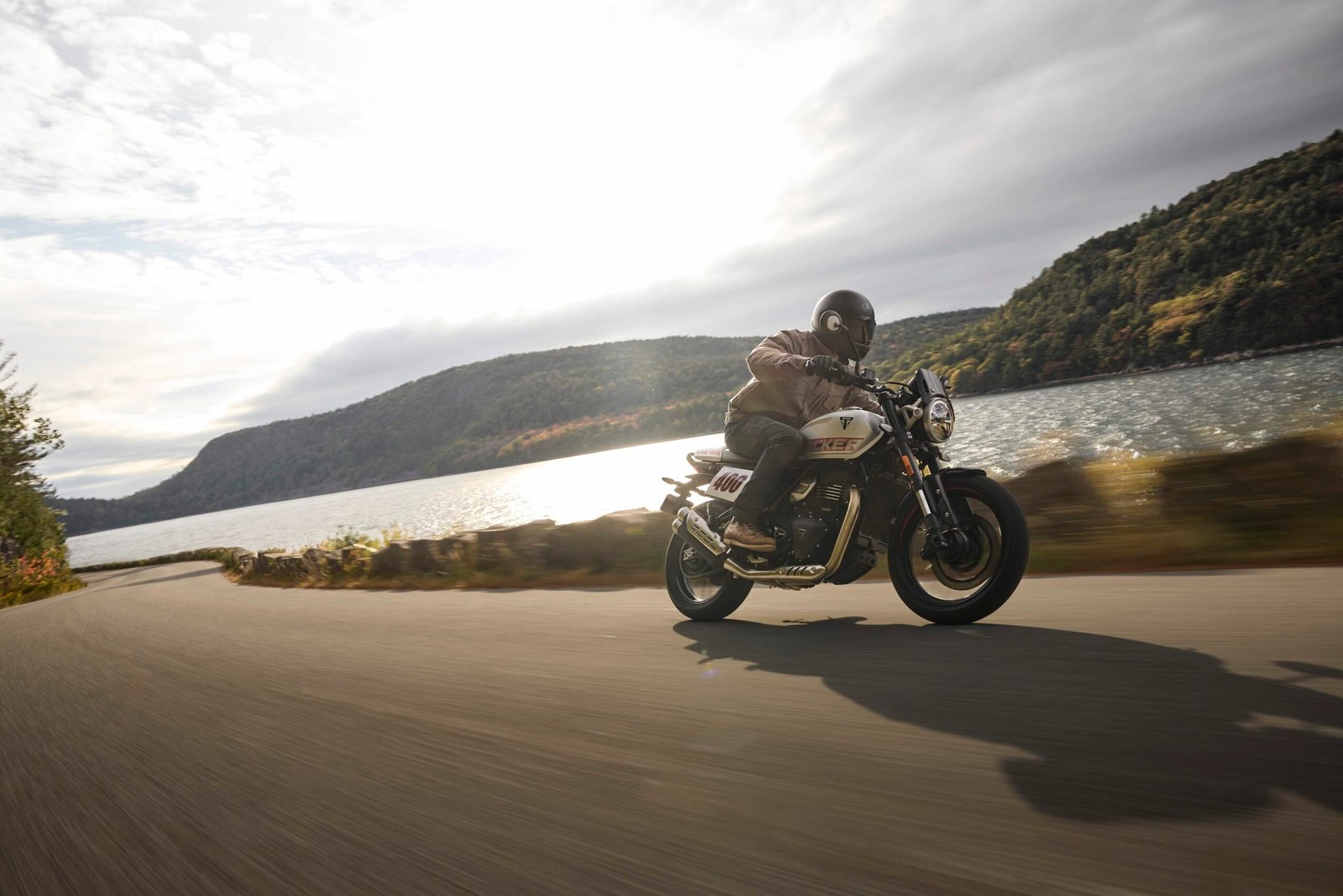
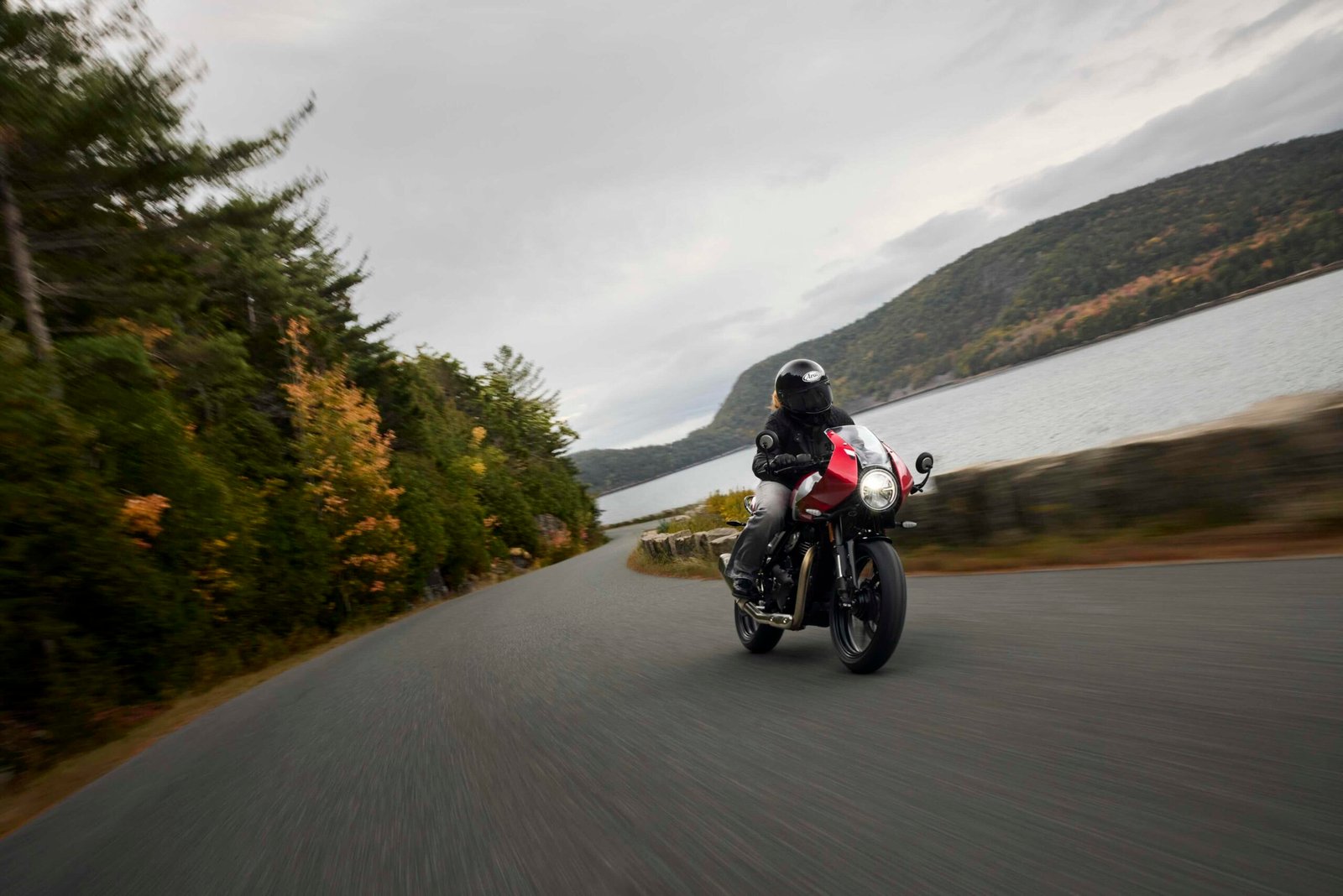
The Tracker is wide-barred, upright and covered in the sort of graphics that suggest someone in Triumph’s design department had been watching old American flat-track footage. The Thruxton sits lower and sleeker, with clip-ons, a little cockpit fairing, bar-end mirrors and enough café-racer theatre to make its $10,390 rideaway price seem slightly improbable.
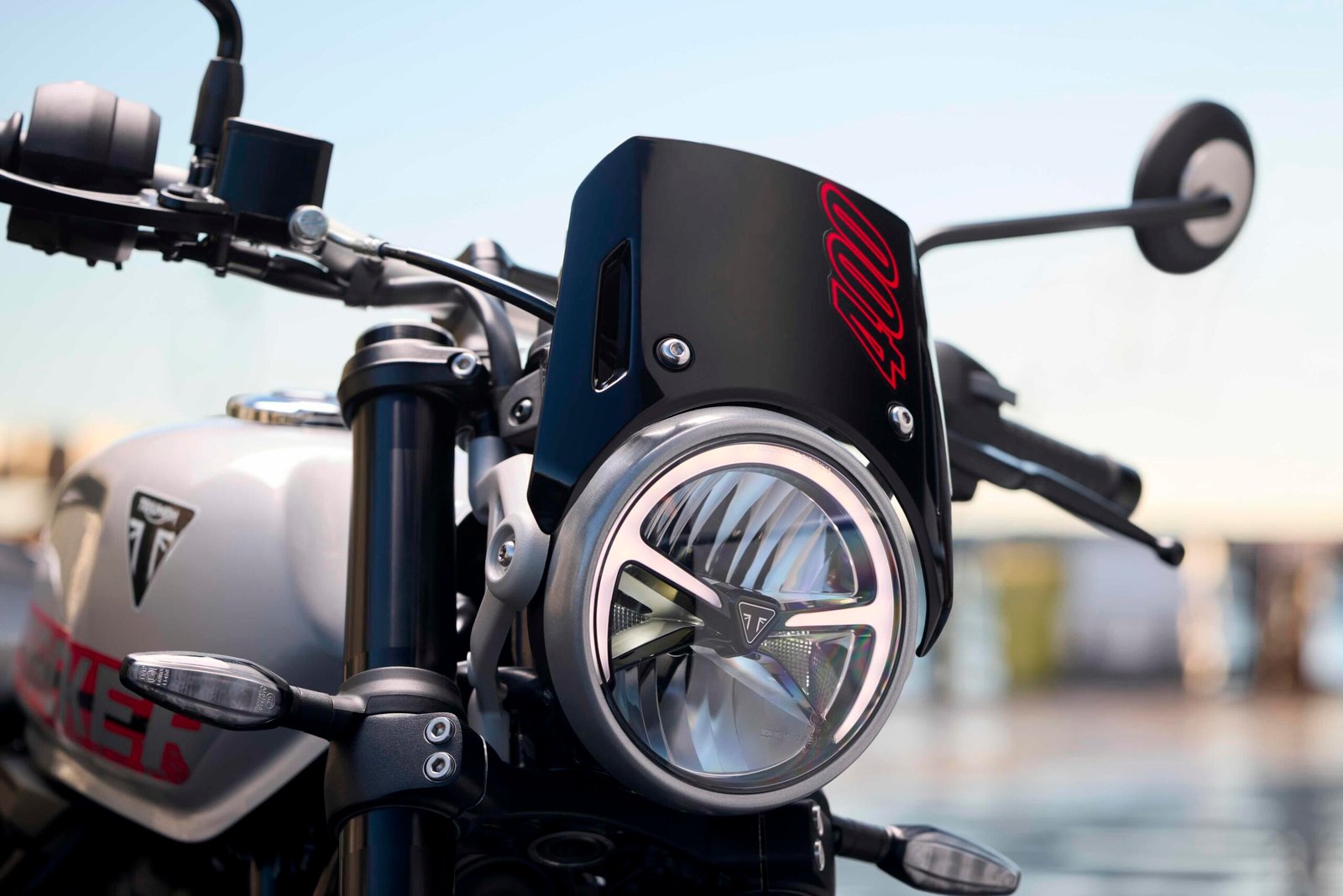
I started the day on the Tracker, and getting out of Melbourne gave me plenty of time to settle into it before the roads became interesting. The first thing I noticed wasn’t the extra two horsepower or revised engine tune, but simply how naturally I fitted on the thing. At 190cm, smaller motorcycles can sometimes make me feel as though I’ve accidentally borrowed somebody else’s bike, but the Tracker never did. The bars are broad, the riding position upright and the footpegs sit far enough rearward to keep you involved without folding your legs into an uncomfortable shape. Triumph talks about an “elbows out” riding position borrowed from flat track, which sounds slightly theatrical in a presentation, but on the road it translates into something much simpler: you feel relaxed, in control and ready to throw the bike around a little.
That position suits the Tracker’s personality because there is an element of larrikin about the whole thing. The number boards, flyscreen, blocky Pirelli MT60 RS tyres and mud-splatter graphics could very easily have crossed the line into trying too hard, but the whole package feels sufficiently tongue-in-cheek that it gets away with it. Neither of these motorcycles seems particularly interested in historical reenactment. They borrow heavily from familiar motorcycle archetypes, but there is enough humour in the execution that they land somewhere between homage and hysterical without tumbling into either.
As Melbourne gradually gave way to more open roads, the Tracker became increasingly difficult to fault as an everyday motorcycle. It was happy trickling through traffic, happy sitting at road speeds and happier again once there were corners to play with. Within Triumph’s existing 400 range, it feels like it lands somewhere between the Speed and Scrambler, taking some of the upright control and visual attitude of the latter without going as far down the adventure-bike path. If anything, it might be the most pragmatic of the lot.
The weather was doing its best to test that theory. What began as a cold Victorian morning became the sort of day where patches of sleet periodically appeared and you started wondering whether your gloves were actually waterproof or merely something the manufacturer had suggested in the marketing copy. But there is something about a small motorcycle that makes miserable weather slightly less miserable. The Tracker was light and unintimidating beneath me, the controls were easy, the throttle mapping crisp, and there was never much mental bandwidth being spent managing the motorcycle itself. I could concentrate on the road, the weather and the increasingly questionable decision to leave the hotel that morning.
It also became a useful reminder that 42 horsepower can be plenty. Triumph has deliberately moved the character of this latest version of the TR-series engine further up the rev range, with peak power now arriving at 9,000rpm and peak torque at 7,500rpm. Compared with the Scrambler 400s I’ve ridden previously, there is a slightly peakier feeling as you chase the engine towards the top, encouraging you to keep winding it out, although once you’re there the single-cylinder engine is also vibrating enthusiastically enough to make sure you know about it.
On paper, that might sound like a criticism, but on the road it contributes to what I can only describe as fast drama. The engine gets busier, the sound becomes more urgent, vibrations start working their way through the motorcycle and the relatively small chassis makes everything feel as though it is happening with considerable intensity. You can be using a meaningful amount of what the engine has to offer without travelling at a speed that immediately turns a pleasant Wednesday into a conversation with Victoria Police.