Ferrari Amalfi

A Different Kind of Romance

Black

Ferrari Amalfi: A Different Kind of Romance

15 September, 2026

Words by:

Justin Jackie

Elegant, playful and far more resolved than the Roma, the Amalfi finds new ways to preserve the feeling Ferrari enthusiasts are always afraid of losing.

At 18 years old, I won a trip to Italy with Ferrari.

It came via RPM, the old Australian motorsport television show, with Vodafone and Ferrari sending two Australians to Maranello after what I remember being a classic 25-words-or-less competition. It was also my first trip to Europe, which would have made almost any itinerary feel significant. Instead, I arrived in Italy with a personal chauffeur and spent the next few days experiencing a version of Ferrari that, looking back now, feels almost comically difficult to improve upon as a European debut.

The Enzo was being built at the factory at the time. I remember seeing it there and thinking it looked completely futuristic, almost unrelated to the other cars around it. We toured the factory and were taken into Enzo Ferrari’s old office overlooking the Fiorano test track, preserved much as he had left it. The room even smelt the way you imagined Enzo Ferrari’s office should smell. Sitting at his desk, it was easy to picture him looking through the window at a car circulating below, noticing something he didn’t like and immediately picking up the phone to call an engineer.

At some point Rubens Barrichello arrived by helicopter to say hello. As glamorous as that sounds, my suspicion now is that meeting him had been written into the competition somewhere and the reigning Ferrari Formula 1 driver had a contractual obligation to briefly materialise in front of two Australians before getting on with his day. Whatever the reason, when you’re 18, and Rubens Barrichello descends from the sky at Maranello, you don’t spend too much time questioning the logistics.

Then there was Fiorano. Ferrari’s Formula 1 test driver at the time was a 22-year-old Felipe Massa, several years before he would graduate to the race team and come within a point of winning a world championship. For reasons that still seem slightly absurd, Massa was tasked with driving me around Ferrari’s private test track in a 360 Challenge Stradale. Of all the details from that lap, the thing I remember most clearly is the sound. That V8, stripped of much of the insulation and civility of the regular 360, seemed to occupy every available space inside the car. More than 20 years later, hearing a Challenge Stradale still takes me somewhere very specific.

The whole trip was surreal enough at the time, although I don’t think an 18-year-old could have had much perspective on quite how surreal it was. I still have the Ferrari race suit and helmet from the trip, and seeing a 360 or an Enzo today feels different because I don’t really encounter either of them as an old Ferrari. I remember when they were new. I remember staring at an Enzo being assembled in Maranello and thinking it looked like something from the future, because at the time it was.

Eventually I flew home to regional New South Wales, where Prime News Tamworth came out to interview me about the trip, which is possibly the only logical way such a story could end. Somewhere around then, I also remember excitedly telling a relative about being driven around Fiorano in the Challenge Stradale, only for them to turn their nose up at the car.

It wasn’t a manual.

I can’t remember who said it, which might make the memory even better. I just remember being amazed that someone could hear the preceding story and locate the flaw. Ferrari had flown an 18-year-old kid halfway around the world, put him in a Challenge Stradale with Felipe Massa at Fiorano, and somehow the missing clutch pedal had rendered the experience slightly suspect.

It has stuck with me because very few companies inspire such specific opinions about what their products are supposed to be. There are Porsche people who think a 911 should be air-cooled and BMW people convinced everything went downhill after a particular generation of M3, but Ferrari seems to invite an especially rigid form of nostalgia. Ask enough enthusiasts to describe a proper Ferrari, and eventually you’ll assemble a familiar list: naturally aspirated, preferably twelve cylinders, manual gearbox, Pininfarina, hydraulic steering, perhaps pop-up headlights if the person is of a certain age. Everyone seems to carry around their own recipe.

The strange part is that Ferrari itself has never followed one for very long. The ingredients we now think of as essential arrived and disappeared at different times, while some of the cars regarded as sacred today were criticised for precisely the same reasons newer ones are. What we often describe as the definitive Ferrari is really the Ferrari that caught us at the right age.

All of which was rattling around in my head on a crisp morning in Bowral, more than two decades after that first trip to Maranello, as I climbed into the new Ferrari Amalfi.

There is, as the kids might say, an aura to driving a Ferrari. Perhaps that is an embarrassing thing for a grown man who has driven plenty of expensive cars to admit, but pretending otherwise seems sillier. Even before moving, there is something about seeing that badge at the centre of the steering wheel and knowing the long bonnet stretching away in front of you belongs, temporarily at least, to the car you’re about to drive. Ferrari carries an enormous amount of cultural baggage, but some baggage is quite enjoyable to carry.

The Amalfi replaces the Roma and occupies broadly the same place in Ferrari’s universe: front-engined, rear-wheel drive, nominally capable of carrying more than two people and pitched more towards grand touring than the company’s harder-edged sports cars. The Roma was therefore my obvious reference point, and I liked that car for many of the same reasons I liked the Amalfi almost immediately. Both resist the temptation to communicate performance by shouting about it.

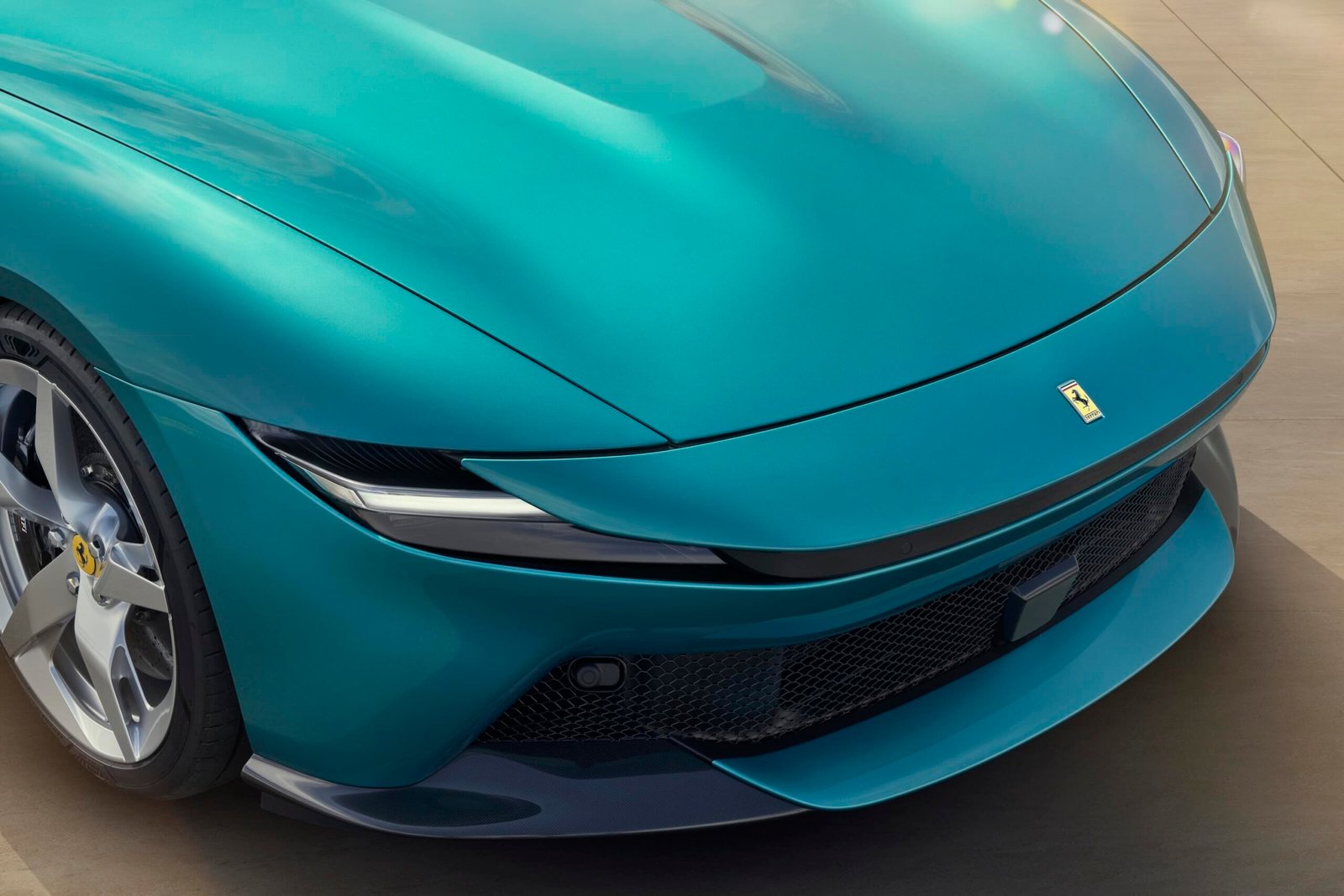
Where the Amalfi moves things on significantly is in its design. Modern Ferraris have rarely struggled for visual impact, but impact and beauty aren’t necessarily the same thing. The Amalfi feels like a return to something more romantic, not by reaching into the catalogue for retro details, but through proportion, restraint and the simple pleasure of a long bonnet, a cabin sitting rearward in the body and surfaces that don’t appear desperate to explain what they are doing. There are echoes of the great front-engined Ferraris of the past without the car ever looking backwards.
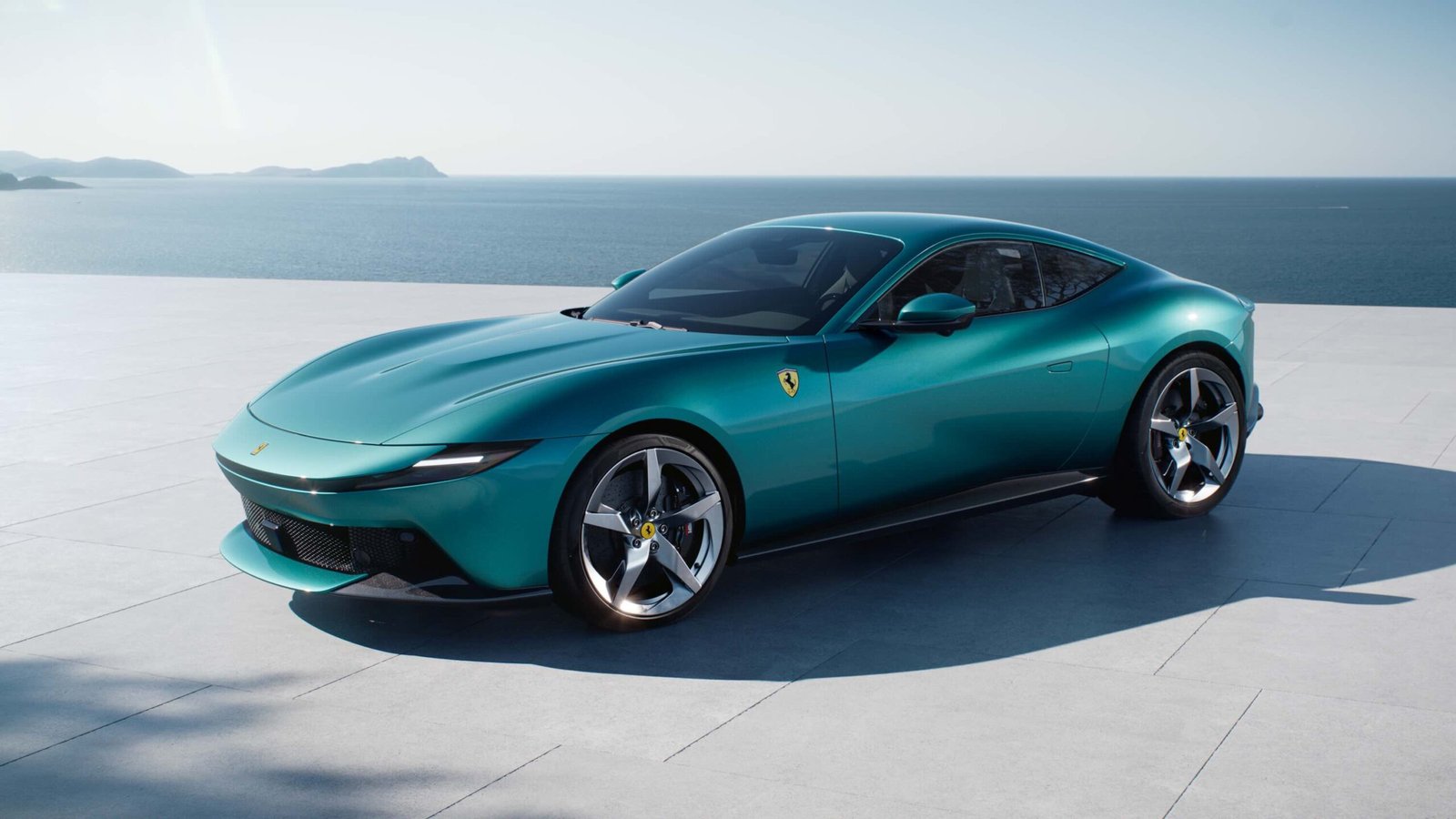
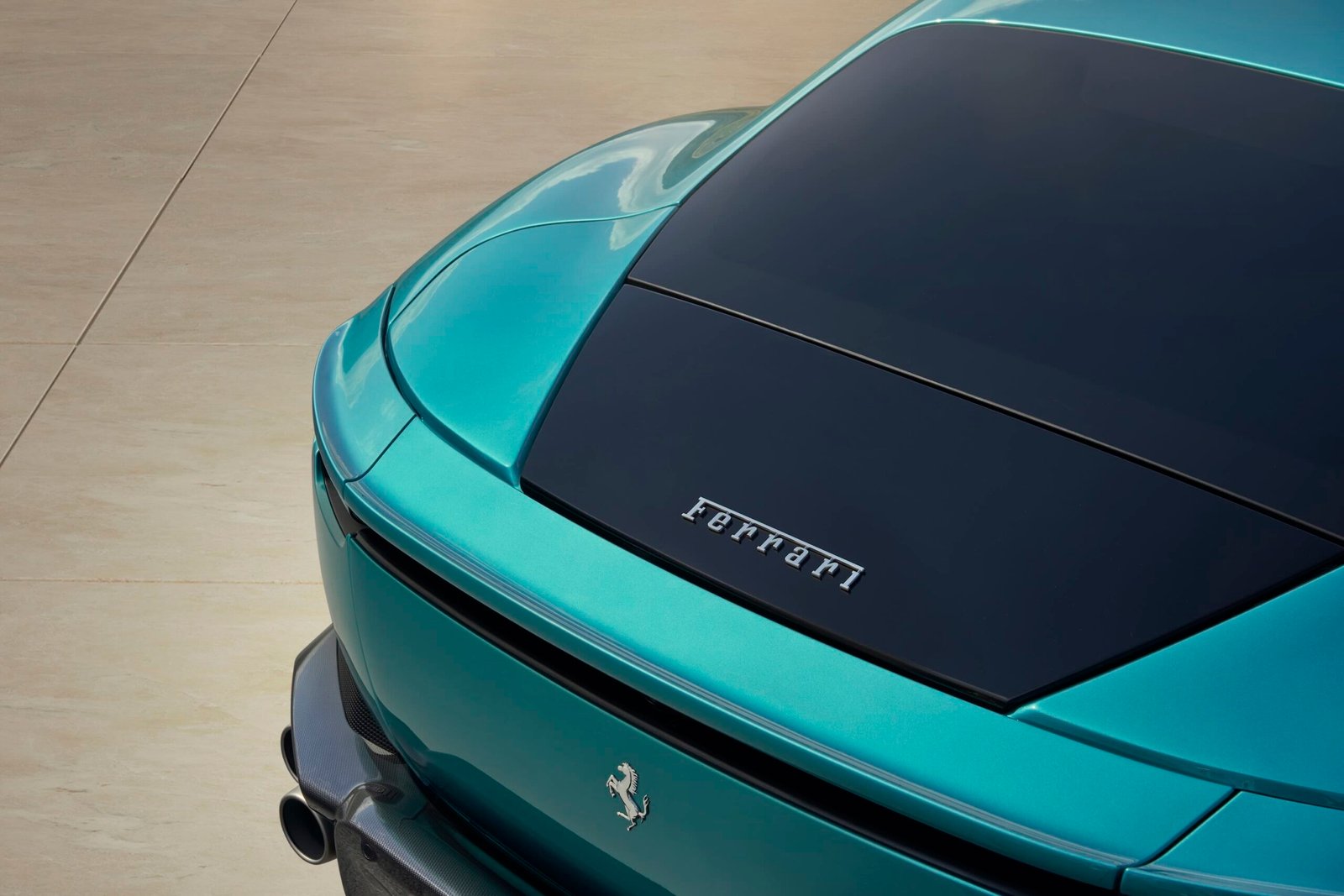
That distinction matters. There are cars that make a statement because they are impossible to ignore, and then there are cars that you simply find beautiful. To my eyes, the Amalfi belongs much more comfortably in the latter group. It doesn’t need a collection of vents, slashes or aerodynamic theatre to remind you of what it is. The nose is cleaner than the Roma’s, the body sides are remarkably free of clutter, and the tail feels resolved rather than decorated. For all the complexity that must exist underneath, the result has an ease to it that feels increasingly rare.

Modern cars have become extraordinarily difficult objects to make look this simple. Aerodynamics, cooling, cameras, sensors, crash structures and pedestrian-impact requirements are all competing for space on the same piece of bodywork, and it is increasingly common for even very expensive cars to look less like a single resolved object than a collection of answers to problems. The Amalfi doesn’t. It manages to accommodate all of those demands while still possessing the sort of shape that makes you want to walk around it for reasons that have very little to do with engineering.

There was an Amalfi Spider sitting statically at Milton Park as well, and if anything, the open car made the point more clearly. With the roof removed, the simplicity of the proportions becomes even more apparent, and the whole thing takes on an almost old-fashioned glamour without resorting to anything obviously nostalgic. I didn’t drive it, so there isn’t much more to say about the Spider dynamically, but visually it was difficult not to imagine that this might be the version in which the Amalfi’s more romantic side makes the most sense.

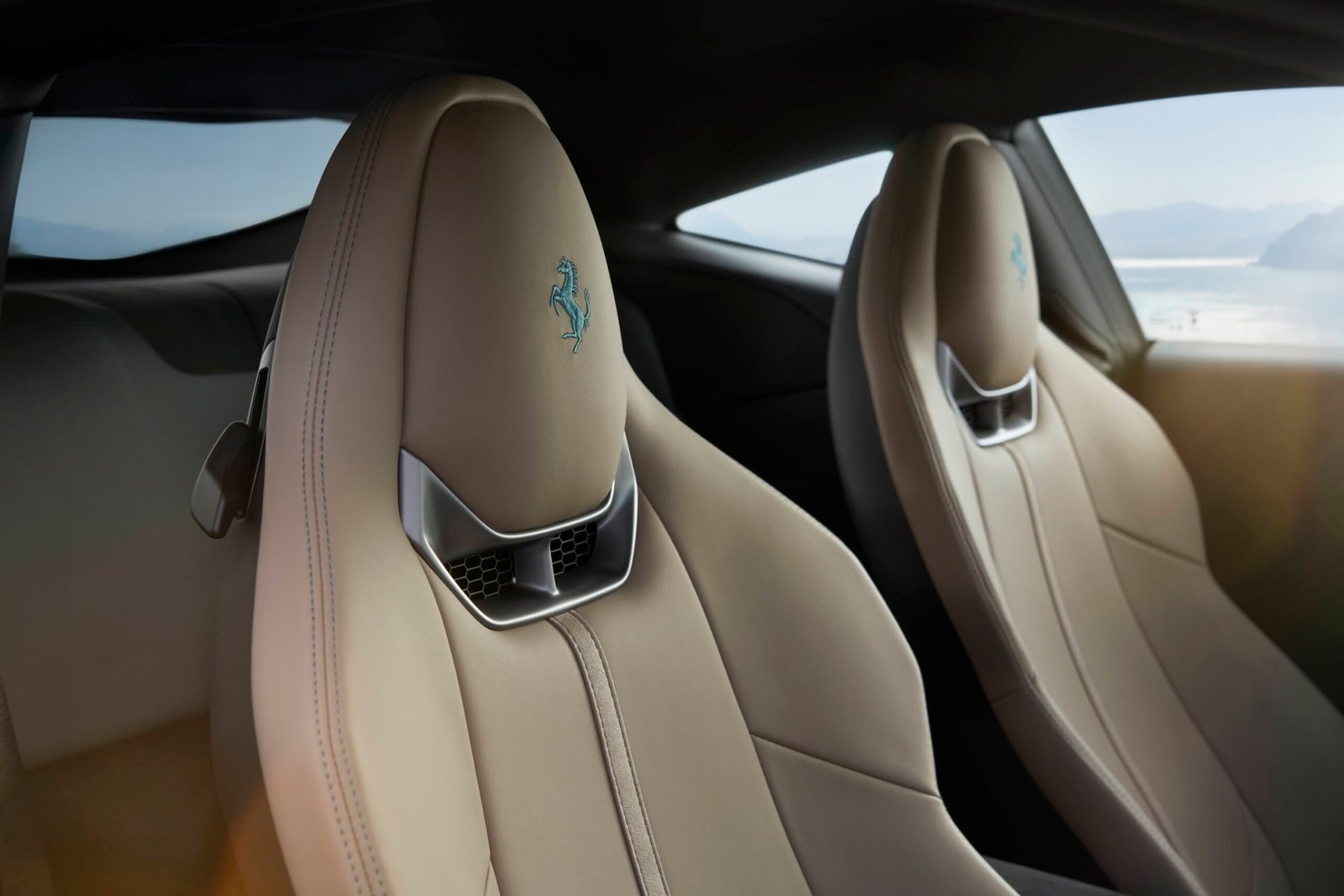
The interior represents an even more meaningful improvement over the Roma for me. I always struggled with the Roma’s cabin, particularly its reliance on touch-sensitive steering-wheel controls. They looked suitably futuristic when the car appeared, but in use I never found them especially intuitive. Too many basic interactions required more thought, attention or precision than they should have, which seemed an odd trade-off in a car supposedly designed around the relationship between driver and machine.

The Amalfi fixes much of that. Proper physical switches, buttons and rotary controls have returned to the steering wheel, along with a proper aluminium start button, and the difference is immediately apparent. You don’t need to admire them as an exercise in nostalgia; they’re simply better tools for the job. Your fingers can find them, there is a physical response when you use them, and the operation becomes instinctive in a way a glossy capacitive surface rarely manages. In a car capable of travelling this quickly, not needing to look down to confirm whether your steering wheel has understood your thumb feels less like an aesthetic preference and more like common sense.
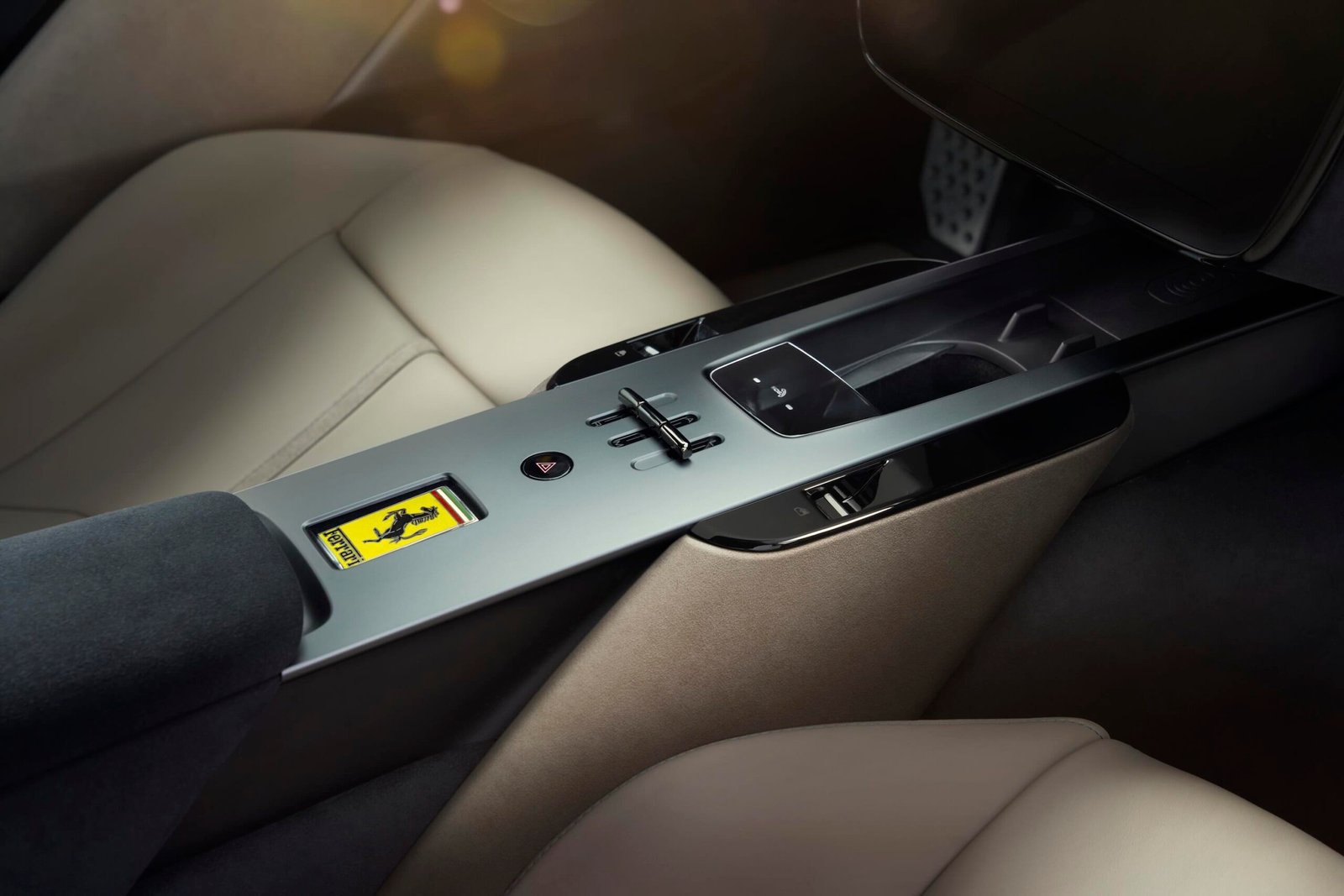
More broadly, the cockpit just feels finished. Nothing creaked in the car I drove, nothing felt like an afterthought, and there wasn’t the sense, increasingly common in modern interiors, that hardware and software teams had developed their parts of the cabin on different continents before meeting for the first time at launch. Even the rear seats fulfil their traditional role in this genre perfectly, which is to exist primarily so Ferrari can describe the car as something more than a two-seater. Any adult placed back there for more than a short trip may begin reassessing the friendship.

It was somewhere around this point that I remembered another idea, this one via Stephen Fry. Fry has previously recalled a line attributed to W.H. Auden about not wanting to be rid of his demons for fear that his angels might leave with them. I like the thought because it describes a tension that extends well beyond whatever Auden originally had in mind. When you remove the difficult parts of something, are you always certain you haven’t removed part of what made it interesting too?

Cars provide plenty of examples. Heavy steering, awkward pedal boxes, engines that don’t properly wake up until the top third of the tachometer, manual gearboxes that punish a lazy shift and cabins that make no attempt to disguise the fact that comfort was quite far down the priority list. These are all things engineers have spent decades solving, for very good reasons. Yet listen to enthusiasts talk about older cars and we routinely hear those same inconveniences repackaged as character.

The manual gearbox is perhaps the most obvious casualty. I understand why people miss it. There is an involvement in coordinating your own shift that even the best paddles cannot recreate, and few tiny victories in motoring are as satisfying as getting a difficult downshift exactly right. But I have always struggled with the idea that the arrival of a better technical solution automatically means the experience has become worse. I apparently felt the same way at 18, given that Ferrari could have fitted three pedals to the Challenge Stradale and I doubt the lap would have occupied any more space in my memory than it already does.

The Amalfi’s gearbox only strengthens that argument. It is fantastic. Around town or while flowing down a faster section of road, it can largely disappear, but start leaning on the car and the shifts become part of the entertainment, responding quickly enough that the paddles feel less like an instruction sent to a computer and more like a direct part of the process. There are things a manual would give you that this doesn’t, but there are also things this gearbox can do that a manual never could. Both statements can be true.

The same applies to the brakes. Brake-by-wire is the sort of phrase that tends to appear near the top of the charge sheet whenever someone wants to explain what has gone wrong with modern performance cars. In theory, another physical connection between driver and machine has disappeared. From behind the wheel, I simply found myself impressed by how good the pedal felt. Firm, progressive and easy to judge, it gave me no reason to spend the drive worrying about what did or didn’t mechanically connect my foot to the callipers.

By now we were into the roads around the Southern Highlands, the weather crisp but clear and the Amalfi starting to reveal the part of its personality that surprised me most. This is still a GT in my mind rather than a sports car, and it feels comfortable playing that role. You can settle into it, leave the gearbox to its own devices and cover ground without the car constantly demanding that you perform for it. The ride has enough compliance, the cabin is civilised, and the whole thing feels much happier simply travelling than its badge and performance might suggest.

Our route was also littered with slower, hooked corners, the sort that bring you down to a speed where the consequences are sensible enough to start asking a little more of a chassis. Turn in, add some steering, begin feeding the power back in and the Amalfi becomes unexpectedly playful. There is enough movement at the rear to feel what the car is doing beneath you, enough power to alter its attitude and enough accuracy through the front that you can start joining those inputs together. It doesn’t feel like a car trying to prevent you from discovering the limits of its enormous processing power. It feels like something willing to dance.

That was probably the biggest surprise of the morning. We have become accustomed to performance cars with such extraordinary levels of grip, power and electronic supervision that the only place to properly access their personality is often at a circuit or at speeds that make public roads the wrong environment entirely. The Amalfi still has vastly more performance than anyone needs on a road, but those slower corners gave glimpses of something more approachable. You could make the chassis work without first needing to make the scenery blurry.

The steering helps. Ferrari steering has long been quick, sometimes to the point that the first few corners require a recalibration of your hands, and the Amalfi is no different. Once you’ve adjusted, however, there is a satisfying precision to the front end and an immediacy that suits the playful rear. The car never entirely disguises its size, nor should it, but on those tighter sections it feels smaller and more alert than its grand touring brief might suggest.

If there was one thing I wanted more of, it was noise. In Sport, particularly, the Amalfi can feel almost too polite. That might be a strange criticism of a car capable of covering ground at the rate this one can, but noise has always been an important part of Ferrari’s theatre, and there were moments where the chassis and gearbox were encouraging a level of mischief that the soundtrack didn’t quite match. I didn’t need it to be antisocial, but another few decibels and a little more texture would have been welcome. Perhaps that is one demon Ferrari could afford to invite back in.

It also gets to the more interesting problem with declaring progress either entirely good or entirely bad. The Amalfi is easier to drive than the Ferraris many people grew up idolising. It is more refined, more usable and supported by layers of electronics that Enzo Ferrari could hardly have imagined while sitting at that desk overlooking Fiorano. You can crawl through traffic in it. You can let the gearbox shift itself. The steering is electrically assisted, the brakes operate by wire, and computers are continuously interpreting what the car and driver are doing.

If your definition of involvement is simply the number of mechanical tasks a driver must perform, then yes, something has been lost. But spend a morning with the Amalfi, and it becomes difficult to argue that the result is devoid of interaction. The satisfaction is simply appearing in different places. It is in the accuracy of the steering, the progression of the brake pedal, the immediacy of the gearbox and, most of all, the way the chassis responds when you start combining those things through a corner. Ferrari has removed plenty of old complications, but it hasn’t removed your ability to influence what the car is doing.

This is why arguments about what constitutes a real Ferrari eventually become impossible to resolve. Judge the Amalfi against a 550 Maranello, and it is missing cylinders and a clutch pedal. Put it beside a 360 Challenge Stradale, and it is heavier, quieter, more luxurious and considerably more interested in making your life easy. Go further back and almost every major system in the Amalfi would appear to represent the end of civilisation.

Yet Ferrari has spent its entire existence changing. Carburettors gave way to fuel injection. Drum brakes disappeared. Power steering arrived. Manuals became automated manuals and then dual-clutch gearboxes. Turbocharging appeared, disappeared and returned. Electronic systems became progressively more involved as power outputs climbed from merely fast to faintly ridiculous. Some of those changes undoubtedly made Ferraris better, and others may have taken something away, but the idea that there was a moment when the recipe became perfect and should thereafter have been frozen in place says more about us than it does about Ferrari.

The challenge today is particularly complicated. A modern Ferrari has to exist inside a labyrinth of emissions targets, crash regulations, pedestrian protection, noise restrictions, connectivity, usability and customer expectations that simply didn’t exist for many of the cars now held up as examples of a purer age. It has to be spectacular enough to feel like a Ferrari while also functioning as an actual car for someone spending a very large amount of money. The Amalfi even has back seats, technically.

That Ferrari has managed all of this while producing a car that feels so cohesive is probably its greatest achievement. The styling, interior, gearbox, steering, brakes and chassis don’t feel like individual technologies competing for your attention. They feel like parts of the same idea. And after a morning driving it around Bowral, my strongest memories weren’t of menus, drive systems or performance figures. They were of the low-speed corners where the rear began to move, the way the steering let me catch and shape that movement, and the feeling of looking through the windscreen and remembering, however briefly, that I was driving a Ferrari.

That aura matters. Not because a badge can rescue a bad car, and certainly not because Ferrari has always got everything right, but because emotion has always been part of the transaction here. Nobody needs a Ferrari. At some point, arguments over cylinders, gearboxes and steering systems have to confront the rather inconvenient fact that these cars exist largely to make their drivers feel something.

At 18, I understood that without needing to think about it very much. I had just travelled to Europe for the first time, watched Enzos being built in Maranello, sat at Enzo Ferrari’s desk, seen Rubens Barrichello arrive by helicopter and listened to a 360 Challenge Stradale howl around Fiorano with Felipe Massa at the wheel. Someone could tell me afterwards that the car would have been better with a manual, but they couldn’t retrospectively make the experience any less extraordinary.

More than two decades later, the ingredients have changed again. The Amalfi is quieter, easier, more comfortable and more electronically mediated than the Ferraris I grew up obsessing over, but it may also be one of the more classically beautiful shapes to come out of Maranello in some time. I would happily give it a little more noise, and I wouldn’t volunteer to sit in the back, but neither feels like much of an indictment. On a good road, there is a wonderfully playful car hiding beneath that elegant GT exterior, and the fact that Ferrari has found room for that character among everything else a modern car is now required to do feels significant.

There probably isn’t an objective formula for a Ferrari, because there never was. Different ingredients will matter more or less to different people, and the recipe will continue to change whether enthusiasts approve of it or not. The more useful question is whether, after all the compromises, regulations and technical progress, enough of what mattered survives.

Some of the demons have inevitably gone. After a morning in the Amalfi, I’m fairly sure the angels are still there.

Your next Read

As Melbourne settles into its chilling stretch of winter, the Melbourne International Film Festival rolls …

If you’ve ever spotted a faceless surfer god riding a cosmic wave on a t-shirt, …

MINI’s latest JCW range is as comprehensive as its ever been, since the performance-focused sub-brand …

I came across it the way you come across most things worth knowing about: by …