Ode To The Past

The RS 3 Is The End Of An Era

Black

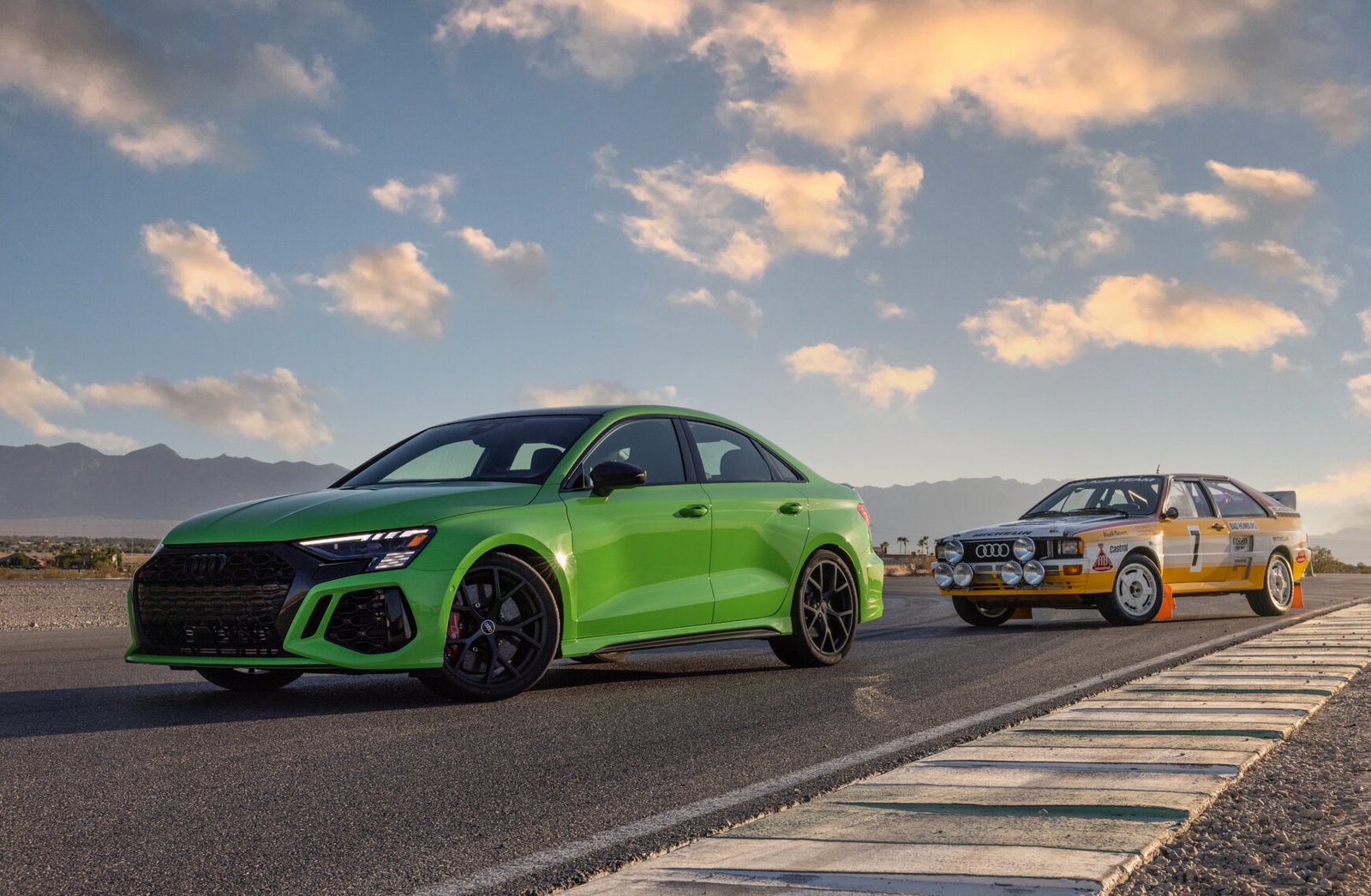
The Audi RS3 Is An Ode To The Past

1 November, 2026

Words by:

Cobey Bartels

Audi’s baby RS car has avoided hybridisation (for now) and is more raucous today than ever before. It’s also the last chance you’ll have to experience the four-ringed brand’s iconic five-cylinder engine…

Sure, $110,000 is expensive for a compact sedan, sporty or otherwise. But the RS3 isn’t for people who buy on value, or logic, or any of the other normal metrics. Most who buy one of these will understand where it came from, as well as just how critically endangered it is in today’s world. It’s the heritage baked into the RS 3 that makes it special.

The slightly mad Audi Sport engineers in Ingolstadt have been perfecting their formula for a road-going rally car since the 1980s. It consists of this: a five-cylinder turbocharged engine, Quattro all-wheel drive, and a supercar-rivalling performance wrapped up in a relatively pedestrian package that could be – and very often was – daily driven. Early S/RS cars, like the S2 Coupe in 1990 or the RS 2 Avant that came a couple of years later, all had Audi’s famous five-cylinder engine. The unique configuration was debuted in the Audi 100 in 1976 but made famous by the Quattro of the early ‘80s, which was basically a road-going version of the legendary Group B Quattro S1. So, it’s a proven performer. It’s also one of the longest-standing engine lineages in automotive history, with Audi celebrating 50 years of the five-cylinder this year.
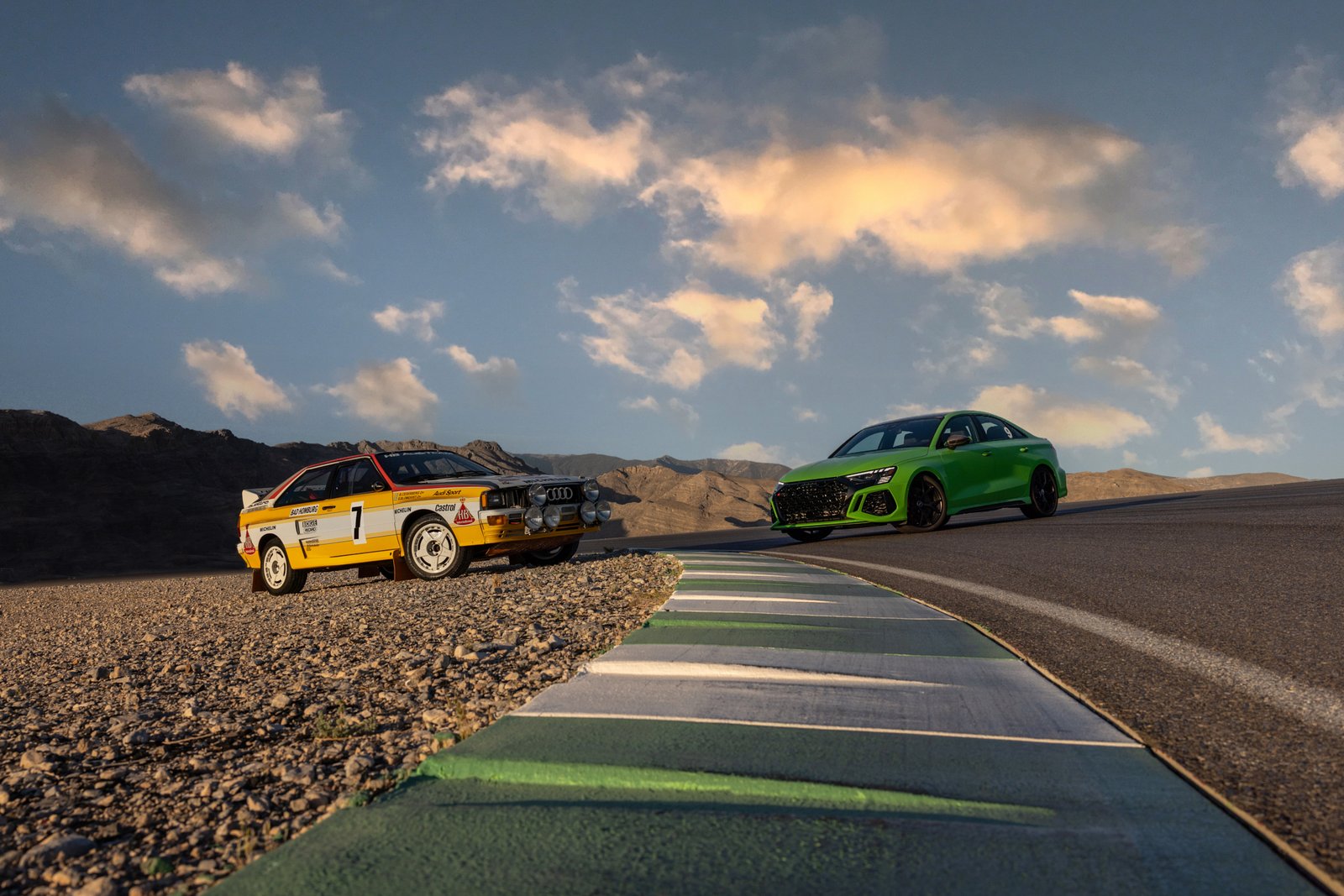
Of course, Audi’s performance models have had an array of engines since the RS 2 launched the Rennsport revolution in 1994. Alongside the five-cylinder have been V6s, V8s, even a V10, and most have been force-fed by turbochargers, as is the Audi way. The RS car is changing, though.

The new RS5 is a hybrid. I’m told by colleagues that the new system is very good, but that doesn’t mean it isn’t a drastic detour from what these models have long stood for. The fastest RS car now, the e-tron GT Performance, is fully electric, which is fine, but its Porsche Taycan Turbo S twin-under-the-skin is faster. Then there’s the RSQ8, which is outrageously fast, but it’s a hulking SUV, and its Lamborghini twin-under-the-skin is also faster. I understand that the new wave of hybrid and electric performance cars are faster than ever, use less fuel, and are probably just flat-out better. But I’d argue the RS 3 is the penultimate evolution of the RS car, based on what it set out to achieve when the RS 2 set the wheels in motion. Come to think of it, it’s probably the last evolutionary adaptation of the formula the original Quattro introduced.

So endangered is the RS 3, we’ll soon be one of the only countries to get it. It’s being pulled from the European market early next year because its brilliant five-cylinder engine falls short of updated emissions rules. Audi Australia has confirmed it’ll live on here until at least mid-2028, but that gives you a little over 12 months to buy one. It isn’t just special because of what it stands for, though. It’s very, very fast. Effortlessly fast, in the hands of almost anyone, skilled or otherwise. While its closest competitor, the BMW M2, is a scalpel that’s quick with a skilled driver at the helm, the little RS car turns anyone into a record-setting driver…almost.

When the current-generation RS 3 launched in 2024, it set the production car record around the Nurburgring, dispatching the treacherous 20km loop in 7:33.123. The only compact car that’s faster today is the M2 CS, which is effectively BMW’s track-focused M2 variant. That’s a $172,900 (before on-roads) car, mind, and I’d argue few drivers will wheel it like German racing driver and M Division test engineer Jörg Weidinger did when he set the record. Mortals like you or I will be far quicker in the RS car.
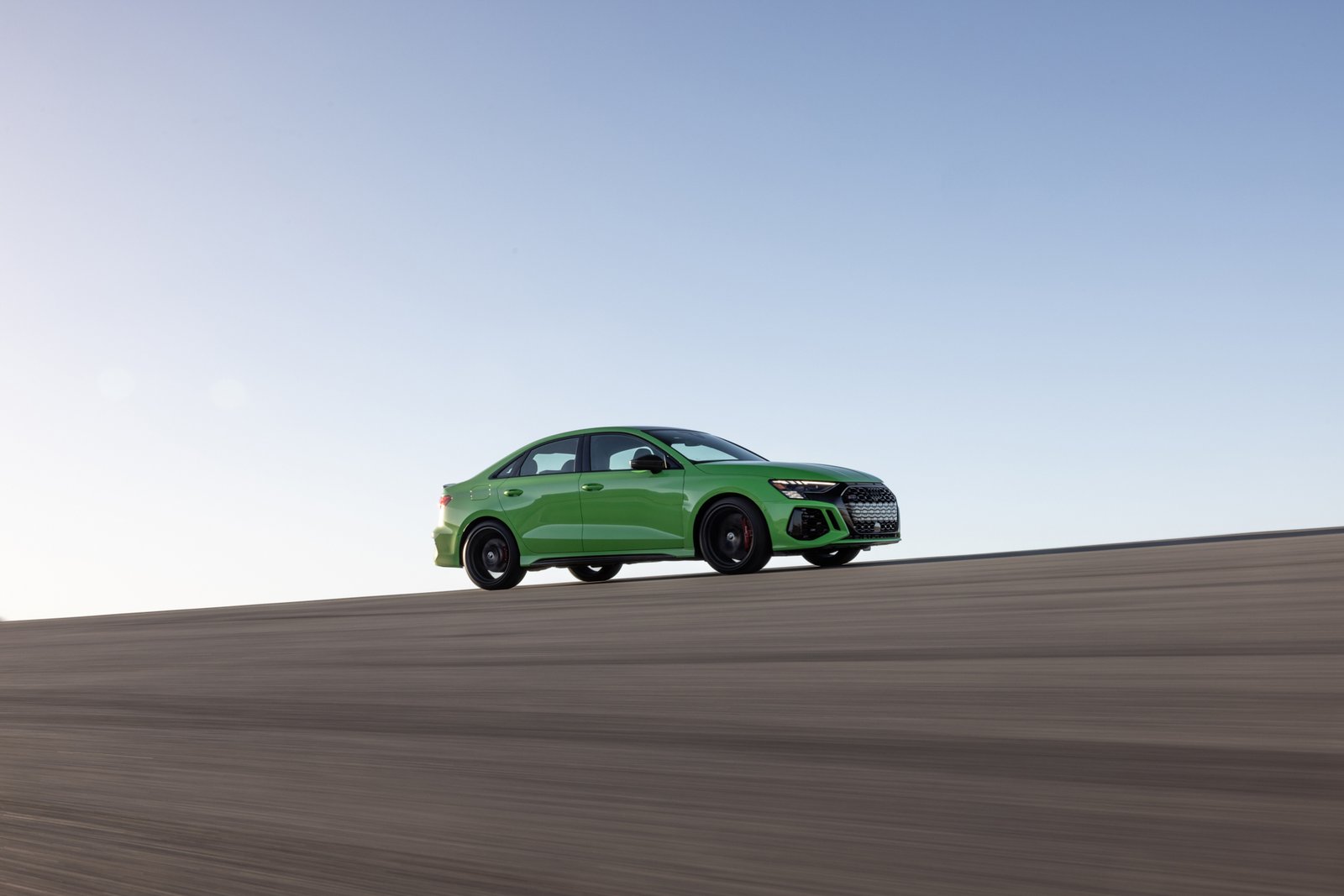
Audi suggests in its marketing material that the RS 3 is a ‘giant killer’. I’d agree, but that isn’t to suggest it’s a giant. It’s a compact, city-friendly sedan (or hatch, but we’re not testing that one) that happens to be capable of a sub-eight-minute Nürburgring lap. The RS 3 is unique because of its compromised character: softer than its competitors, easier to drive quickly, and actually liveable. I’m sure, if there was a way to travel back in time to drive a brand-new RS2 Avant, before travelling back to the present day to drive this RS 3, there’d be similarities. At the very least, they’d both sound fantastic.

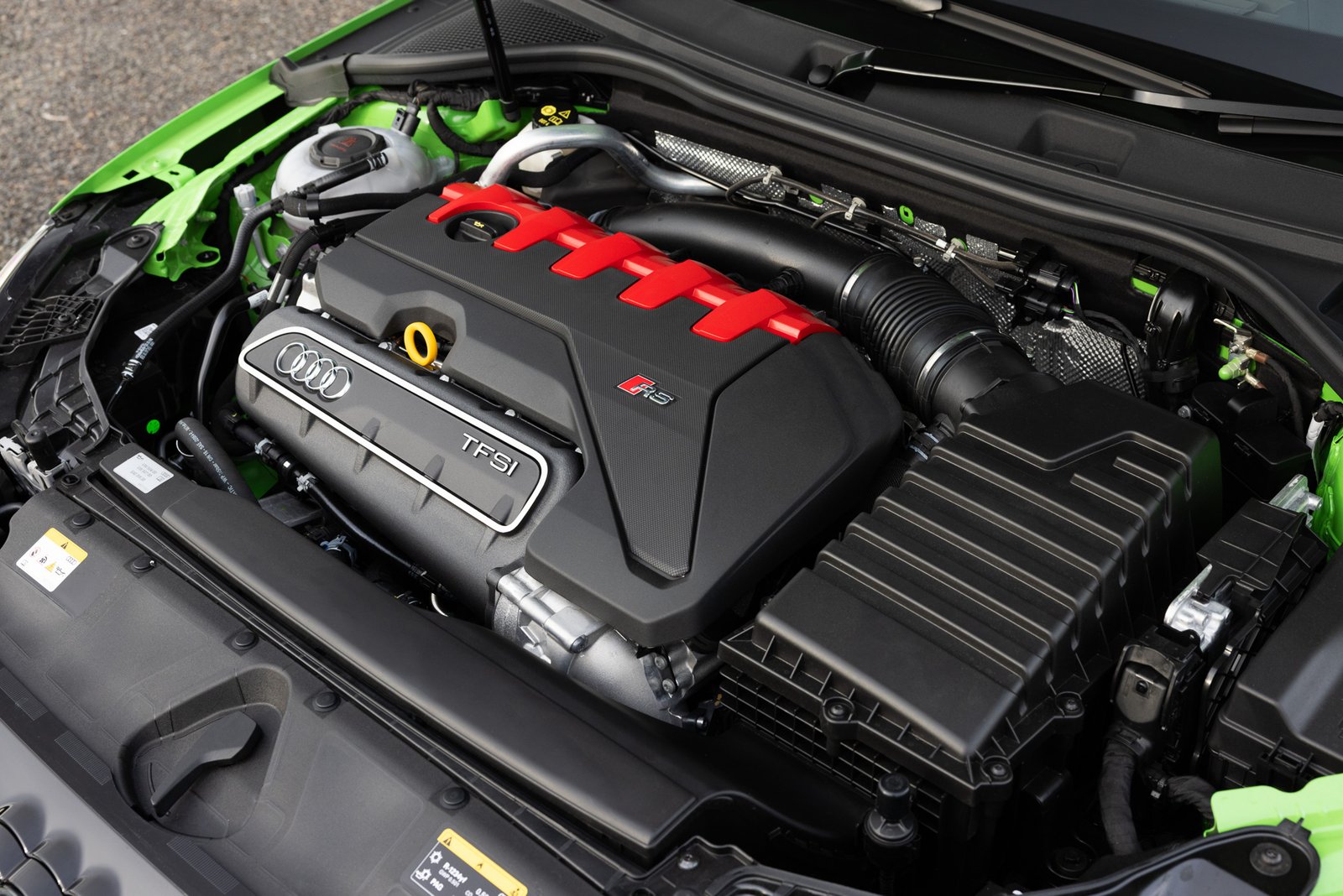
That’s because the RS 3 has a 2.5-litre five-cylinder engine producing 294kW/500Nm, which is a modern iteration of the five-pot found in the first Quattro and subsequent RS models. It has a distinct sound that is the result of a firing order that Audi has held onto since its first five-cylinder engine. The 1-2-4-5-3 sequence, along with an uncharacteristic 114-degree crankshaft rotation interval, generates the bassy, rhythmic idle and, as the revs rise, a guttural wail that consumes the cabin.

I’ve heard people suggest it sounds like half a V10, and the comparison is difficult to deny. It does sound eerily similar – both at idle and on song – to an R8 or Huracan of yesteryear. It doesn’t howl quite the same way, but it’s easily half as good. And, I’d argue it still sounds twice as good as any of the four- or six-cylinder engines found under the bonnets of its competition. Short of a handful of supercars, I can’t think of another car that sounds this good in a post-emissions world.

The five-cylinder is dramatic in more ways than one. The urgent rush this engine delivers as you lean on it, and the way it intensifies, strips away any self-restraint you might have. I have very little of it to begin with, which is why I deliberately own slow cars. Small doses only, for me. On a three-hour rural run with a photographer, chasing light and far from the confines of the city, I hurtled the RS 3 along a number of country roads where at times I may as well have been in that original Group B Quattro S1. The grip is phenomenal, so there are few scenarios that require you to lift the throttle. It’s all go, like a rally machine with all of the road-legal bits thrown on. I don’t think I’d have carried that pace, along those roads, in a supercar.

Behind the magnificent engine is Audi’s seven-speed S Tronic transmission. It’s as intuitive as you would expect of a modern dual-clutch automatic, but it hangs onto gears for too long, then slams up or down, which can be jarring. I do think these ‘boxes ‘learn’ a particular driver’s ways, and press cars are pedalled by a different operator each week. The solution? If you’re using a sportier drive mode, which obviously intensifies the shift logic, flick it into manual and use the paddles. At least until the gearbox learns how to get along with you. But, despite criticising the DCT’s hard shifting, it does, when you’re after that, add to the drama.

Still, the powertrain works and was thoroughly enjoyed. The RS 3 is capable of reaching 100km/h in 3.8 seconds, but many consider this to be a conservative figure. It feels faster, every single time. The insane reality of this is that it doesn’t get off the line like an electric car, or a supercar with fancy launch control, instead rolling away under full throttle – presumably to preserve the driveline – before entering what can only be described as hyperdrive. Suddenly it squats, scrambles and rockets forward, completely distracting you for the few seconds it takes to reach the legal limit. It can indeed propel itself far, far beyond the bounds of the law, capable of a top speed of 290km/h (if unlocked for track work). Nearly 300km/h in a comfortable, luxurious compact car is madness, really.

As has always been the case in RS models, much of the magic is found underneath the car. The Quattro system in the latest RS 3 is a fairly new design, doing away with a rear differential altogether. In its place sits Audi’s torque splitter system, which uses a multi-plate clutch on each half-shaft to apportion torque between the rear wheels in milliseconds. And the system can now send 100 per cent of the available torque to an individual rear wheel during hard cornering, reducing the understeer previous models were criticised for. In the RS Torque Rear mode, which is ‘not for road use’ according to Audi, the RS 3 can actually drift like a rear-driven car. Even in more pedestrian drive modes – like ‘Normal’ – you can feel the torque splitter working. The RS 3 is more neutral through corners, particularly under power on exit, than any all-wheel drive car I’ve ever driven. It will also, if encouraged, power oversteer before the front axle pulls it back into line.

Then there’s the RS Sport suspension, which uses adaptive dampers that are far more adept across the board than the previous generation’s magnetic ride system. The setup provides taut body control in sportier modes, while offering German luxury car comfort when dialled back. Amazingly, it doesn’t feel particularly compromised at either end of the spectrum, which is very likely due to its kerb weight. At a smidge over 1500kg, it’s dainty by modern car standards. In fact, it’s only around 100kg heavier than the original RS 2 Avant.

It all comes together gloriously on the right road. I don’t recall feeling so inclined to push the RS 3 when I think back to my time in earlier variants. The latest model is sharper, more communicative, and offers most of the benefits of a strictly rear-driven car with the safety net of an active front axle. It has the same power as the previous model, but the sum of its improvements makes it far more engaging.


I’m not sure people buying these cars think a great deal about the particulars of the styling, but I do think they arrive at an Audi dealer knowing they won’t see too many 20-somethings crackling and popping down the road in whatever they choose. Every Audi, right up to the departed R8 supercar, is understated…particularly when compared to the other German brands.

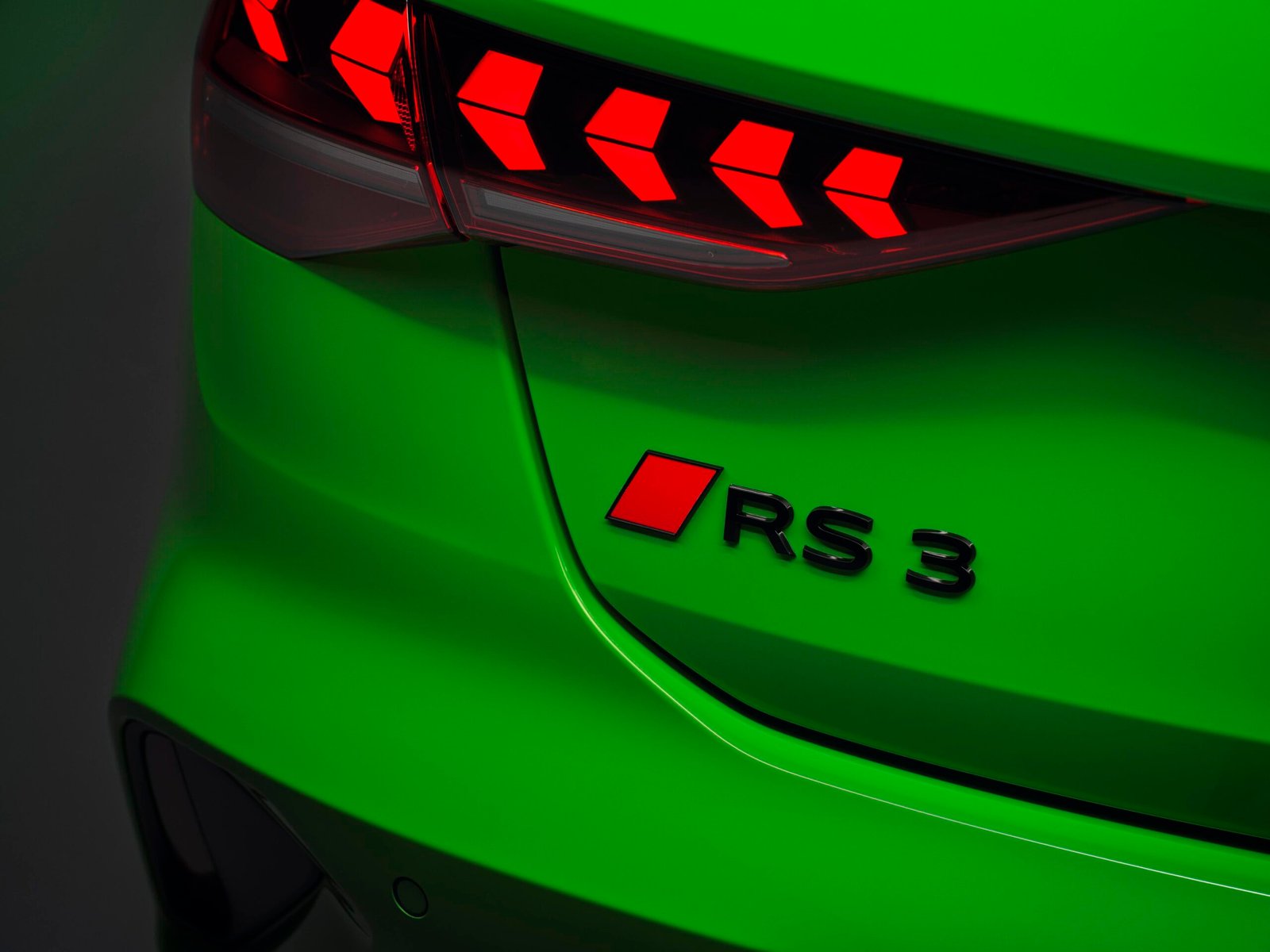
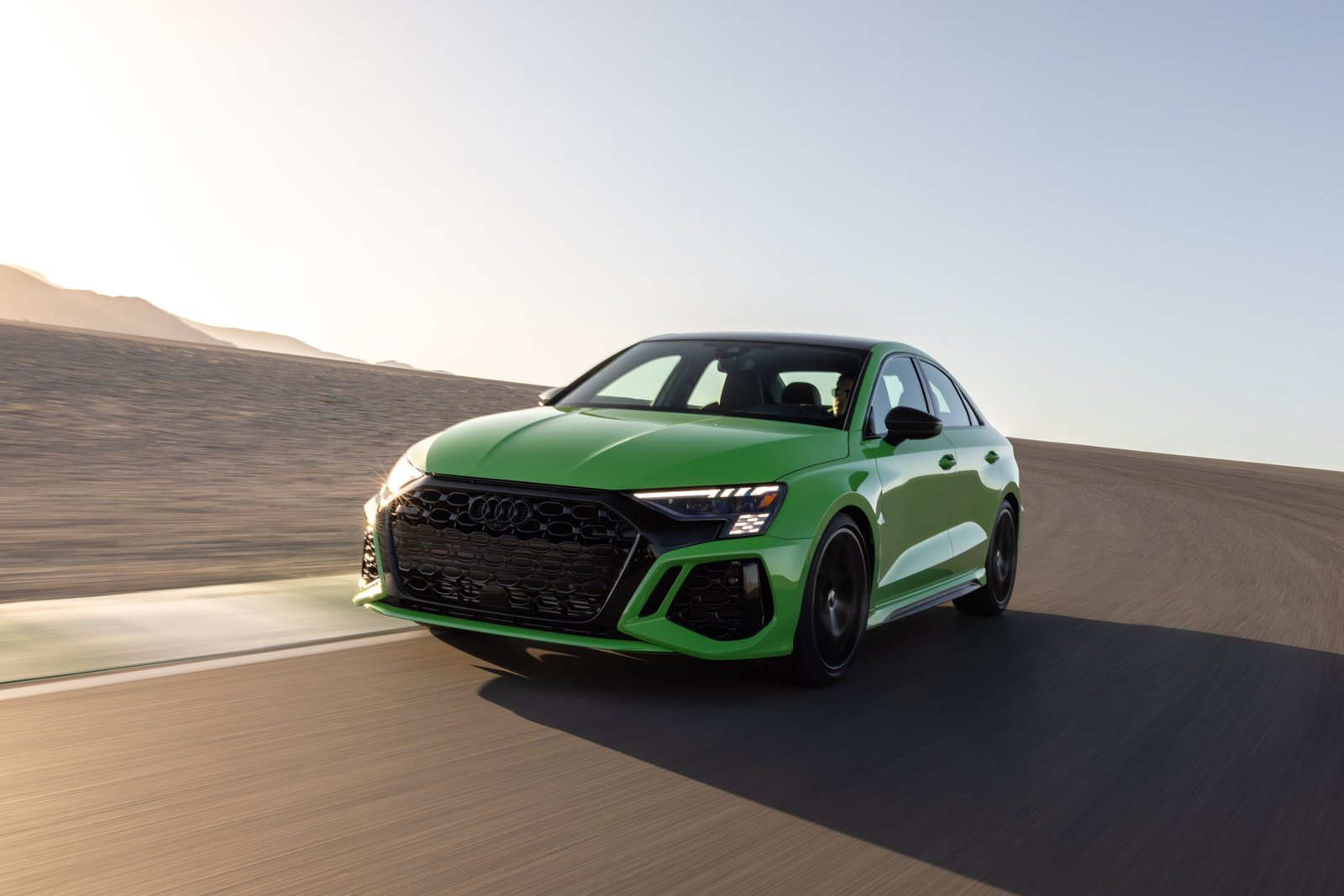
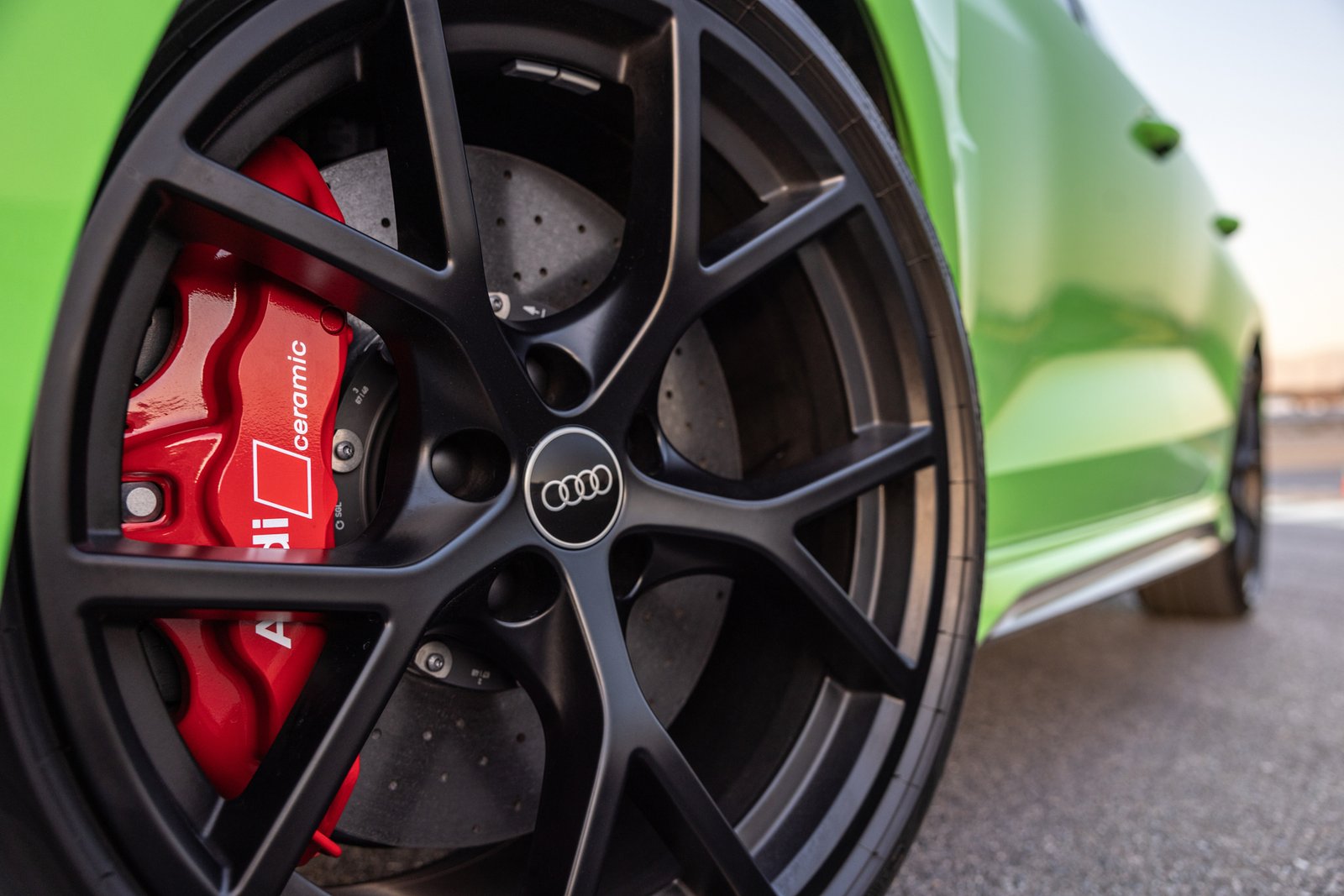
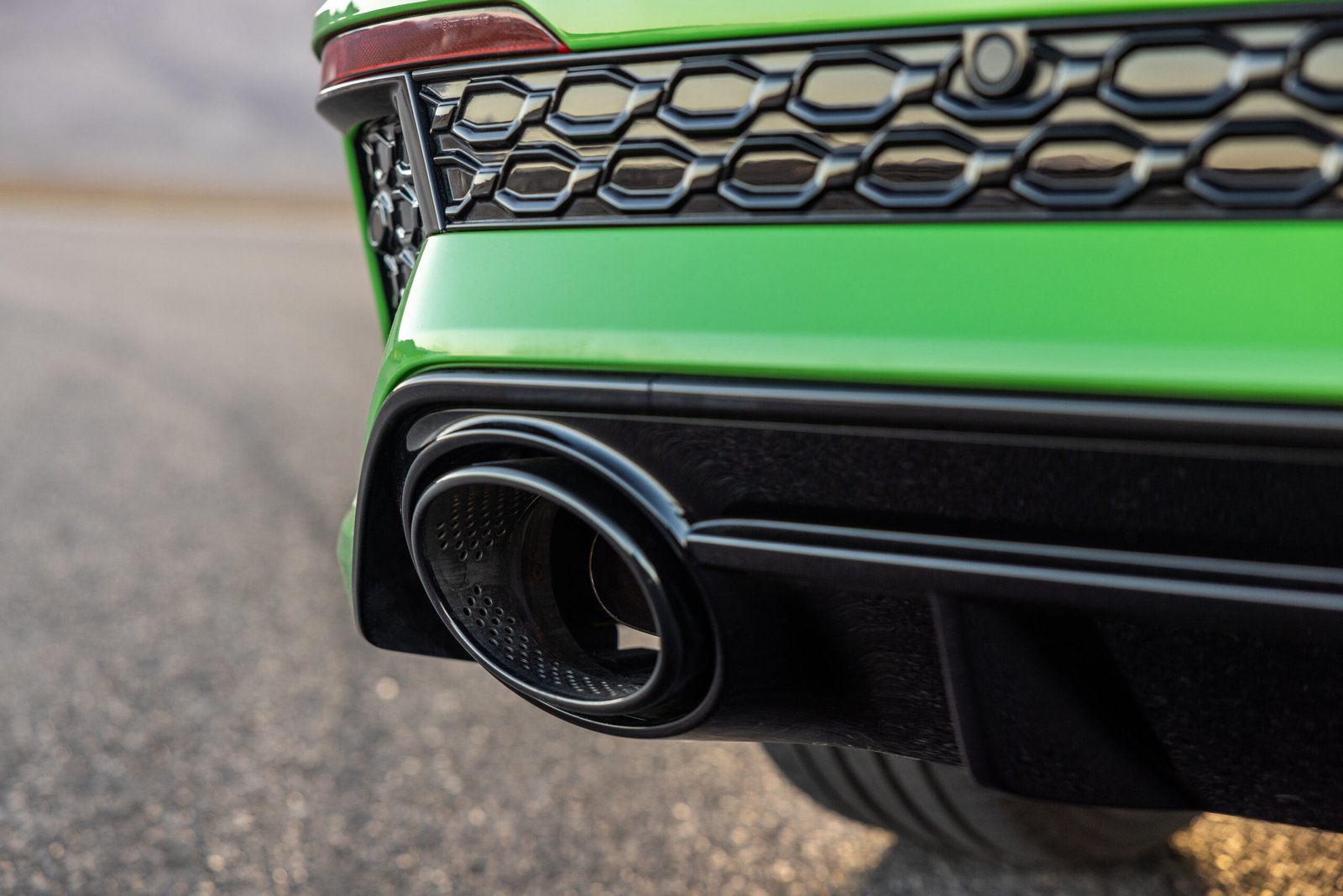
The RS 3 still has enormous brake ducts, pumped arches, and blacked-out exterior trim, but Audi stopped short of making it too gaudy. It certainly doesn’t look anywhere near as ‘boy-racer’ as many of the hot hatches it competes with. There’s still hostility in its design to remind you – and others – it’s a serious machine; like the blacked-out mesh grille which quite literally consumes the entire front clip, the sharp, angry-looking headlights that feature a distinctive chequered daytime running array, the racey 19-inch five-spoke alloys, or, in our case, the optional 10-spoke design, and that enormous rear diffuser flanked by two enormous oval tailpipes.

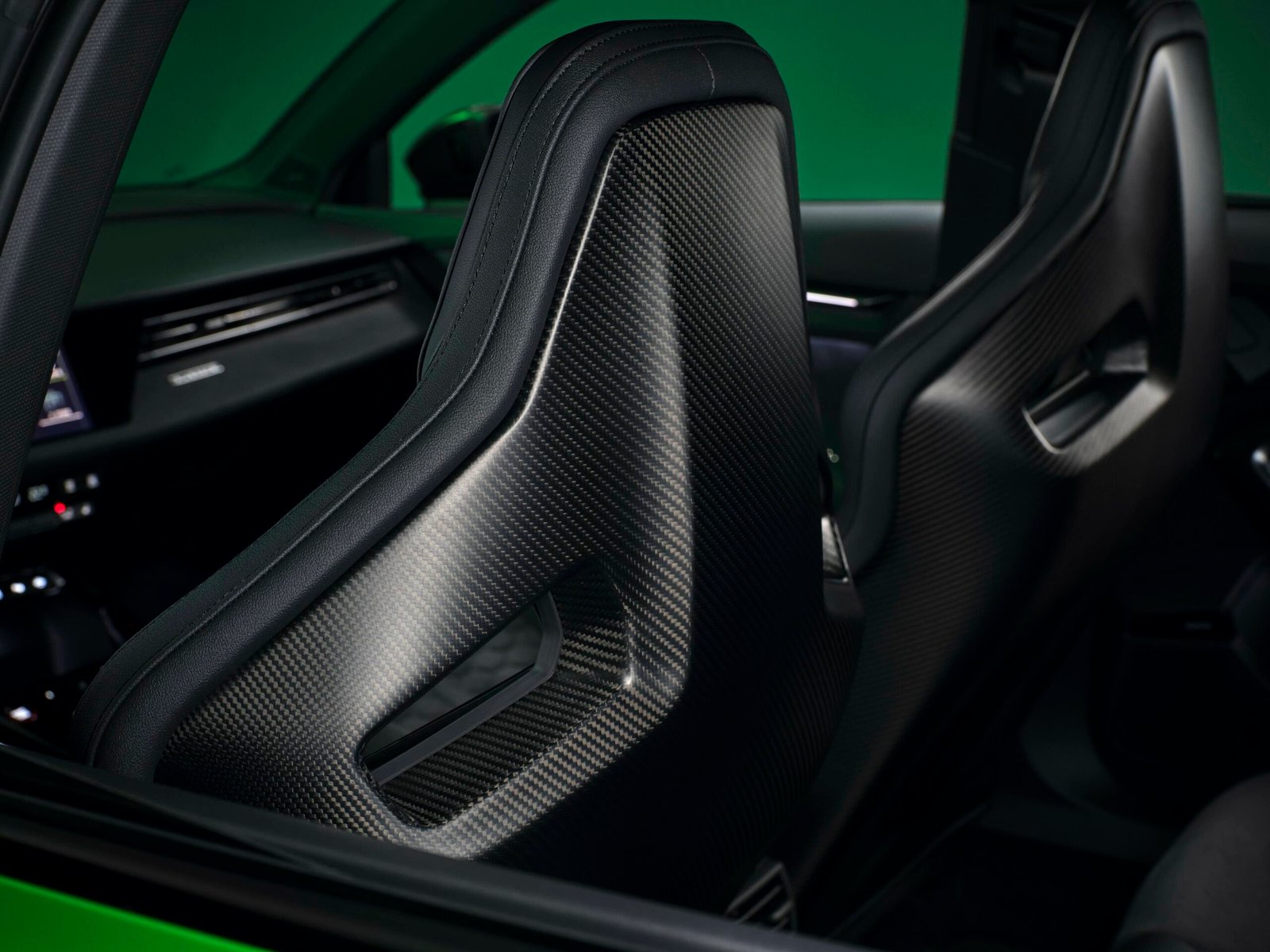
If you’ve spent time in any generation of RS 3 across the model’s 15-year history, you’ll know the interior is also understated. Like the exterior, the cabin has never been too outrageous. The latest model does take it up a notch, but it still feels like a familiar Audi cabin, with elements you’ll find across other models. There are some RS additions, like bucket seats with honeycomb stitching and a sporty steering wheel with a flat top and bottom, which sounds weird, but is fantastic. There are lashings of carbon throughout the cabin, and muted vanadium-look elements, as well as Nappa leather and Dinamica microfibre (eco-friendly, faux-suede, basically). Audi hasn’t forgotten to include its ever-polarising Piano black trim either, making this cabin a texturally rich – and at points overwhelming – experience. Adding to the sensory overload is Audi’s optional RS Styling package, fitted to our tester, which effectively colour-matches trim details to the exterior of the vehicle. So, ours had bright green accents throughout.

It’s hard to ignore that this car is, under its flashy carbon-clad facade, an A3. There are signs, albeit subtle and largely limited to the interior, with most of the aforementioned features available on lesser models. I’d like, for the money, a more bespoke cabin experience. But the lineup it’s based on is objectively fantastic, with Audi’s current spate of passenger cars and SUVs benefitting from one of the best interior treatments of any marque.

I did, at times, ponder whether I’d take this RS 3 over the myriad used performance car options landing around the $100,000 mark. A Porsche 911, 993-generation of course, or a severely neglected Ferrari 360. But they’re very different cars and, truthfully, don’t have a great deal more heritage to show for the money. They’re nowhere near as fast as the baby RS car, either. On the new car front, I’m not sure there’s a compact sports car I’d choose over the RS 3. I’m a BMW tragic, having owned old, less old, and then new-ish models from the brand. The M2 sounds too raspy, and its personality is a little too boisterous to live with daily. As a second car, sure, but given just one it’s the Audi.

The RS 3 is a swansong to the brilliant formula Audi concocted in the ’80s, and refined for forty-five years. It’ll live on into the future, I’m sure, but given the hybridisation sweeping the broader RS models, it won’t have a turbocharged five-cylinder under the bonnet for much longer. It’s expensive, but I smiled a lot during my 1000-or-so kilometres in the baby RS car. A lot more than I have in far, far more expensive cars that stood for far, far less.


Your next Read

One of the things I’ve always liked about Royal Enfield is how little ego is …

Technology is moving quickly these days. If you caught Bill Gates’ interview with The New …

At 18 years old, I won a trip to Italy with Ferrari. It came via …

A sort of amnesia has taken hold across the automotive design world. In the feverish …