All of which was rattling around in my head on a crisp morning in Bowral, more than two decades after that first trip to Maranello, as I climbed into the new Ferrari Amalfi.
There is, as the kids might say, an aura to driving a Ferrari. Perhaps that is an embarrassing thing for a grown man who has driven plenty of expensive cars to admit, but pretending otherwise seems sillier. Even before moving, there is something about seeing that badge at the centre of the steering wheel and knowing the long bonnet stretching away in front of you belongs, temporarily at least, to the car you’re about to drive. Ferrari carries an enormous amount of cultural baggage, but some baggage is quite enjoyable to carry.
The Amalfi replaces the Roma and occupies broadly the same place in Ferrari’s universe: front-engined, rear-wheel drive, nominally capable of carrying more than two people and pitched more towards grand touring than the company’s harder-edged sports cars. The Roma was therefore my obvious reference point, and I liked that car for many of the same reasons I liked the Amalfi almost immediately. Both resist the temptation to communicate performance by shouting about it.
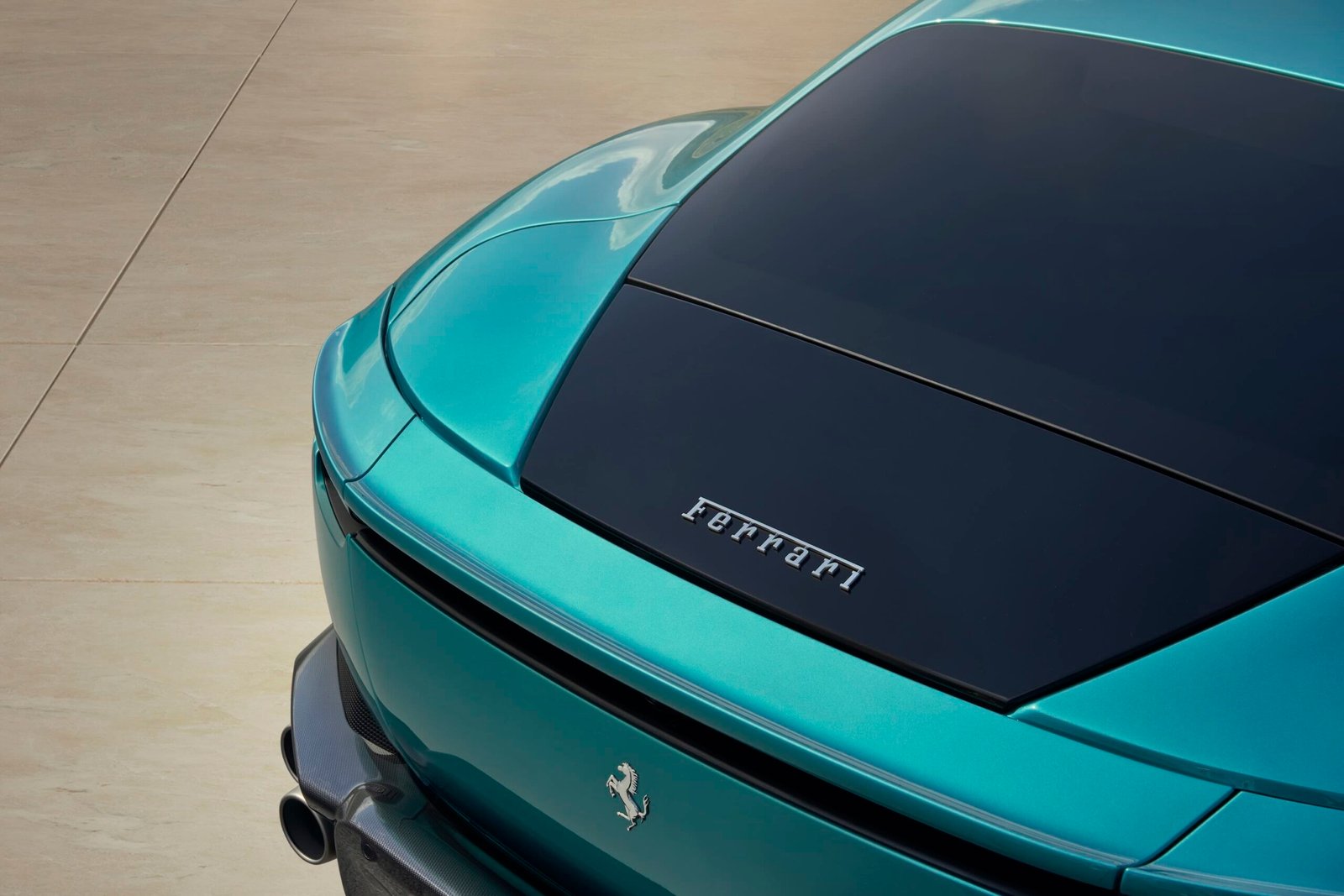
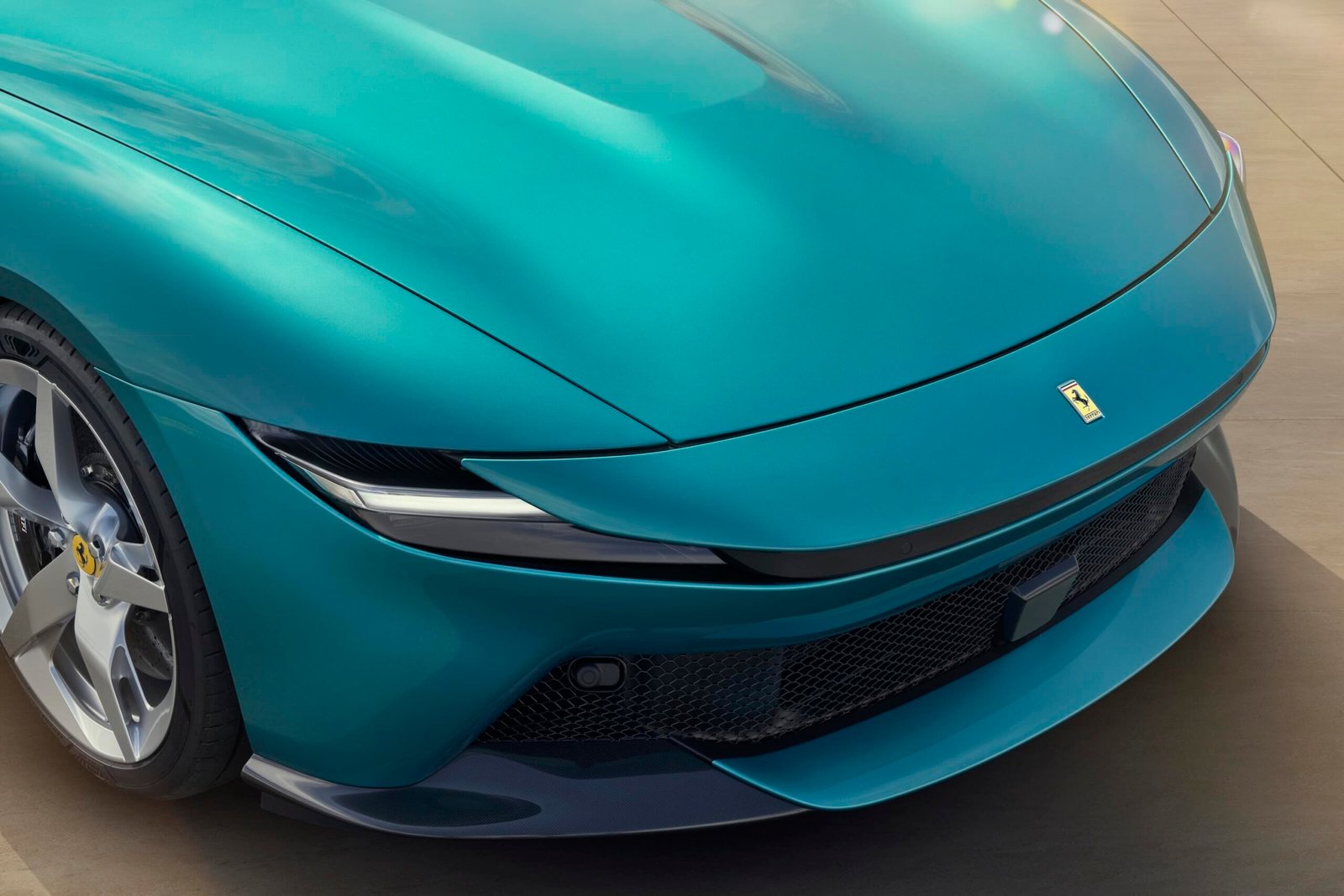
Where the Amalfi moves things on significantly is in its design. Modern Ferraris have rarely struggled for visual impact, but impact and beauty aren’t necessarily the same thing. The Amalfi feels like a return to something more romantic, not by reaching into the catalogue for retro details, but through proportion, restraint and the simple pleasure of a long bonnet, a cabin sitting rearward in the body and surfaces that don’t appear desperate to explain what they are doing. There are echoes of the great front-engined Ferraris of the past without the car ever looking backwards.
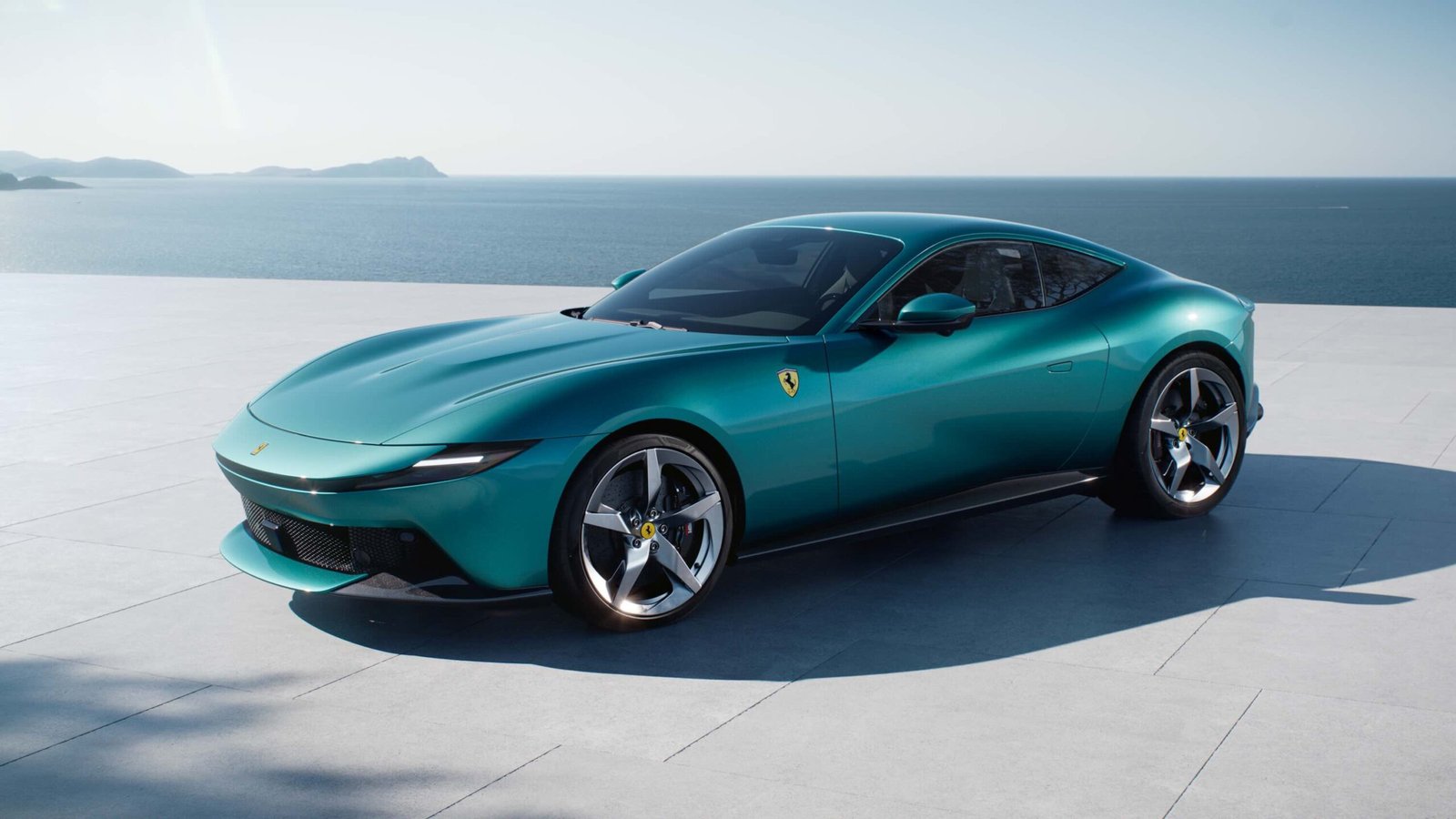
That distinction matters. There are cars that make a statement because they are impossible to ignore, and then there are cars that you simply find beautiful. To my eyes, the Amalfi belongs much more comfortably in the latter group. It doesn’t need a collection of vents, slashes or aerodynamic theatre to remind you of what it is. The nose is cleaner than the Roma’s, the body sides are remarkably free of clutter, and the tail feels resolved rather than decorated. For all the complexity that must exist underneath, the result has an ease to it that feels increasingly rare.
Modern cars have become extraordinarily difficult objects to make look this simple. Aerodynamics, cooling, cameras, sensors, crash structures and pedestrian-impact requirements are all competing for space on the same piece of bodywork, and it is increasingly common for even very expensive cars to look less like a single resolved object than a collection of answers to problems. The Amalfi doesn’t. It manages to accommodate all of those demands while still possessing the sort of shape that makes you want to walk around it for reasons that have very little to do with engineering.
There was an Amalfi Spider sitting statically at Milton Park as well, and if anything, the open car made the point more clearly. With the roof removed, the simplicity of the proportions becomes even more apparent, and the whole thing takes on an almost old-fashioned glamour without resorting to anything obviously nostalgic. I didn’t drive it, so there isn’t much more to say about the Spider dynamically, but visually it was difficult not to imagine that this might be the version in which the Amalfi’s more romantic side makes the most sense.
The interior represents an even more meaningful improvement over the Roma for me. I always struggled with the Roma’s cabin, particularly its reliance on touch-sensitive steering-wheel controls. They looked suitably futuristic when the car appeared, but in use I never found them especially intuitive. Too many basic interactions required more thought, attention or precision than they should have, which seemed an odd trade-off in a car supposedly designed around the relationship between driver and machine.
The Amalfi fixes much of that. Proper physical switches, buttons and rotary controls have returned to the steering wheel, along with a proper aluminium start button, and the difference is immediately apparent. You don’t need to admire them as an exercise in nostalgia; they’re simply better tools for the job. Your fingers can find them, there is a physical response when you use them, and the operation becomes instinctive in a way a glossy capacitive surface rarely manages. In a car capable of travelling this quickly, not needing to look down to confirm whether your steering wheel has understood your thumb feels less like an aesthetic preference and more like common sense.
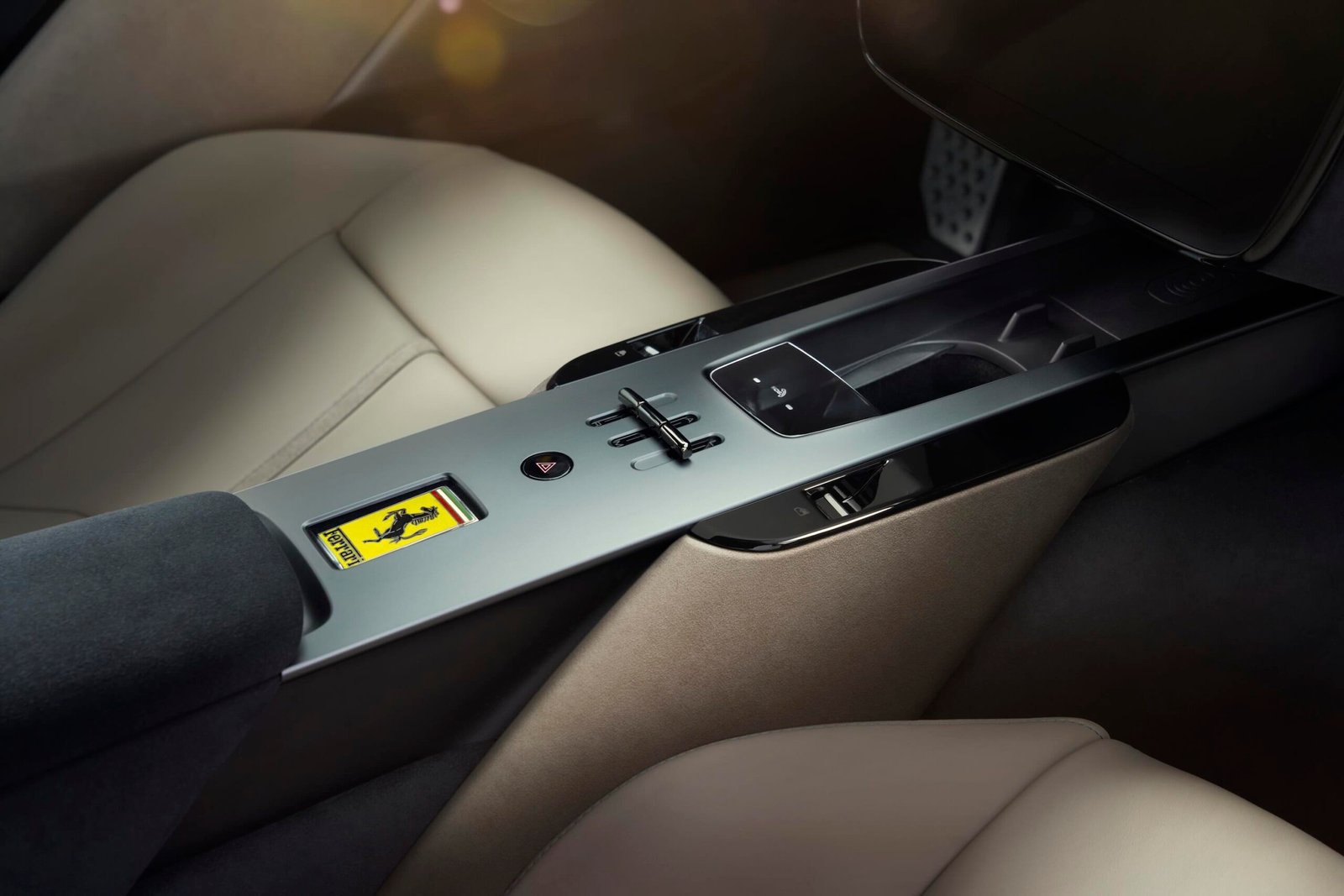
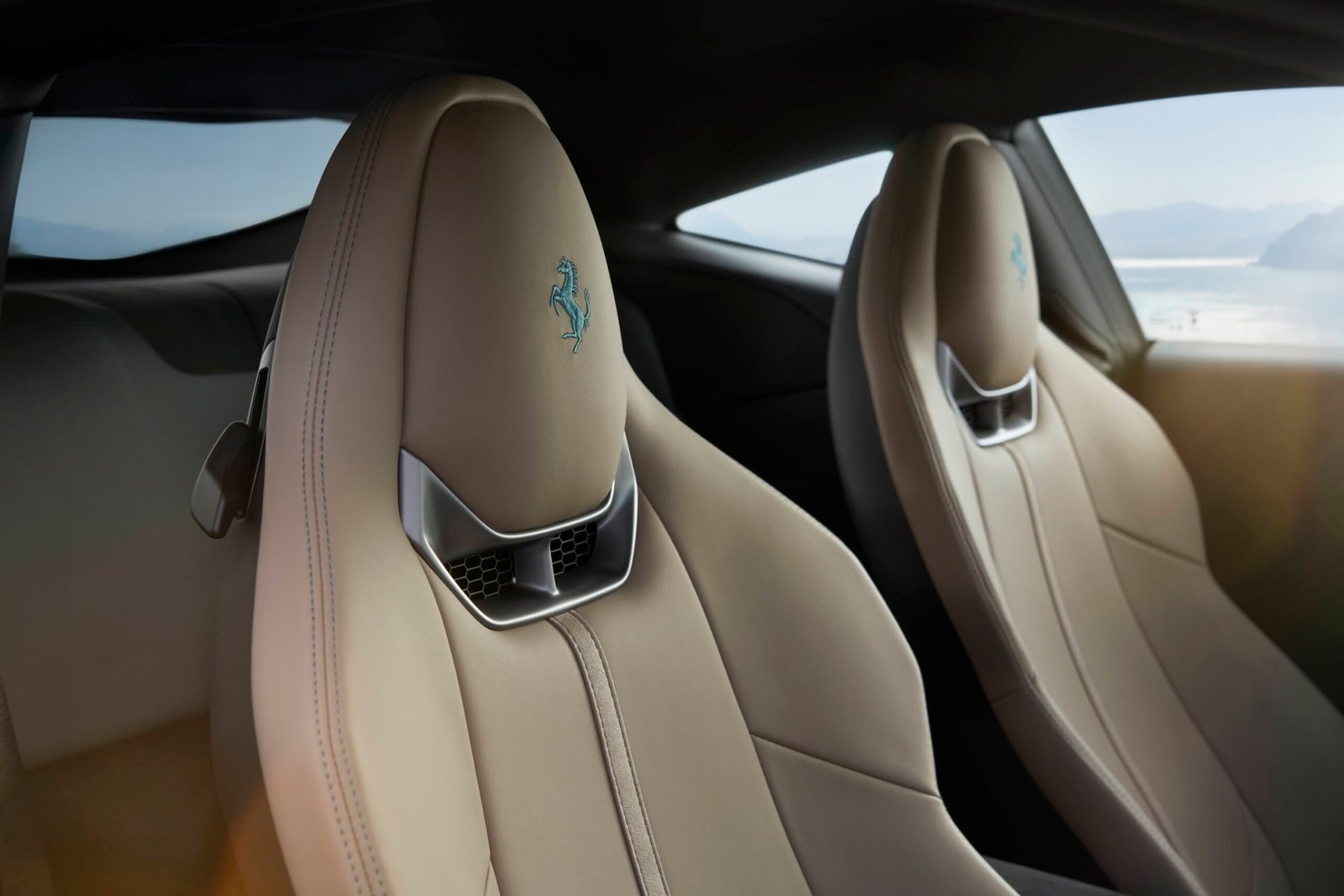
More broadly, the cockpit just feels finished. Nothing creaked in the car I drove, nothing felt like an afterthought, and there wasn’t the sense, increasingly common in modern interiors, that hardware and software teams had developed their parts of the cabin on different continents before meeting for the first time at launch. Even the rear seats fulfil their traditional role in this genre perfectly, which is to exist primarily so Ferrari can describe the car as something more than a two-seater. Any adult placed back there for more than a short trip may begin reassessing the friendship.
It was somewhere around this point that I remembered another idea, this one via Stephen Fry. Fry has previously recalled a line attributed to W.H. Auden about not wanting to be rid of his demons for fear that his angels might leave with them. I like the thought because it describes a tension that extends well beyond whatever Auden originally had in mind. When you remove the difficult parts of something, are you always certain you haven’t removed part of what made it interesting too?
Cars provide plenty of examples. Heavy steering, awkward pedal boxes, engines that don’t properly wake up until the top third of the tachometer, manual gearboxes that punish a lazy shift and cabins that make no attempt to disguise the fact that comfort was quite far down the priority list. These are all things engineers have spent decades solving, for very good reasons. Yet listen to enthusiasts talk about older cars and we routinely hear those same inconveniences repackaged as character.
The manual gearbox is perhaps the most obvious casualty. I understand why people miss it. There is an involvement in coordinating your own shift that even the best paddles cannot recreate, and few tiny victories in motoring are as satisfying as getting a difficult downshift exactly right. But I have always struggled with the idea that the arrival of a better technical solution automatically means the experience has become worse. I apparently felt the same way at 18, given that Ferrari could have fitted three pedals to the Challenge Stradale and I doubt the lap would have occupied any more space in my memory than it already does.
The Amalfi’s gearbox only strengthens that argument. It is fantastic. Around town or while flowing down a faster section of road, it can largely disappear, but start leaning on the car and the shifts become part of the entertainment, responding quickly enough that the paddles feel less like an instruction sent to a computer and more like a direct part of the process. There are things a manual would give you that this doesn’t, but there are also things this gearbox can do that a manual never could. Both statements can be true.
The same applies to the brakes. Brake-by-wire is the sort of phrase that tends to appear near the top of the charge sheet whenever someone wants to explain what has gone wrong with modern performance cars. In theory, another physical connection between driver and machine has disappeared. From behind the wheel, I simply found myself impressed by how good the pedal felt. Firm, progressive and easy to judge, it gave me no reason to spend the drive worrying about what did or didn’t mechanically connect my foot to the callipers.
By now we were into the roads around the Southern Highlands, the weather crisp but clear and the Amalfi starting to reveal the part of its personality that surprised me most. This is still a GT in my mind rather than a sports car, and it feels comfortable playing that role. You can settle into it, leave the gearbox to its own devices and cover ground without the car constantly demanding that you perform for it. The ride has enough compliance, the cabin is civilised, and the whole thing feels much happier simply travelling than its badge and performance might suggest.
Our route was also littered with slower, hooked corners, the sort that bring you down to a speed where the consequences are sensible enough to start asking a little more of a chassis. Turn in, add some steering, begin feeding the power back in and the Amalfi becomes unexpectedly playful. There is enough movement at the rear to feel what the car is doing beneath you, enough power to alter its attitude and enough accuracy through the front that you can start joining those inputs together. It doesn’t feel like a car trying to prevent you from discovering the limits of its enormous processing power. It feels like something willing to dance.
That was probably the biggest surprise of the morning. We have become accustomed to performance cars with such extraordinary levels of grip, power and electronic supervision that the only place to properly access their personality is often at a circuit or at speeds that make public roads the wrong environment entirely. The Amalfi still has vastly more performance than anyone needs on a road, but those slower corners gave glimpses of something more approachable. You could make the chassis work without first needing to make the scenery blurry.
The steering helps. Ferrari steering has long been quick, sometimes to the point that the first few corners require a recalibration of your hands, and the Amalfi is no different. Once you’ve adjusted, however, there is a satisfying precision to the front end and an immediacy that suits the playful rear. The car never entirely disguises its size, nor should it, but on those tighter sections it feels smaller and more alert than its grand touring brief might suggest.
If there was one thing I wanted more of, it was noise. In Sport, particularly, the Amalfi can feel almost too polite. That might be a strange criticism of a car capable of covering ground at the rate this one can, but noise has always been an important part of Ferrari’s theatre, and there were moments where the chassis and gearbox were encouraging a level of mischief that the soundtrack didn’t quite match. I didn’t need it to be antisocial, but another few decibels and a little more texture would have been welcome. Perhaps that is one demon Ferrari could afford to invite back in.