Interview with Chef Telly Justice: HAGS, New York City

White

Queer First, Restaurant Second

21 September, 2026

Words by:

Sarah Palmieri

For Telly Justice, who won Young Michelin Chef of the Year, it's queerness first and restaurant second at HAGS in Manhattan's East Village.

It’s difficult to stand out on the bustling island of New York City… a place so many love because you can fly under the radar. “I could be naked on the subway, and no one would bat an eye,” I’ve said to so many, because truly, amid the myriad ways this city fights for your attention — a fashion campaign taking over a West Village block, an album launch packing thousands into a square, a restaurant where tableside extravagance and celebrity hype are all selling some sort of mediocre tagliatelle — it would be the least interesting thing anyone’s seen all day.

And then along comes a place like HAGS. Not yelling or pushing an idea, not taking its clothes off for attention… not buying into hype or trends or a set of ideas of what success looks like. Just putting its head down, doing the work, incredibly well, and then sitting back, allowing the community to come in as they are.

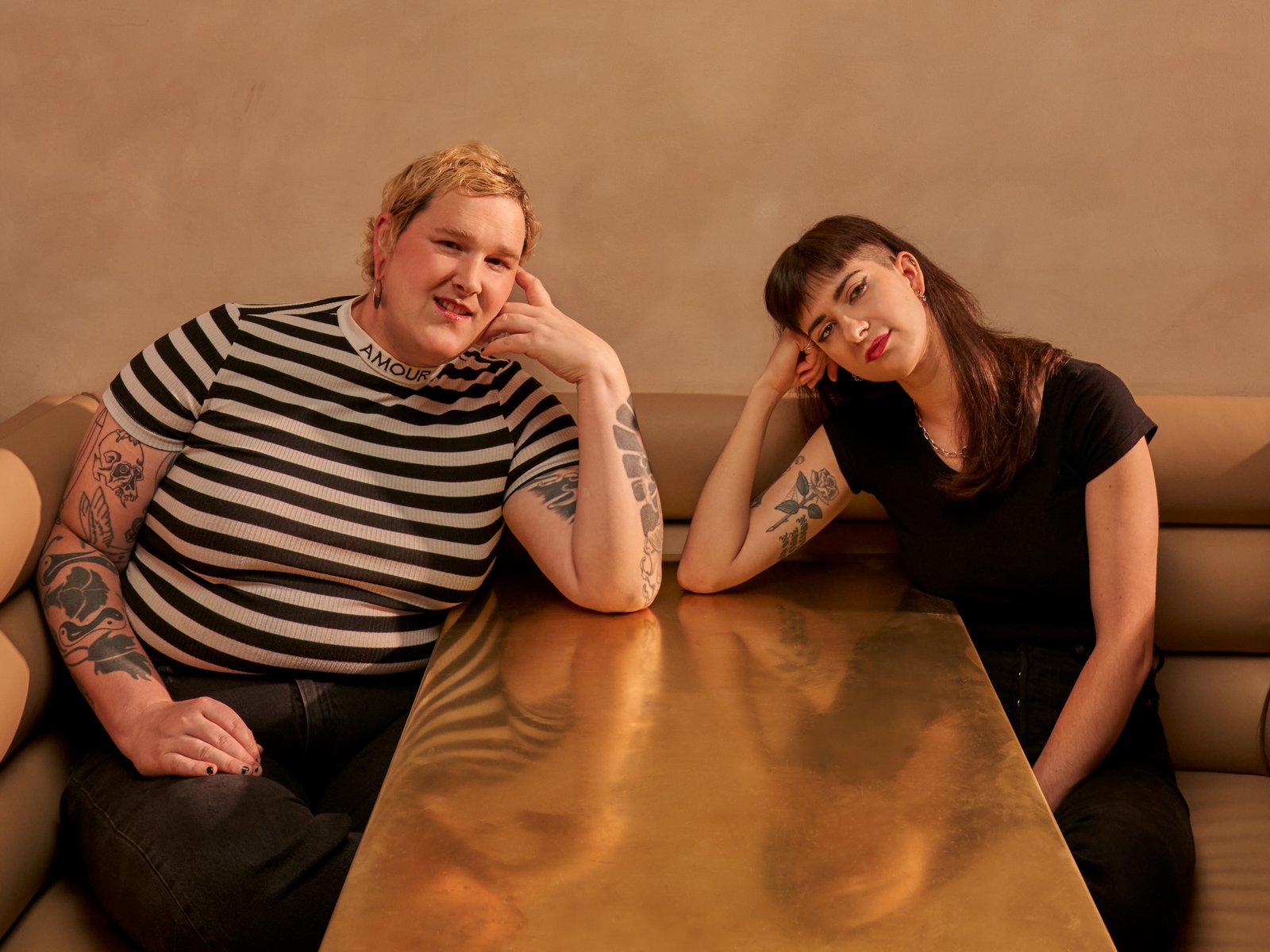
Telly Justice cut her teeth in the East Village, cooking at Contra and Wildair under Fabián von Hauske and Jeremiah Stone before opening HAGS in 2022 with her partner and co-owner, sommelier Camille Lindsley. The two met years earlier working together at Kimball House in Atlanta, and had been talking about opening a restaurant of their own long before they landed on the East Village.

It’s a fine dining restaurant. A queer fine dining restaurant. Unlike any other. It might be hard to imagine how being queer could make that much of a difference, but it was undeniable… the thoughtfulness that ran through every corner of the small restaurant settled on 1st Avenue.

I sat down with Telly to talk about what it actually means to build a restaurant queer first, what she’s carried with her from her years in Michelin kitchens, and what’s next.

Can you share a key memory where food made you feel something special?

Every year on my birthday without fail my mom would make me scrambled eggs with cheese for breakfast. There wasn’t anything remarkable about them materially. But what sticks with me the most is the feeling of it. Waking up and walking down the stairs from my bedroom, wondering if I felt older or different in any way. Seeing her already standing over the stove, dressed for work sometimes, in pajamas other times. She was cooking just for me. I don’t think anything has ever made me feel so special and loved as those simple breakfasts. When I cook now, I try to take people to that place as best I can. To me, the food is important, but what really makes for a special experience is cooking directly for a person and helping them access this fantasy that they are the most significant person in the room.

You’ve said HAGS is “queer first, restaurant second.” What does that ordering actually change in practice, from the menu to how a table is run?

I actually see that ordering as pre-work, meaning the significance of our queerness is set for our guests before they even arrive. Before they set foot in HAGS, before they experience our service style, eat our food, enjoy our bathroom — our queerness is acknowledged. That creates a freedom for the staff as well as the guests to be exactly who they are. It also makes it impossible to separate our queerness from the work that we do and the service we provide. There is no list of attributes to point to proving the ways in which queerness has impacted the space, because the impacts are so inherent and in some cases personal. If I had to boil it down to a few examples, I’d say our collaborative way of writing the menu feels essentially queer. Everyone’s voice is heard and considered. We entertain elements such as camp, irreverence, and flamboyance in our creative process. We orient the menu and physical space around accessibility, inclusivity and harm reduction measures. Our playlist features exclusively queer musicians. We have a full page of queer wine producers on our wine list. The art on our walls is by queer artists. There are countless winks and nods through the space to queer history, icons of the community, previous and current queer projects. The list can grow endless, and in a way can make us seem like more of an art project than a place to get a yummy dinner. Ultimately, it isn’t so cerebral. We are queer people before we are working people, and that matters to us. But we make a hell of a yummy dinner.

Fine dining has historically been built on rigid hierarchy and exclusivity. What specifically did you set out to dismantle or rebuild at HAGS?

Before HAGS, I had felt this growing frustration that the traditional modes of building and running a restaurant were at odds with individuality. I felt squashed in other work settings and unfulfilled despite being deeply passionate for the material work. I saw other people around me feeling similarly. It seemed possible to me to build something different — not necessarily better, but different. A place for people to work where our individuality was seen as a benefit, not an inefficiency. We are still figuring out how to build that space every day. It’s a living document that takes every voice in the room to write. I can do my best to direct it, but I can’t entirely dictate the shape of it. Breaking something down and rebuilding takes time, it’s hard work. There are many moments of failure and ample time for self-reflection. I don’t know if HAGS has really changed the dining landscape so much, but I do know that building HAGS has changed me.

“HAGS” reclaims a word that’s historically been used as an insult. Was that reclamation a way of thinking about what queer fine dining could reclaim more broadly?

At first, no. We named the restaurant as though we were naming a punk band. We wanted it to feel irreverent and not so self-serious. And the queer community has a long history of reclaiming divisive terms. But the name has become kind of a flag for us. That spirit of reclamation has, over time, become a driving component of what inspires us.

You chose the East Village for its queer and punk history. How much does a restaurant’s physical and historical context matter to what you’re building?

Restaurants can have huge impacts on their blocks and neighborhoods, in both positive and negative ways. We wanted to build our first restaurant in a place that we loved and wanted to contribute to. The East Village was a neighborhood that inspired us for so many reasons. We wanted to build something that felt in keeping with this beautiful, rich neighborhood identity. That may not be how everyone selects their commercial real estate, but I do think it helps to ensure community support over time. Who wouldn’t want that?

Your “Pay What You Can” Sundays sit alongside an otherwise full tasting menu model. Why do you want to hold fine dining craft and radical accessibility together?

I get this question from time to time and I think it’s an interesting one. To me it’s natural. I spent so many years in fine dining settings, it’s the work that I know. The craft element of it, the attention to detail, the eye for aesthetic, the intentionality of it is peaceful to my brain. I don’t need to change the material of my work, which is an extension of who I am, to make it accessible. And I didn’t want to condescend our guests by making the food we serve at dinner and the food we serve at brunch thematically different. They are both equally special, conceptual, intentional, fine. I get to feed people caviar and truffles for free if they want! I get to watch all kinds of people have their first fine dining experience and decide for themselves if it’s for them. It’s magical.

How has the city embraced HAGS?

It’s been an interesting ride. We draw a clientele that is ready for change and delighted by new ideas, and those diners are so delightful to feed. They’re fun. They come in with a co-conspiratorial vibe, and that’s made running the restaurant really dynamic from a food standpoint. But HAGS challenges people in a lot of different ways. We receive a lot of criticism and scrutiny. We’re a queer space that’s also a fine dining tasting menu restaurant, but we also do the sliding scale service. And the food is strange — we’re known for our vegan food, but we aren’t a vegan restaurant. It’s a lot. It’s taken a long time for people to come around to our way of thinking, and that’s impacted our way of thinking over time too. We like meeting people in the middle. We thrive on the friction between what we see working for diners and what isn’t embraced by the larger dining public. With that in mind, we have to be very discerning about what criticism to listen to and what to ignore. HAGS loves change and will always center change as a component of the brand. But we can’t sacrifice the elements that make us who we are.

You won Michelin’s Young Chef Award. Michelin has long stood for a fairly old, rigid idea of what fine dining should be. What did it feel like to be recognised by that institution while building something that actively pushes against it?

Really weird. It was shockingly emotional. I cried a lot. I’ve never experienced a more disorienting set of conflicting emotions. And then my life kind of changed almost overnight after that, which has been further destabilizing. I didn’t open HAGS with the intention that we would win awards. Trying to maintain some semblance of self and core identity as the project gains more and more notoriety from outlets we felt automatically outsider to isn’t something I knew how to prepare for. I’m still figuring it out.

What do you think is important for other queer people entering the hospitality space to know?

We are in this together. You are never alone. Rely on your community. Find moments of rest. Don’t forget who you are.

Who are your inspirations?

Alice Coltrane & Charles Mingus. John Waters & Divine. Psychedelics, club music, goth and glam music, leather, mirrors. Vanitas art. Fake flowers. David Lynch, Cronenberg, Araki. Camp. Queer Soup Night, Lil Deb’s Oasis, Neng Jr.’s.

What’s coming up next for HAGS?

We’re getting ready to move to a larger space, which is so exciting. We’ll be able to do a la carte for the first time, and I know that’s going to be a huge change for us. We’re also working on a HAGS cookbook with Phaidon, out in 2028. There are going to be a lot of collaborations, pop-ups and parties coming up — so keep checking back with us.

Your next Read

There are probably more sensible ways to spend a freezing Wednesday morning in Victoria than …

At 18 years old, I won a trip to Italy with Ferrari. It came via …

The brand did not emerge from a desire to disrupt skincare so much as a …

Now in its sixteenth year, Vivid Sydney is the Southern Hemisphere’s largest multi-artform festival, running …