“I thought, stuff it, bought the ticket, and made the best decision I’ve ever made in my life.”

White

Giovanni Pilu Walked Into a Bar and Ended Up on Sydney Harbour

2 November, 2026

Words by:

Sarah Palmieri

After trading a motorbike for a one-way ticket to Australia, the chef behind Pilu at Freshwater has opened Flaminia, a tribute to Italy’s great port cities on Circular Quay.

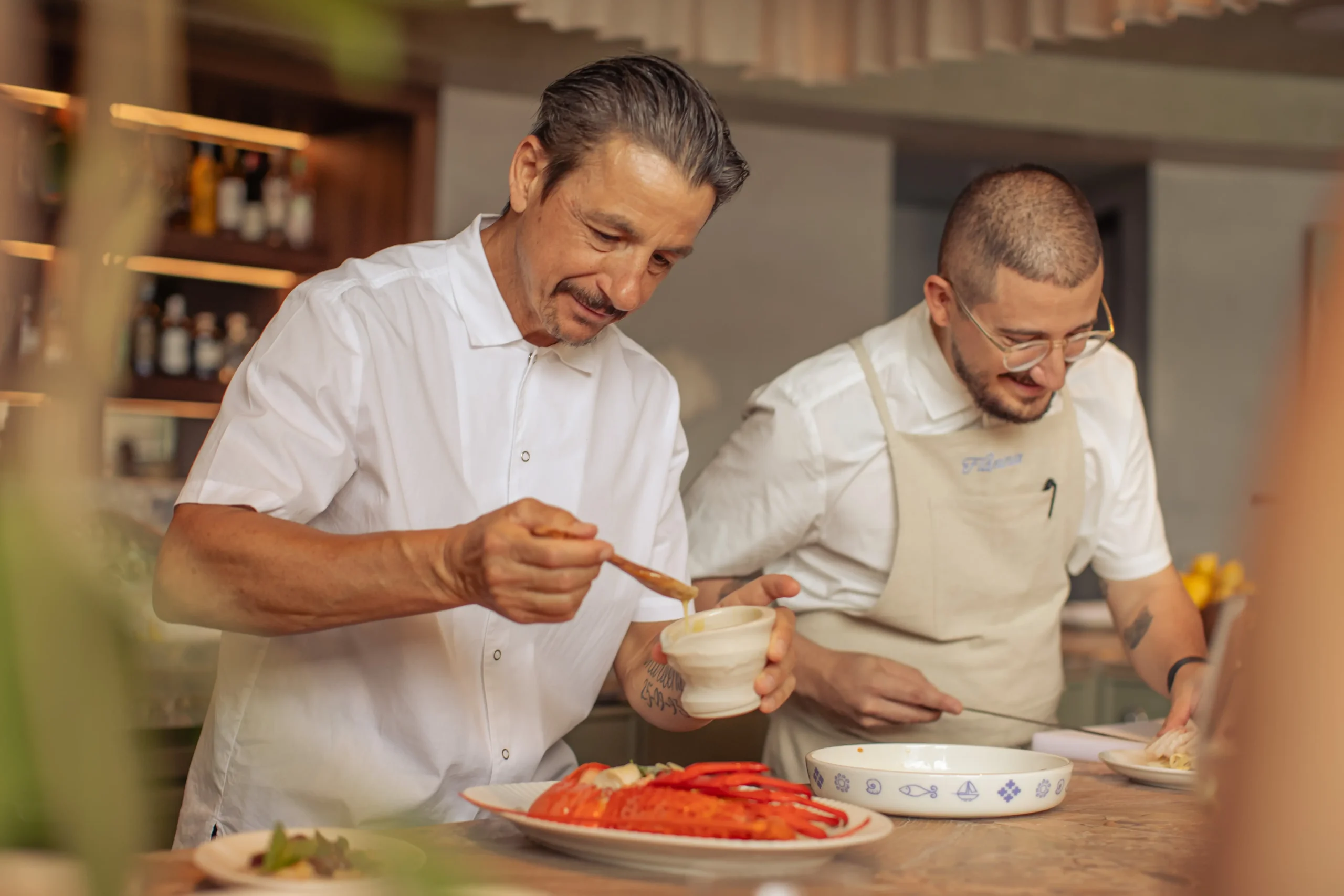
When I arrived at Flaminia at 3 p.m. on a Friday, a time when most chefs of his standing would be off making business deals or getting their picture taken, Giovanni Pilu was still working the pass. He had been for a run that morning and would run again the next day, and in between he was being summoned, booth by booth, by diners who wanted a handshake or to tell him the vongole was excellent.

He stopped at every one of them.

Flaminia, which opened in December 2025 inside the Pullman Quay Grand Sydney Harbour, is no small feat for Pilu and his wife and business partner, Marilyn Annecchini. For two decades, their name has been shorthand for special occasions by the sea at Pilu at Freshwater, their two-hatted restaurant on Sydney’s Northern Beaches.

The new space was gutted and rebuilt from floor to ceiling by Adelaide’s Studio Gram, the team behind Fugazzi and Osteria Oggi, with curved banquettes and sculptural lighting that echo the lines of a ship. All of it, the details, the thought and the memories of Sardinia reimagined in Sydney- certainly hasn’t gone unnoticed. Flaminia, named after the ship that brought Annechcini’s family from Aburrzo to Sydney in 1959, has been nominated for best new restaurant, and Pilu for chef of the year.

Harbours are where people come and go and where they arrive and make a home. The great ones, like New York, Naples, Marseille and Hong Kong, make an entire city off that idea. Pilu, an islander who crossed the world for love, built a restaurant instead.

“We are in the most iconic port city in Australia, if not the world,” he said. “Why don’t we cook from the Italian port cities? You’ve got so many of them. It’s not just another Italian restaurant with just burrata and bistecca.”

The menu moves through five ports at a time, which at the moment means Cagliari, Napoli, Venezia, Bari and Palermo, with an antipasto, a pasta, a secondo and a dolce from each. Bari will soon be parked to make way for Pescara, bringing cuttlefish, spaghetti alla chitarra with vongole and pesce in brodetto. Each time a new port docks on the menu, a fresh set of dishes comes with it. “They are all so diverse,” he said. “It’s very exciting for us.”

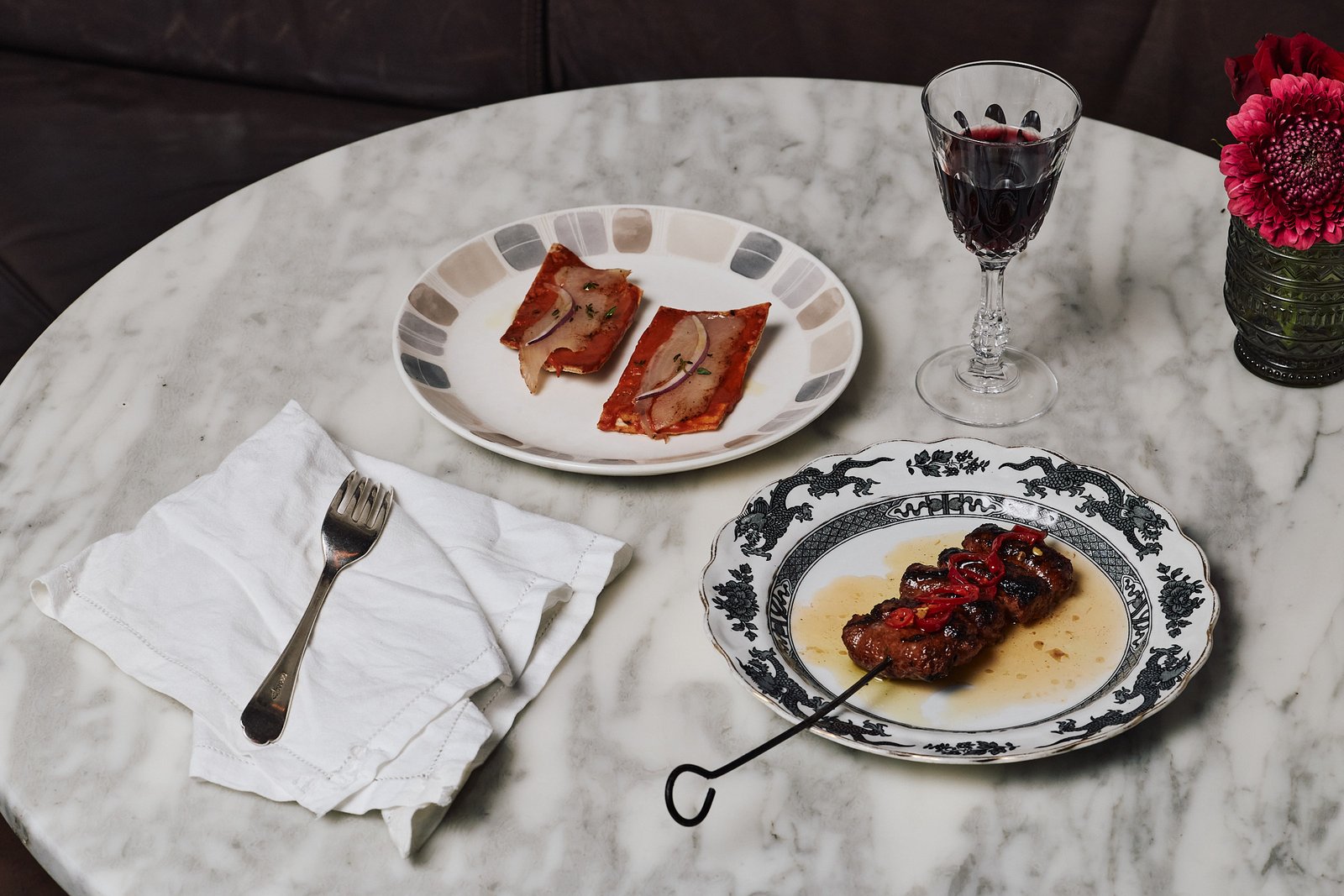
Meals can begin at the crudo bar, which sent me straight back to the seaside restaurants of Napoli. “I want to do crudo like in Italy, in the south especially,” Pilu said. “Freshly shucked oysters, fish sliced to order, and all the dressings, lemon, oil, vinegar. No microherbs.”

We had both recently returned from Venice, and sitting there looking out over Circular Quay, I couldn’t help thinking of the gondolas sliding back and forth, of wondering who was on board, and admiring the world going about its business. Plenty of waterside institutions coast on a great view and forget about everything else we look for when we dine out, like the food and the service. Flaminia sits well and truly above the rest, a lens trained on the harbour that brings a great city into focus.
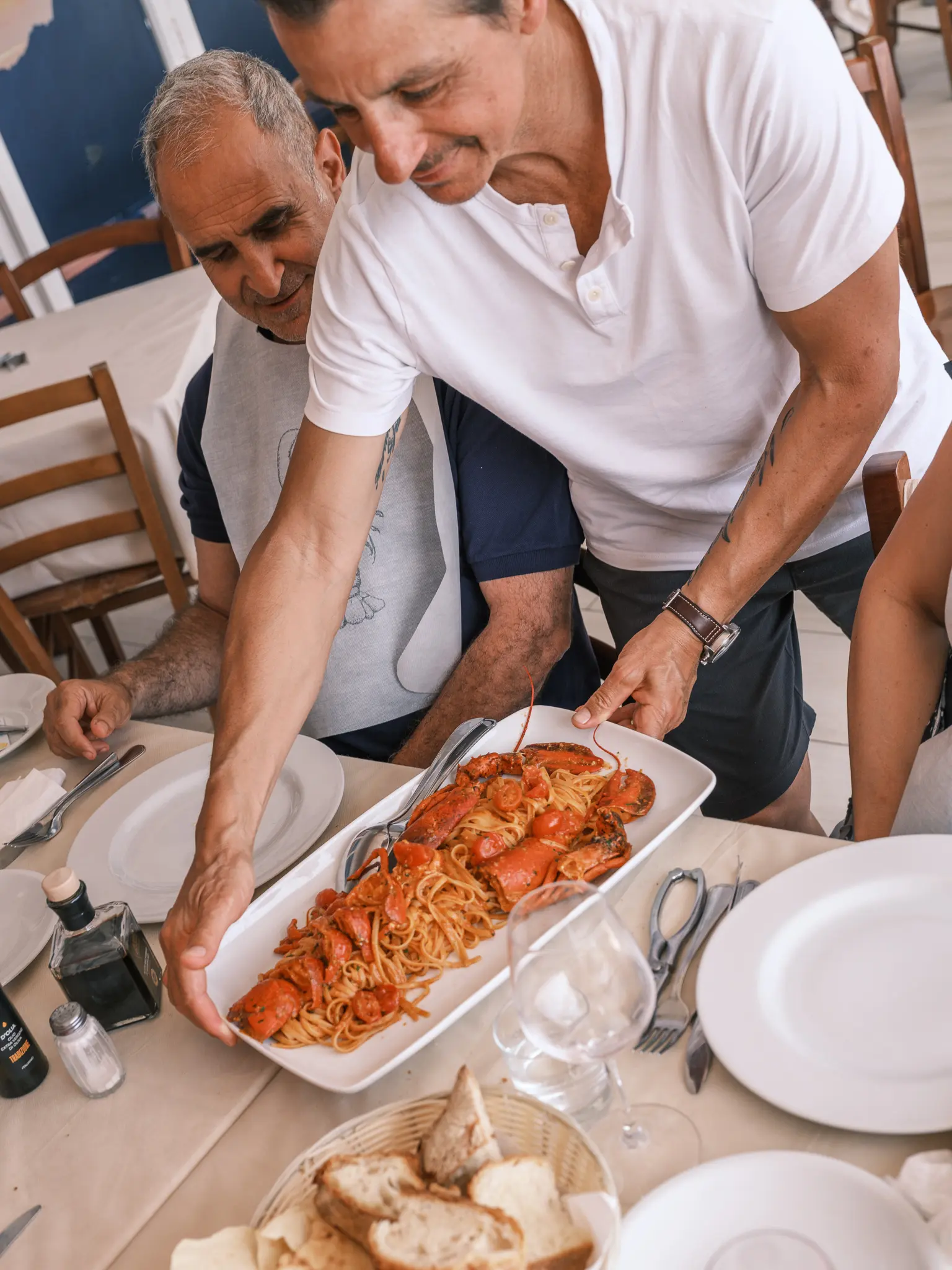
The story of how he got to Australia starts the way plenty of greats do… with a man walking into a bar.

He was 22, living in Sardinia, and had left the island all of twice. It was the end of summer, and he was tired and driving home from work with no intention of stopping for a drink, but his mate Antonello had other ideas. “I said, ‘Nah, I’m tired,’” Pilu recalled. “He physically pushed the steering wheel to go to the bar. I said, ‘Man, Antonello, only one more!’”

Inside was Marilyn, a girl from Australia who, though neither of them knew it yet, would one day become his wife and take him on a journey he never could have imagined. “What even is Australia?” he remembered thinking. “I’m from a small island. I had no clue what this place was.” His dream had always been to learn English, and he had pictured himself one day living in America.

As the story goes, their young love blossomed on the island, until the day came for Marilyn to fly home and Pilu was left with a decision to make. “I had this money to buy a motorbike, or I could spend it on a ticket to Australia,” he said. “I thought, stuff it, bought the ticket, and made the best decision I’ve ever made in my life. By far.”

He landed in 1992, alone and having never left Italy before, and his first memory of the trip is of the plane in Rome with a kangaroo on its tail. When he turned up at Marilyn’s parents’ house, he said, “it was already like their son had rocked up.”

His first boss in Australia, Piero, gave him the lesson he still runs his kitchens by. “He said to me, you may have 10 things that you have to look after,” Pilu said. “If only nine work and one doesn’t, and you can’t pick out which one it is, it may send you broke.”

He seems to have got all 10 right. In 1997 he opened Cala Luna on The Spit, introducing Sydneysiders to Sardinian cooking, and in 2004 he and Annecchini opened Pilu at Freshwater in a heritage beach house above the sand, later adding a little kiosk next door called Pilu Baretto. Along the way came a cookbook, the aptly named A Sardinian Cookbook, and last year Pilu turned 20. The restaurant, that is.

That makes Pilu part of the city’s old guard, and he is happy enough to wear the title. He spoke fondly of Armando Percuoco of Buon Ricordo, whom he called “the Di Stasio of Sydney.” “Armando is retired. That was the generation for us,” he said. “And now it’s us.”

He remembers when a single review could make a restaurant, and he saw it first-hand in 2005, when Pilu was named best new restaurant in the Sydney Morning Herald Good Food Guide. “When Good Food used to come out on a Tuesday, people used to pick up the paper and read it every week. It was like a Bible,” he said. “When we won that award, the restaurant was packed for months and months and months.”


For someone with that kind of track record, Pilu keeps his head a remarkably normal size, putting it down to knowing the difference between a good ego and a bad one. “I think there are two types of ego,” he said. The bad kind is all “me, me, me,” and he wants nothing to do with it. “What would I be without my team? I’m only as good as my team.”

He went through the names of his staff like a proud dad at a school concert, from Rob, the head chef, to Davey out front, who is “like my brother,” and Jeremy, “the wine guy.” “I’m not the best cook in the world,” he said. “But maybe I’m one of the best chefs around, because I’ve created amazing teams.” To him, a restaurant works a lot like a plate of food. “It’s made with five different ingredients and they all have to work together,” he said. “If one is not good enough, it’s like not putting in salt. The dish doesn’t work.”

The good kind of ego, as he sees it, is really just drive, the same drive that got him off the island in the first place. “When I left Sardinia, I wanted to do something,” he said. “Not just sit there and whinge about the government and everyone else around you.”

Running two restaurants at once might sound exhausting, but Pilu draws a firm line between hard work and working hard. “Working hard I love. It’s never killed anyone,” he said. “Hard work is when you’re pushing uphill. The restaurant is quiet, you’re shuffling staff, maybe you’ve got to close for a day. That’s hard work.” Part of the energy he has left over goes into running. The day after we met, he was due to run a 10-kilometre leg of the Bondi to Manly for charity, which is no biggie for a man who has done an Ironman. “Sport, I think it’s good for your sanity, more than your fitness,” he said.

It hasn’t always been smooth sailing. A few years ago, a bad fall during a triathlon left him with a fractured pelvis held together by a 35-centimetre titanium pin, a broken collarbone and four broken ribs. “I was a mess,” he said. “I thought I’d never walk again.” From his hospital bed, his son promised him that once he got better they would start racing together, and twelve months later Pilu crossed the finish line of his first Ironman, in Port Macquarie.

Father and son have raced side by side ever since. “We high-five each other on the run,” he said. “I don’t care how I go, if I win, if I lose, what position I come. For me, it’s the highlight of my life.” It says a lot about where his priorities lie, in a strict order of family first, then work, then pleasure. “Don’t start switching them around,” he said. “It doesn’t work.”

Looking back, he puts it all down to that one choice on the island. “When you’re young, you go, stuff it, I’m gonna give it a crack,” he said. “It’s a split-second decision. You do it or you don’t.” Had he bought the motorbike, none of it would exist, not the family or the restaurants or the life in Sydney with Sardinia only a plane ride away.

More than three decades on, he is still a little amazed by where he ended up. “When I came here in ‘92, never in my life would I have thought I’d be running a restaurant in Circular Quay, the most beautiful harbour in the world,” he said. “You only see the Opera House on postcards or in documentaries. And now we’re here.”


Your next Read

Morten’s gently satirical, yet disarmingly warm artwork adorns wine bottles, tins of olive oil, vinyl …

In Melbourne’s CBD, like most cities around the world, it’s hard not to notice the …

All cities can be defined by a great restaurant, or a landmark, or in some …

It’s difficult to stand out on the bustling island of New York City… a place …