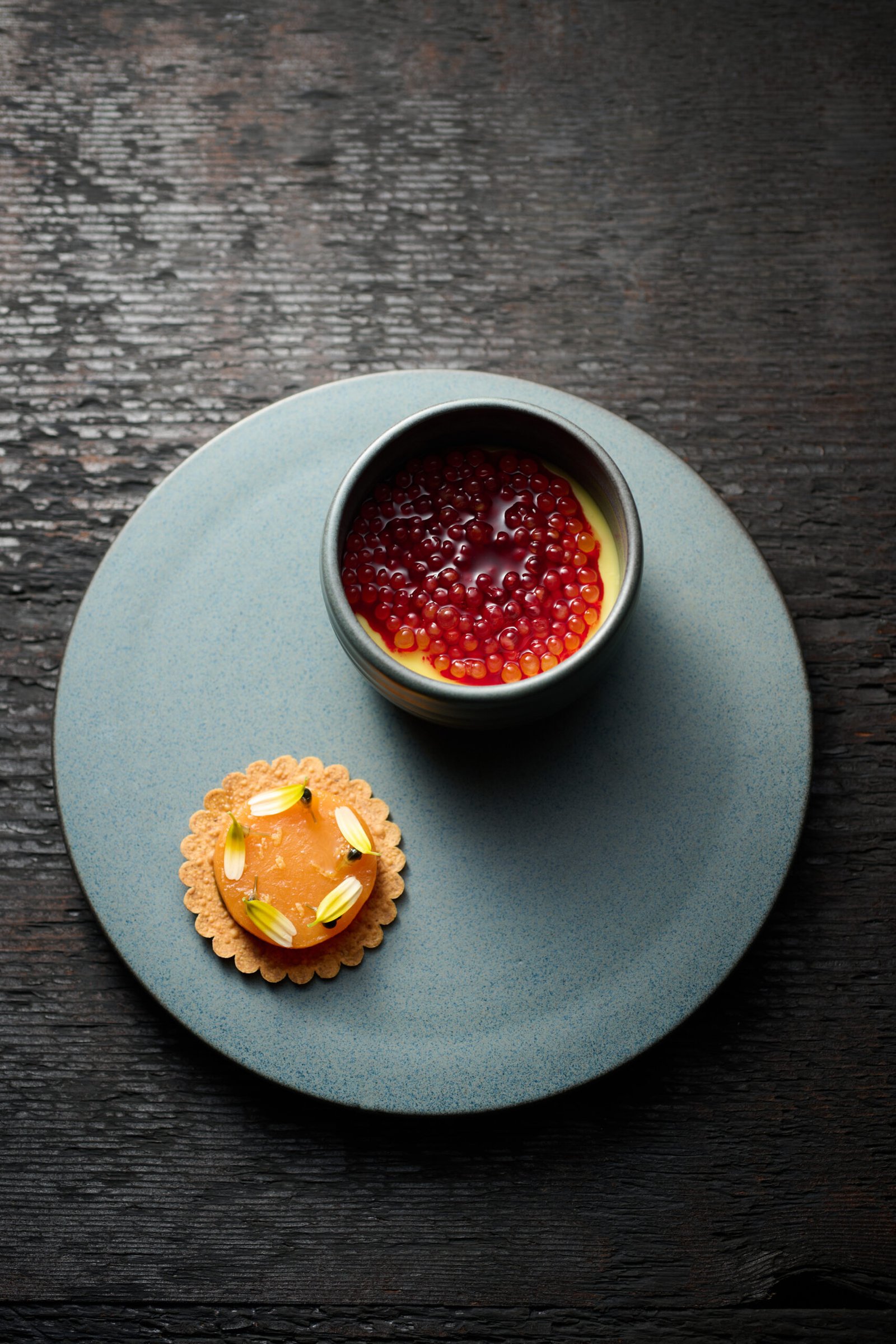
Brae preserves the sentiment of striving for greatness, even as our culture questions its taste for that value.

Black

Dan Hunter Takes Excellence Beyond the Dining Room

13 July, 2026

Words by:

Sarah Palmieri

At a time when fine dining is under greater scrutiny than ever, three-hatted Brae asks the question: what do we lose when we stop valuing excellence? This story forms part of The Chef's Hotel, our series exploring the places chefs build beyond the dining room, and what those places reveal about the people behind them.

Back in the 90s, Dan Hunter used to clock off work in a kitchen and head out to Centrifugal, the legendary underground club nights held at the Mercat Cross Hotel. “I’m not sure if it’s still a party scene,” he told me, “but this was in the 90s, early 2000s. This is prime techno-city Melbourne.”

The dawn of his hospitality career saw him, like so many of the greats (including The French Laundry‘s Thomas Keller), earning his stripes in the dish pit. In time, that would move into the heat and hustle of fire and stoves, a soon illustrious cooking career that would begin at The Oyster, then to Lantons and Verge in Melbourne. “From the minute I walked into a proper kitchen, I did not want to do anything else,” he told me.

It was a drive that led him searching for more technique, more passion, a greater way of mastery. That, and an interest in the Spanish language, took him and his wife Julie Hunter to Spain in 2003 on a journey of discovery. It began in Barcelona at the Michelin-starred Caelis, but there was a bigger venture in mind.

Two years passed and they packed up Barcelona and moved to Errenteria, home to the ever-influential Mugaritz. The two-Michelin-starred restaurant run by Andoni Luis Aduriz (synonymous with pushing gastronomy towards the extreme) was where he would go to build his culinary language. Edible stones, wild game macarons and a broken egg dish that took five years to develop were all common dinner items there.

Hunter began on an internship and worked his way up through the tight kitchen brigade, leaving as head chef. “You make sure you experience the highest levels to calibrate your standards,” he told me about his time at Mugaritz.

European hospitality, now and at that time, lives in a different world to that in Australia. Maybe it’s because people have a different reverence for a restaurant being a craft, and for its chefs and service staff being part of delivering a sort of art. Although some may argue otherwise, a Michelin star is different to a hat, and the legacy it holds ultimately affects the product. It’s something Hunter has experienced in his travels and at home in Australia. “There’s a lot of money here,” he says. “Everyone just goes to Europe to spend it quietly, on what they think is better than something close to home.”

Whilst Hunter was in the Basque Country, working his way up the ranks, the idea of experimental, elevated cooking in Australia remained metropolitan to its detriment. Places like Bennelong, Quay and Marque had been awarded three hats, with the rest of the list following like clones.

In 2007, after four years in Spain, Hunter came back to Australia, where he put all of his new knowledge into the farm-to-table Royal Mail Hotel in Dunkeld. What followed was a tenure that would raise its standard to global recognition.

“It’s easy to say, ‘We want to be the best restaurant in Australia.’ What does that mean?” he says. “Restaurants need to have a vision for what they are, and the ability to change that vision when required.”

For Hunter and Julie, that vision was clear. It was about putting all of their passion into a restaurant to call their own.

And so, in 2013 came Brae. The white cottage on 30 acres that would soon be one of the best restaurants in the world.

On the morning of our interview, I had packed a bag and taken the journey along dusty, winding roads and picturesque views from St Kilda to Birregurra. It’s a place you might not visit if it weren’t for the restaurant, and one that people from all over the world travel to experience what the Hunters have created.

Arriving to meet Hunter in the front room at Brae, a cosy, light-filled lounge, adorned with art, the sun shone through their white panelled windows. He wore black pants, black sneakers, a white button-up chef’s coat and black-framed glasses, gateways to his little blue eyes. Outside, you could see the embers of the woodfire oven burning, where bread would be cooked for the night’s service. A mix of Radiohead, Lou Reed and Mazzy Star drifted over the speakers, a playlist Hunter told me he had precisely curated, and that would set the tone of the evening.

This restaurant is far more than a stovetop and a dining room; it expands out to a farm led by their gardener, Jo Lawson. Some days there’s a cabbage patch, some days that cabbage patch is a pumpkin patch. It’s where tomatoes bloom and apples ripen. When I was there, it was home to ice plant, a leaf with a glossy, crystal-like texture, as though it’s been rained on and the droplets have held their form on its green skin.

It was one of the dishes on their autumn tasting menu, which also featured Juice of 100 Tomatoes, that left me with a shock and excitement I could only relate to watching Veruca Salt and her blueberries in Willy Wonka. There was wild and cultivated mushrooms braised with potato and brassicas; duck liver, cocoa and pistachio; and a “half time” chocolate orange that lay in a bed of green leaves.

Brae is more than a restaurant: it’s a world wrapped in the nature of Australia. Whether it’s a vegetable grown, or the sprawling land where it resides. That same land carries through to its boutique rooms, where the estate doesn’t end when the meal does. A record player waits there, along with a curated selection of vinyls from the xx to Fleetwood Mac to Jeff Buckley. My favourite part is the bath, that looks out onto wide plains, where kangaroos roam and tall trees sway in the wind.

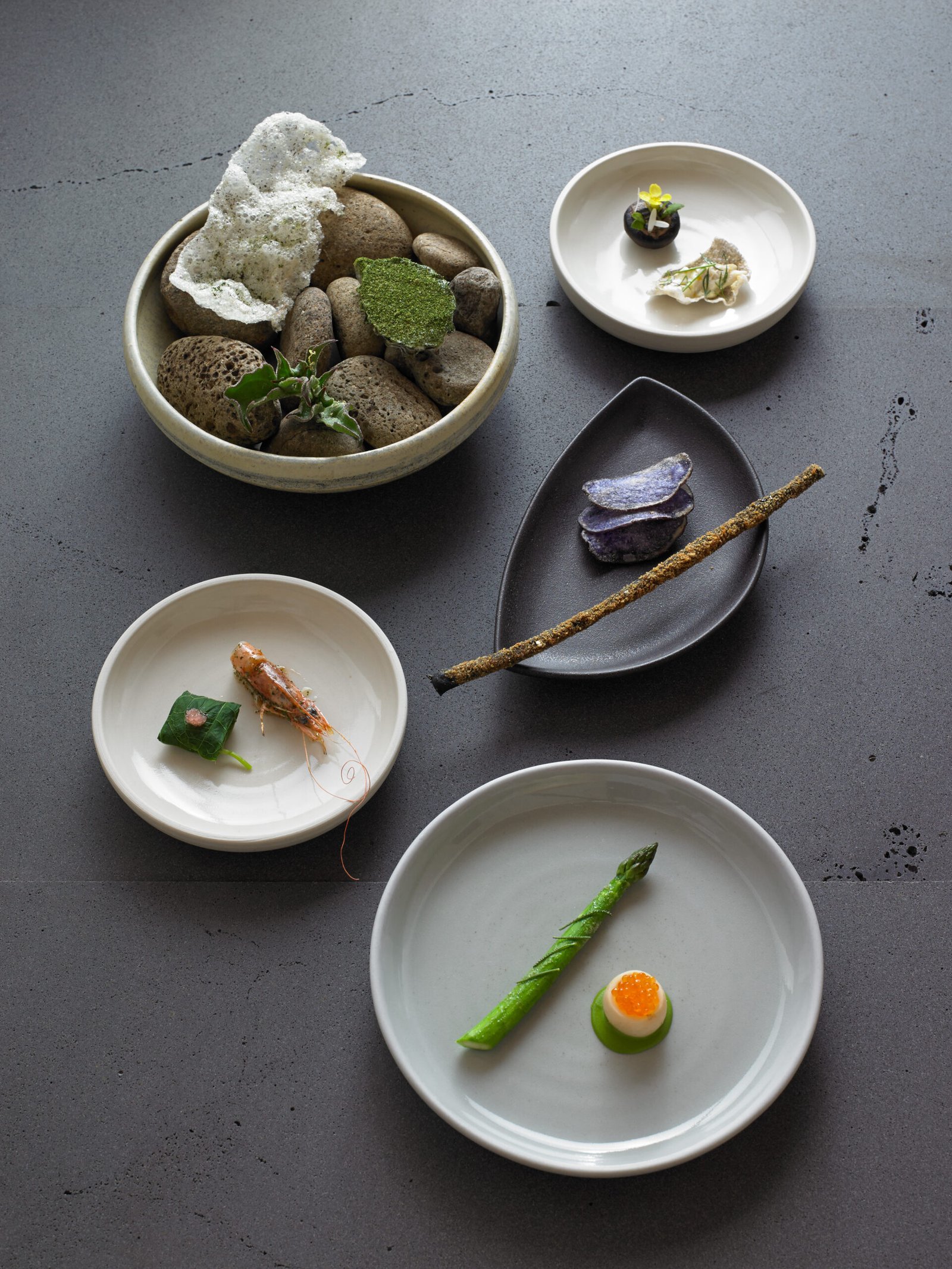
For all of its brilliance, one that is difficult not to adore, it’s a style that our culture may be losing appreciation for. The thoughtful upper echelon of hospitality, that requires its guests to have a hunger for excellence, and a willingness to spend to experience that.

“Creativity has a value now,” Hunter responded as I probed the topic. “Or, you can be as creative as you want, but only if it’s within three hundred dollars or less.”

He tells me they may serve fifteen guests that night. Across the day, between the garden, accommodation, front of house, kitchen and office, there are around thirty staff on shift. “Not everyone can afford it. I can’t afford it all the time either.”

In comparison to other heavily-listed winners of the restaurant game, faux institutions that traverse multilevel skyscrapers and boast over-saturated euro cuisine, Brae has grown completely differently. It is a family restaurant, not backed by investors. “Me and Jules,” says Hunter, “one family.”

There is a reality to running somewhere brilliant, and to sharing that brilliance — one that, without an appetite for beauty, for experiencing something great, can be lost. “We’re working in a way that is hopefully bringing joy to people,” he tells me. “We’re doing it for that moment where someone smiles and says, ‘That was fucking amazing.’”

Hunter spends his time off (not that it comes around too often) travelling, dining in restaurants, and surfing with his daughter. They both throw their surfboards in the car and drive out to the nearby ocean. He speaks about it with peace and sincerity, which maybe gives some reason to how he seems so calm and kind, having spent his entire career working in a kitchen.

“You can never be so good that you’re better than the ocean,” he tells me. “It’s one of the few things I know in life where you have no choices and you must be present.”

Brae breathes that same sincerity. A want to go beyond the egos and the lists, to serve something that aligns with nature and creativity. To build something wonderful takes time and reverence to your craft. For Hunter, it’s not just about what is served on your plate, but everything that remains once that plate is cleared.

Your next Read

MINI’s latest JCW range is as comprehensive as its ever been, since the performance-focused sub-brand …

As Melbourne settles into its chilling stretch of winter, the Melbourne International Film Festival rolls …

A Journey of Discovery Sok’s path to becoming an artist was not straightforward. “Before pursuing …

The brand did not emerge from a desire to disrupt skincare so much as a …