Stay up late, leave the house, and for god's sake, have an opinion.

Black

Jerry Saltz Upholds the Need for Criticism

27 June, 2026

Words by:

Sarah Palmieri

The former truck driver, with no degree, still manages to be one of the most important voices in art criticism. At Sydney Town Hall for Vivid Sydney, he reminded a room full of people why an opinion matters. I was one of them.

Jerry Saltz pulled in one of the hottest audiences Australia has to offer. Sincerely, I had to put down my Janet Malcolm and take a look around — perchance to manifest a meet-cute with my future boyfriend who also reads the New Yorker. A hard find in the age of the social media hoedown, but a find that gathered in harmony at Sydney Town Hall during Vivid to hear the infamous art critic and Instagram personality Jerry Saltz share his wisdom and opinions, live in conversation with the brilliant Art Historian Mary McGillivray.

If you, like the rest of Australia’s unattractive majority, don’t know the work of the great Saltz, allow me to enlighten you.

He was introduced to me in New York City, where he lives with his wife, the former New York Times co-chief art critic Roberta Smith, who retired in 2024 after 38 years at the paper and 4,500 reviews. When she retired, Saltz posted to his infamous Instagram that she was “the best pure art critic alive.” And he reiterates the message on stage. It was through my housemate, an artist, who went through a season of playing Saltz’s book How to Be an Artist on the Sonos in our Brooklyn apartment that I went beyond his personality and discovered his work. The apartment was split into two rooms by a sheet curtain, so yes, I came to know it quite well.

Pulitzer Prize-winning Saltz has been esteemed for his criticism at New York Magazine, but found his writing voice at the Village Voice, the news and culture publication that was based in Greenwich Village. Before that, he drove trucks for a living, a depressed long-haul driver who had never set foot in an art history class and didn’t particularly care to. It was that candidness, a voice that spoke to everyone, which made him. His takes didn’t arrive pampered by theory or academic credentials, but as an honest reaction of someone who looked at something and felt something and was not afraid to say so.
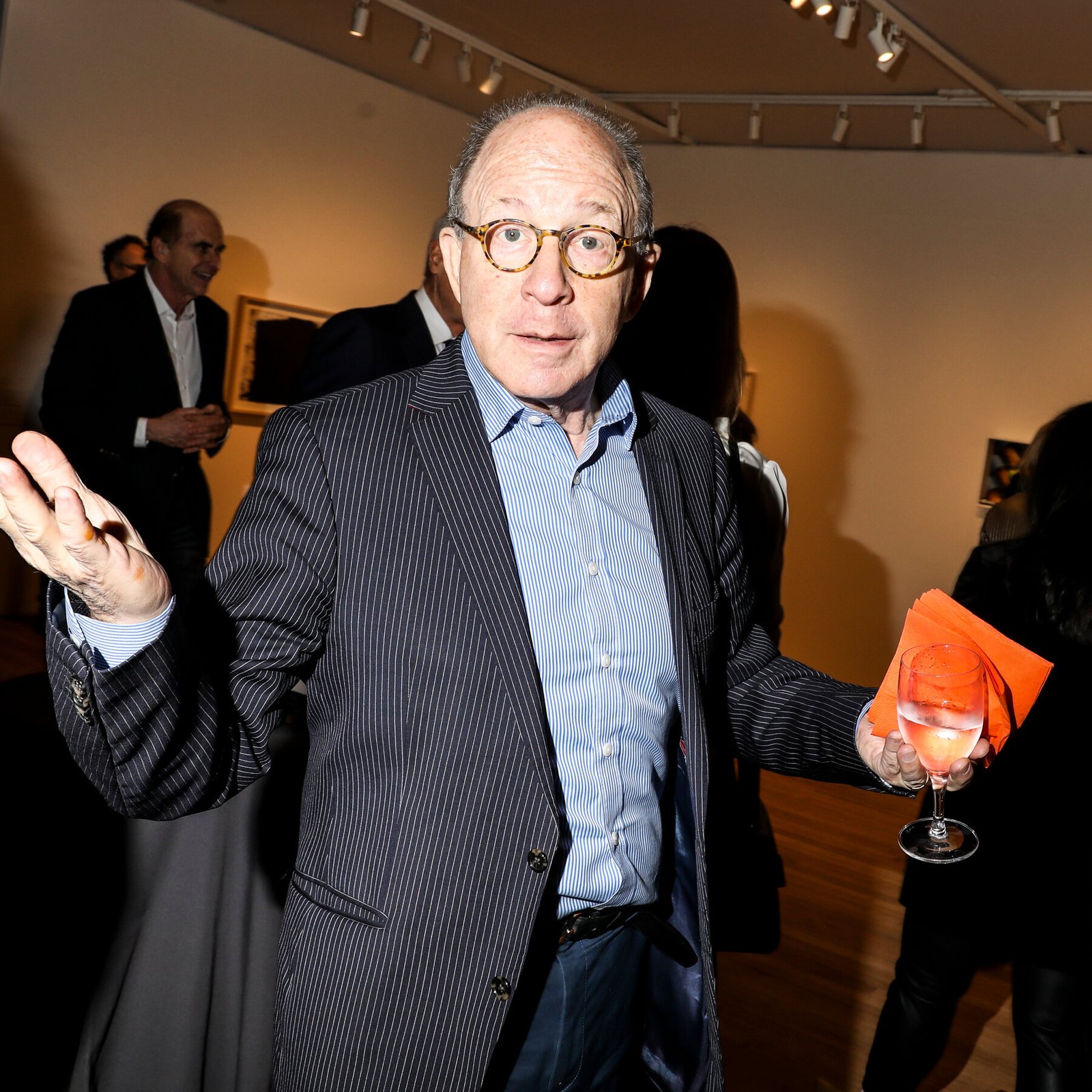
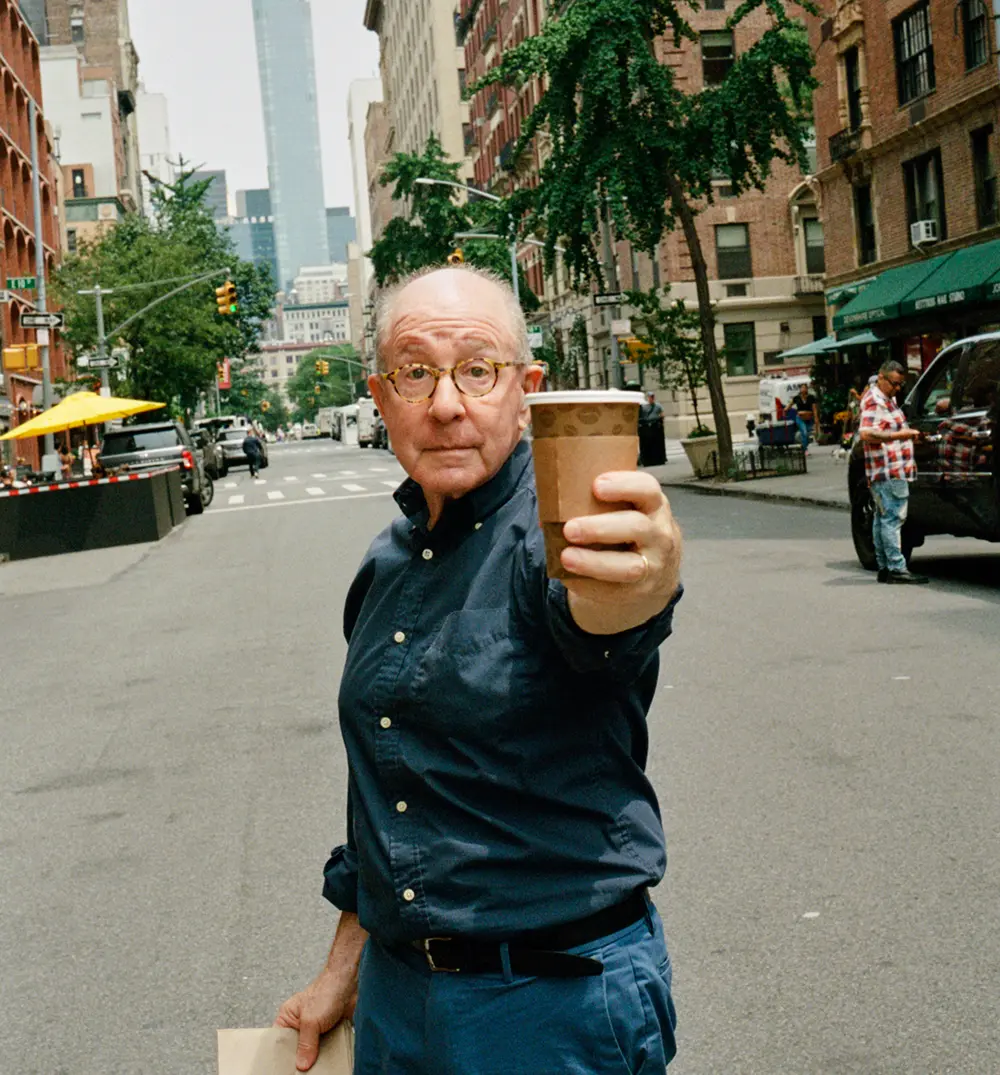
The myth and the legend of Lower Manhattan arrived on stage, donning a black Qantas hat, pointing his iPhone at the crowd. “My name is Jerry Saltz. I’m a writer. I’m an art critic. I was a long-distance truck driver until I was 40 years old. I never went to school. I have no degree. Don’t listen to me.”

The crowd applauded.

The conversation began by zooming in on some of the art Saltz had seen during his short time in Australia, beginning with Sidney Nolan’s First-class Marksman of Ned Kelly, done in 1946. He compared Nolan’s work to Picasso’s, to Tony Albert’s, placing him as equally important but under-recognised. It is worth noting that First-class Marksman is the most expensive Australian painting ever sold, the Art Gallery of NSW paying $5.4 million for it in 2010. Which, in comparison to say, Jackson Pollock’s Number 7A, which recently sold at Christie’s $181.2 million, rather proves Saltz’s point. He would later say this is central to the importance of his job: to highlight these discrepancies and give an equal platform to artists who might otherwise go unnoticed.

Saltz, who has proclaimed “I buy thrift art. No dogs, no clowns,” is a defiant critic amongst a media circus where criticism looks more and more like an Instagram slide, a press release, or something AI-generated that curves around any actual point. It’s a time when writing can act as just a headline, with some pretty imagery attached. Get those two perfected on an algorithm, and much of it can garner the same attention, if not more. Much of it is about finding out what an audience likes and doubling down on that. And that, comes at the expense of having an opinion, of the opportunity to sway an audience to view something differently.

With all his New Yorker forwardness, Saltz speaks to the antithesis of this media trend. No take is too bold, too left of centre, too brave, too unfashionable. He called Jeff Koons’s work “a huge nothing,” dismissing him as the embodiment of art world cynicism and market spectacle. Of Thomas Kinkade, the best-selling artist in America, he wrote: “Kinkade’s work is not art. It’s product.” He has been openly critical of the art world’s relationship with money, declaring that “the art market is a scam” and that “collecting art for investment is a desecration.” He has never tried to sell his truth for a seat at a more palatable table, and that is what makes him great.

Because a good critic doesn’t just tell you whether something is worth your time. They tell you why it matters right now, in this moment, in this culture. They are the ones who can place a painting next to a political climate, a film next to a generation’s anxiety, a restaurant next to the city. They give the work a context it couldn’t build for itself. Without that, we are left with vibes and AI-curated feeds, and neither of those has ever changed anybody’s mind, outside of maybe some wallpaper and a set of fake tabis.

So when McGillivray brought up the dreaded word AI, his position, although danced around, was noble enough for my very attractive future boyfriends and me to bank on. “You have to make yourself yourself, so you’re not replaced,” he said. “You cannot hide your own feelings. You must write in your own voice.”

A great opinion, or even not a great opinion, but at least one garnered with great intent, is a leveller. Saltz, who doesn’t have formal education, wealth or nepotism on his side, is the epitome of that. In New York, he drives a culture of seeing art that may otherwise be lost among a myriad of Picassos and Monets, or subpar work that falls under the safety net of a big-name gallery. “Each person sees a different Hamlet,” he told us, “and that’s what I’m looking for in art.”

Of course, in some cases, those takes may come at a cost. It reminded me of Pete Wells, the great food critic who wrote for The New York Times. I was working at Eleven Madison Park just after he released a review describing our soup as “bong water,” and that essay, although a tremendously difficult thing for a huge reputation to weather coming out of COVID, ultimately made the restaurant better. When you are voted the best in the world, it is fair enough that opinions will reign on your parade.

The same argument plays out in cinema. When Hitchcock released Psycho in 1960, critics called it “more miserable than the most miserable peep show.” One publication declared, “Psycho is sicko.” It went on to change the course of film history. Blade Runner was dismissed as slow and dull on release in 1982, and is now considered one of the most influential works of science fiction ever made. Bad criticism is still criticism. It creates the friction culture needs to figure out what it actually thinks.

At the core of Saltz’s message was a sincere and hopeful one: that artists of every kind are an essential part of our culture, of how we experience the world. “Stay up late and leave the house and teach each other how you’re going to change the world” is how he ended the conversation.

The Sydney Film Festival was happening at the same time. So off I rendezvoused, inspired by his words, to The Ritz to watch Jan Komasa’s The Good Boy. As a big fan of his previous work Corpus Christi, I came out feeling pretty robbed, but with some nostalgic appreciation for the ritual of it all.

Because out of the cinema was where much of the magic was happening. St Paul’s Street was covered in a sea of Carhartt and turtlenecks, tights, pints and cigarettes. People gathering, sharing ideas, arguing, dissecting. A film I didn’t particularly enjoy had somehow become more interesting because of the conversations it created around it. It was a reminder that sometimes the art itself is only the beginning.

Saltz’s sentiment was all around, just waiting for more participants. Whether you arrive with a thesis on the inner workings of Kubrick or perhaps off a long-haul truck drive, the invitation is the same. Look closely, have an opinion, and tell someone why, with passion! It makes for better art, better conversation, and our culture is all the better for it.

Your next Read

We know factory farming isn’t great for the environment, in fact it’s shocking on paper, …

There are few badges in the automotive world that hold as much emotional weight as …

If Albus Lumen had a congregation, Friday night’s Resort 27 runway in an Alexandria warehouse …

MINI’s latest JCW range is as comprehensive as its ever been, since the performance-focused sub-brand …