COMMAS Embraced All the Unexpected At Australian Fashion Week

Black

Tamarama Beach, In All Its Glory, Was Exactly What Richard Jarman Had In Mind

14 May, 2026

Words by:

Sarah Palmieri

There’s a famous moment from Alexander McQueen’s Spring/Summer 1998 runway, “Untitled,” where rain poured onto the catwalk. It was a planned theatrical ruse that left its models drenched, dressed in white with mascara running down their faces. Much of McQueen’s glory was built on the pleasure of bringing that kind of drama and excitement to a runway, leaving his audience to embrace all of the unexpected.

For COMMAS’ Resort 2027 debut, the rain and all of its drama arrived uninvited. Or perhaps spiritually invited. Founder Richard Jarman has always been honest about his adoration for Australian nature, particularly on the coast, so maybe the weather knew exactly where it was going. Either way, he didn’t need a production team to manufacture the romance of messy weather and chance happenings. Tamarama Beach took care of that itself.

At 8am on a chilly Sydney morning, a local swimmer opened the show, descending the steps toward the beach before stretching at the shoreline and plunging into the ocean beside the runway. Then came the models. Music stalled and restarted. Grey clouds and rain gathered overhead. Guests laughed as umbrellas turned inside out and shoes disappeared into wet sand.

Founded in 2017, COMMAS has always sought to embrace and speak to a different kind of beauty than resortwear is typically aligned with. They don’t do fantasy holiday dressing, the kind you might see in a cruise collection, but rather allow the water and life lived by the sea to influence their designs.  Quality, authenticity and a deep respect for the natural world is how the brand describes its ethos, and Resort 2027 distilled that philosophy into something both tactile and cinematic.

What the weather allowed COMMAS to do so well was place these clothes into a completely different environment from the one usually associated with the heat of Australia. Jarman’s world lived side by side with the grey beach scenes of a Bruce Weber editorial and the melancholy glamour of The Talented Mr. Ripley in winter. One look couldn’t have been more mesmerising: a model wrapped in an oversized wool blanket, hand-loomed by Argentine-Australian rug and textile house Pampa in deep green, moving gracefully through the rain.

An oversized rugby jumper, thick and slouchy with the perfect collar, has already become the object of collective obsession at Australian Fashion Week. Everyone I’ve spoken to since the show has mentioned it immediately, all impatiently waiting to get their hands on their own piece of preppy beachside cinema. Myself included.

“There’s a loose cricket theme running through the collection, and what I like about cricket is that it’s one of those rare sports where people dress up properly, then roll their sleeves up and let the clothes get lived in,” Jarman said after the show. “That high-low instinct is the whole collection.”

What makes COMMAS unique is Jarman’s ability to follow that high-low sensibility, especially when taking something refined and making it feel relaxed. The suiting this season was a perfect example. In comparison to a stiff and traditional style, these pieces were tailored to drape and move freely. Lightweight and cut for warmth without weight, as the show notes described. A quality that lent into its character as all of nature’s elements came on.

Culturally, the freedom to develop newness free from expectation is what distinguishes Australian fashion from its European counterparts. There’s less interest in preserving polish at all costs. And while we may not carry the heritage or cultural cache of Milan or Paris, that absence works in our favour. The weight of legacy is not pressing down on creative production, but instead giving designers a fresh slate to dream from.

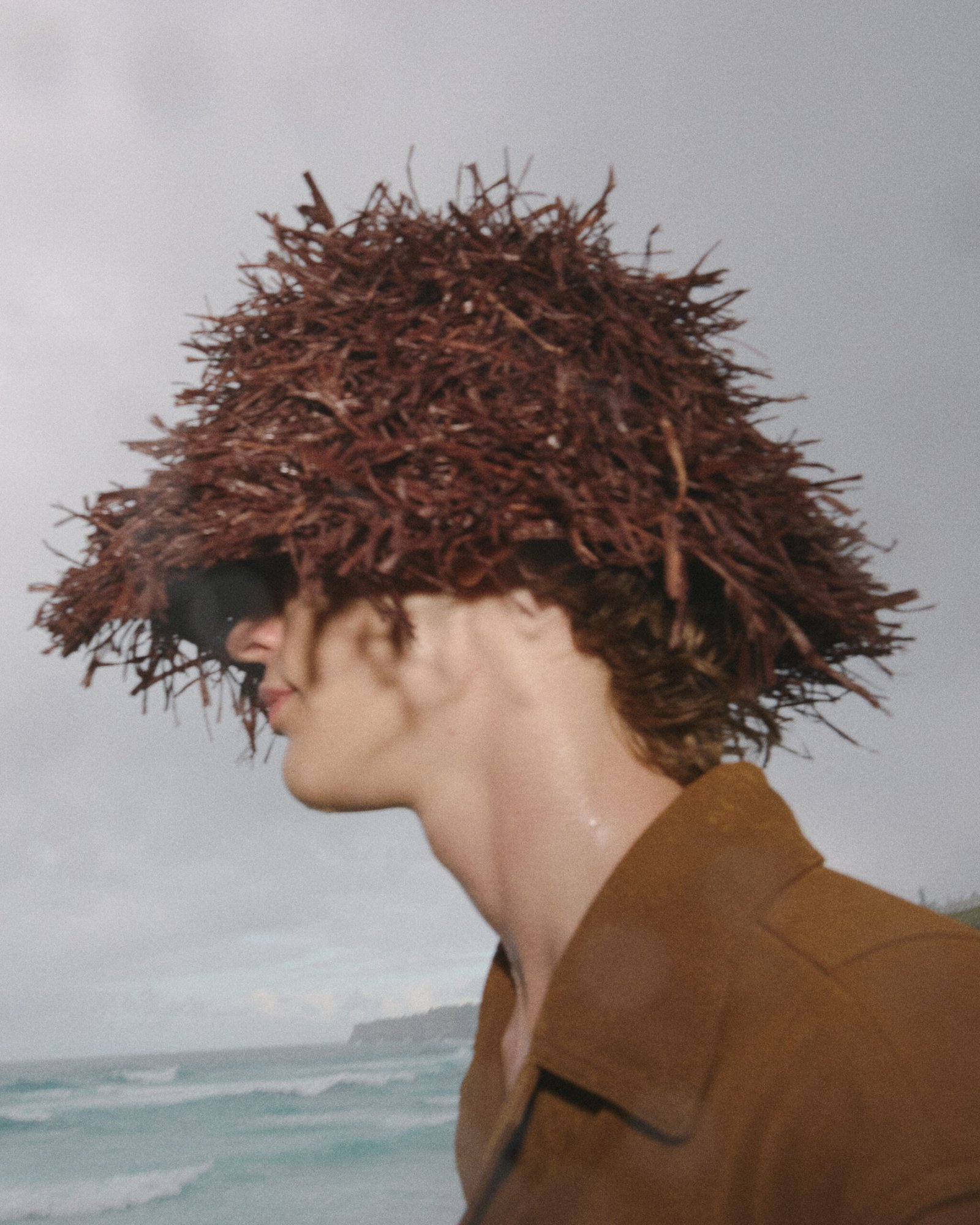
Jarman catches the sunrise every morning and designs with the rhythms of coastal life embedded into his work. But through all that poetry, what he never loses is a deep sense of joy. Take the oversized raffia hats developed with Helen Kaminski that resembled washed-up coral in pale blush and sand. Or the beaded necklaces by Vermeer Studio that sat long on bare chests. Then there was the raw silk that danced effortlessly with the breeze. These are clothes made for movement, for traversing the sand, climbing the stairs, and moseying into a gorgeous restaurant afterwards. It reminded me of some of JW Anderson’s finest moments.

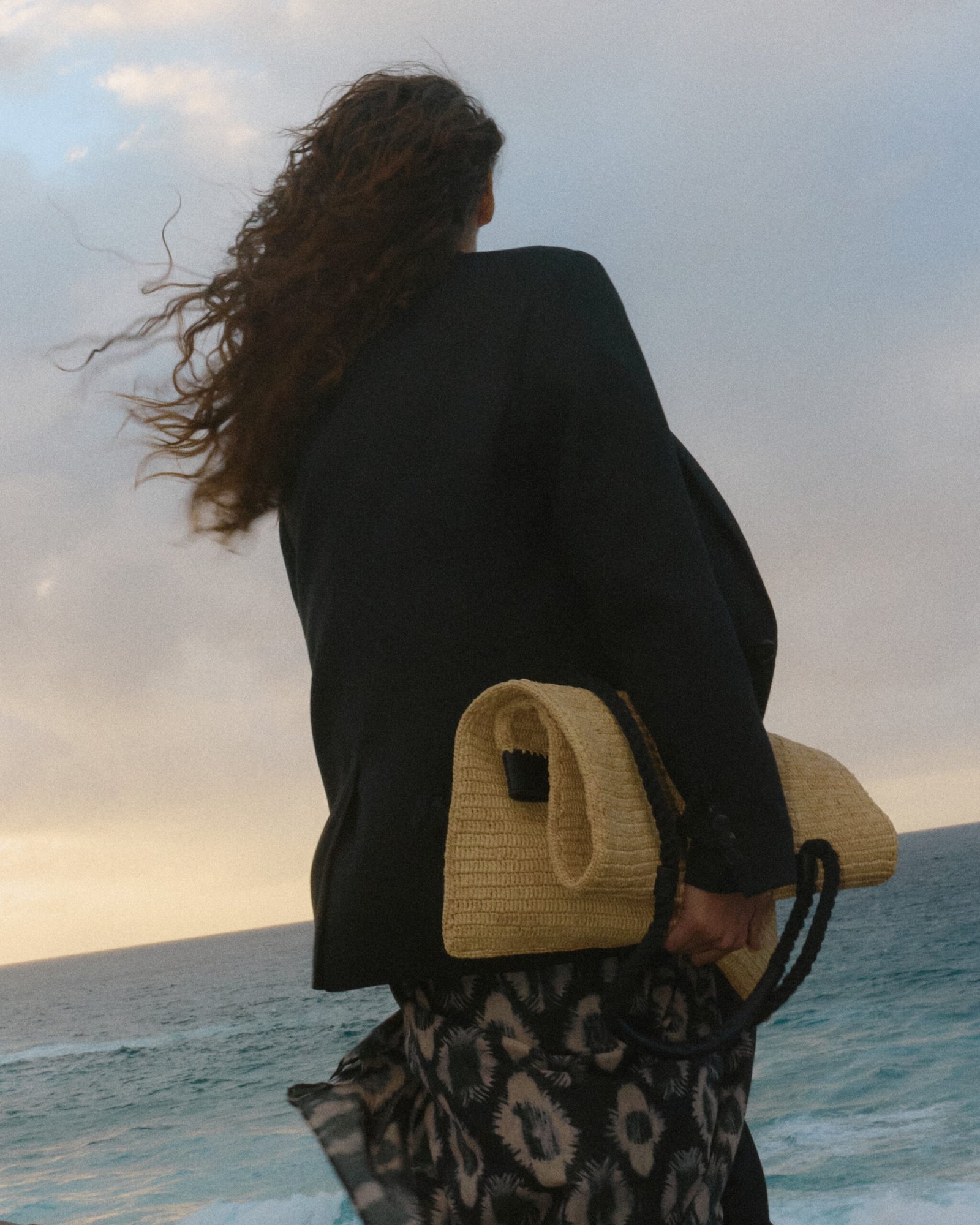
The womenswear expanded that idea, in a way that felt refreshing in an industry so often drawn to placing women in tight, restrictive clothing as a shorthand for beauty. Here, ease did that work instead. One model wore an oversized black suit with a sarong tied low at the waist, carrying a woven handbag. Another appeared in a chunky knitted dress made with Australian knitwear house Purl Harbour, almost identical in colour to the wet sand beneath her feet. Elsewhere, sheer white shirting billowed over shorts cinched with slim leather belts by W. Kleinberg.

“We came back to Tamarama because it feels honest, both to the brand and to me,” Jarman said after the show. “Tearing down a set the morning after a fashion show has never sat right with me.”

In another city, the rain and a surprise visitor might have ruined the show. But at Tamarama Beach, with the sincerity of Jarman behind it, the unexpected only brought the season into its complete glory. The relationship between the collection, the landscape and the people wearing them is a language he speaks with ease, and one that stands as a great testament to the legacy COMMAS is building in the Australian fashion industry and beyond.

Your next Read

Lace-trimmed tanks shimmered beneath the vaulted ceilings of the Musée Rodin as Dior’s Fall 2026 …

Last weekend, I ended up at Golden Plains, a big shroomy music festival in Meredith. …

Let’s be honest, Sydney has to be Australia’s flashiest city, and that’s coming from someone …

There’s a tendency, when talking about cars with any real history behind them, to mistake …