From Grove To Table

The Australian Farm Redefining Olive Oil

Black

Inside Goldi’s fresh take on olive oil

15 July, 2026

Words by:

Cobey Bartels

For generations, the Australian home cook and far too many restaurants have fallen for an unfounded, unchallenged culinary myth: that quality olive oil must be from the Mediterranean, with old-world branding to authenticate its origin. 

But, fresher oil, and branding, exist right here in Australia.

Like so many Australians, I grew accustomed to reaching for a dark glass bottle, adorned with antique, pseudo-religious iconography or faded illustrations of a Tuscan villa, operating under the assumption that heritage means quality.

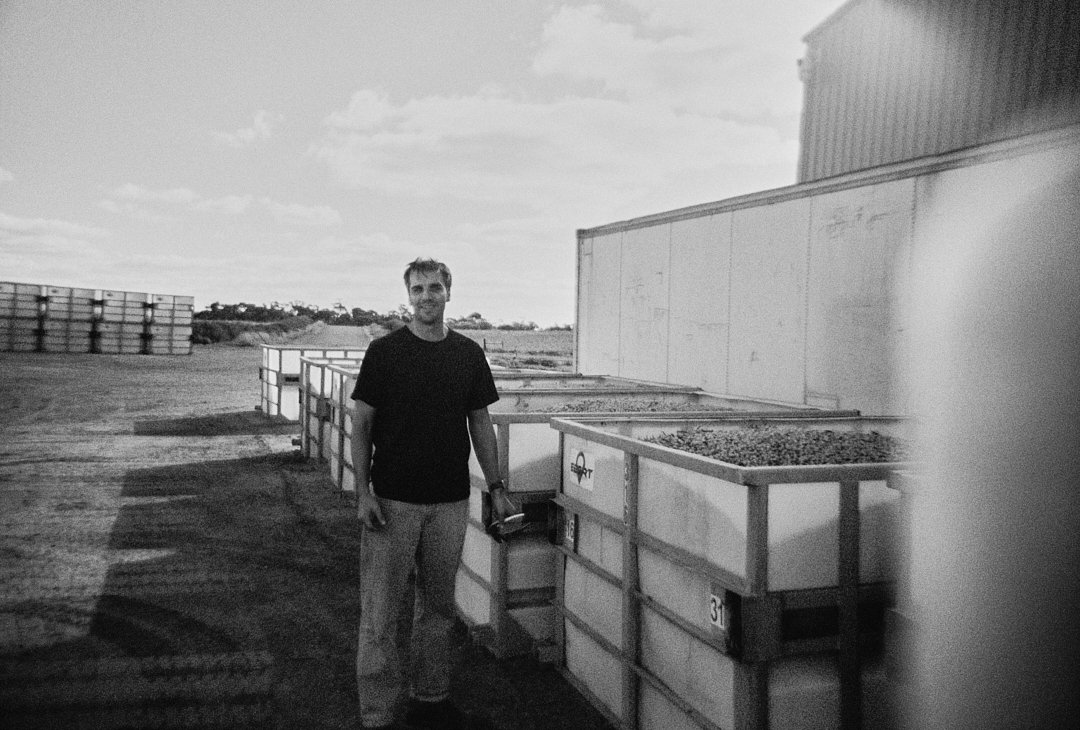
The problem, according to Owen Symington, Co-founder of Goldi, is that olive oil is best when it’s fresh, which is why he focuses on achieving the shortest possible time from picking, to pressing, and then getting his oil out to grocers and restaurants.

As I discovered, talking with Owen, extra virgin olive oil (particularly the cold pressed variety) is not particularly shelf stable, like, say, cellared wine is. It isn’t pickled, or fermented, it’s pressed, so when you think about it…it’s basically juice, and we can all agree juice is best when fresh.

“I think a lot of people were used to a really low-quality, rancid olive oil, and that’s just what they thought it was supposed to taste like,” Owen says. “The biggest thing we see from our reviews, honestly, is this revelatory moment when they realise how different actual high-quality olive oil is.”

Thanks to brands like Goldi, Australia is no longer reliant on imported olive oil. We are blessed with a Mediterranean climate of cool winters and hot, dry summers across a southern growing belt that spans the bottom South Australia and into Victoria, and growers are taking advantage of it. 

The local terroir across this region yields fruit of astonishing flavor and purity, and, importantly, it makes its way to retailers, restaurants and of course homes far sooner than European varieties ever could.

Owen, who founded the company alongside his sister, Janine Fahey, and designer, Michael Precel, found his way into the world of olive oil somewhat by accident, after his father, a retired software developer, purchased a rundown grove just outside of Shepparton.

His father didn’t really know what he was doing, so the transition from a desk to the gritty, unpredictable realities of growing involved an incredibly steep learning curve, and plenty of help from the family, which included a young Owen.

“I was seventeen or eighteen at the time, so I was pretty young, but at that stage it was my parents who got really into olives,” he says. “My dad always jokes it was a massive mistake going into the industry, especially not coming from an ag background.”

What began as a rather haphazard, but respectably ambitious family pursuit has turned into a sophisticated, multi-regional operation, spanning three distinct geographic hubs: Shepparton in Victoria, Telopea Downs on the Victoria-South Australia border, and Peake in South Australia. 

This decentralised approach to grove management protects the family’s supply from the harsh realities of nature. Olive trees are strictly biennial, naturally alternating between high-yielding and low-yielding crop cycles every twelve months, and their flowering patterns are incredibly sensitive to spring frosts, which can ruin an entire season’s harvest. 

“The regions are geographically different to each other,” Owen says. “Tooloopia and Peak have some similarities, but they are far enough apart that they have different weather systems. That’s actually really beneficial from a consistency perspective and by having three different geographic regions, very rarely does a single weather event actually knock out all three.”

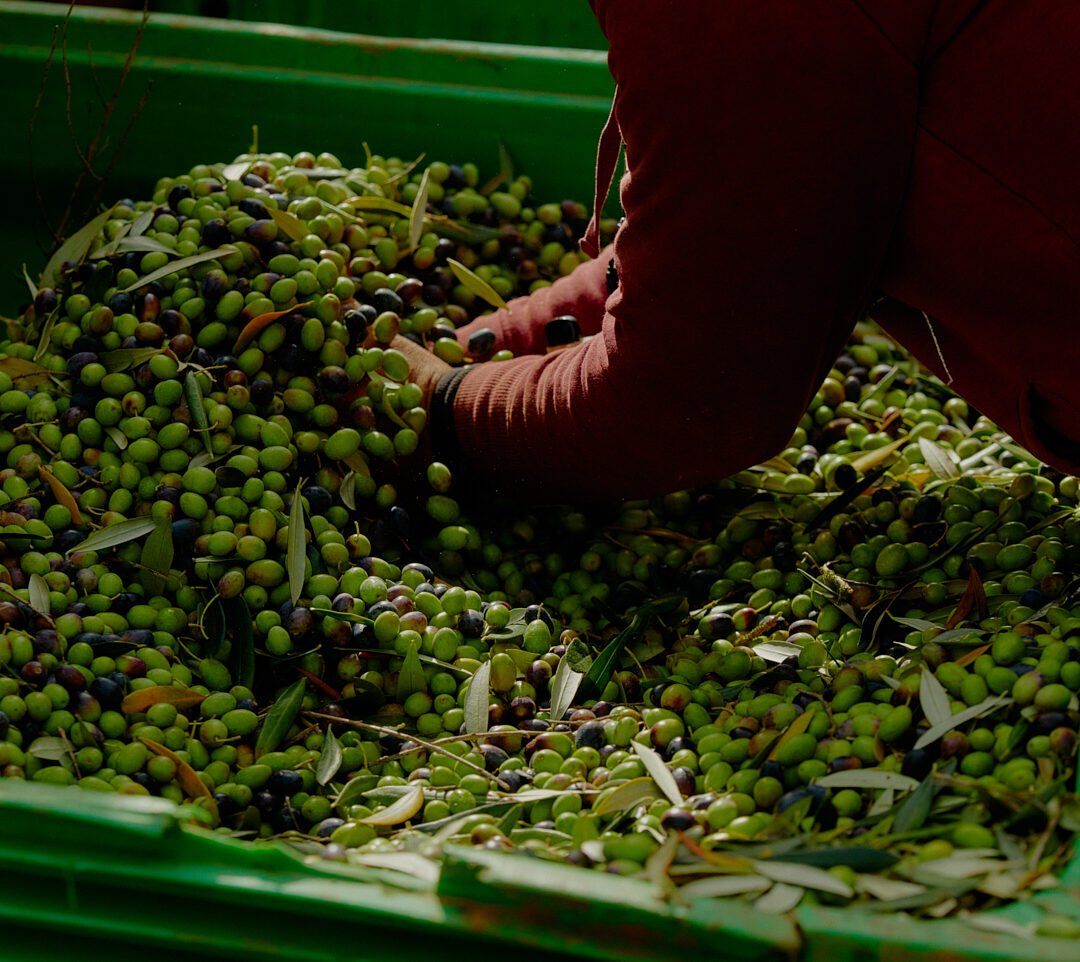
All three of Owen’s groves have come off a harvest that wrapped up mid-June, a high-stakes eight-week window where thousands of tonnes of fruit must be stripped from the branches at the exact right moment which, for Goldi’s early harvest oil, is just prior to maturity.

To ensure the processing can be done quickly, efficiently and with the care required, the family flies in Italian millers and master growers every year to run the harvests, alongside their local teams.

The Italian workers have grown up around olives, so they understand how to get the most out of a harvest, bringing old-world experience to Goldi’s local operation, and a unique cross-cultural appreciation in the processing sheds.

“They are olive growers; they’re olive people,” Owen says. “I love working with them because they’ll high-five when they’ve tasted the olive oil they’ve just made and go, ‘That’s really good.’ For us, that really matters, because it’s important to have someone who can taste the product as it’s coming out and go, ‘Yep, we’ve done that right.’”

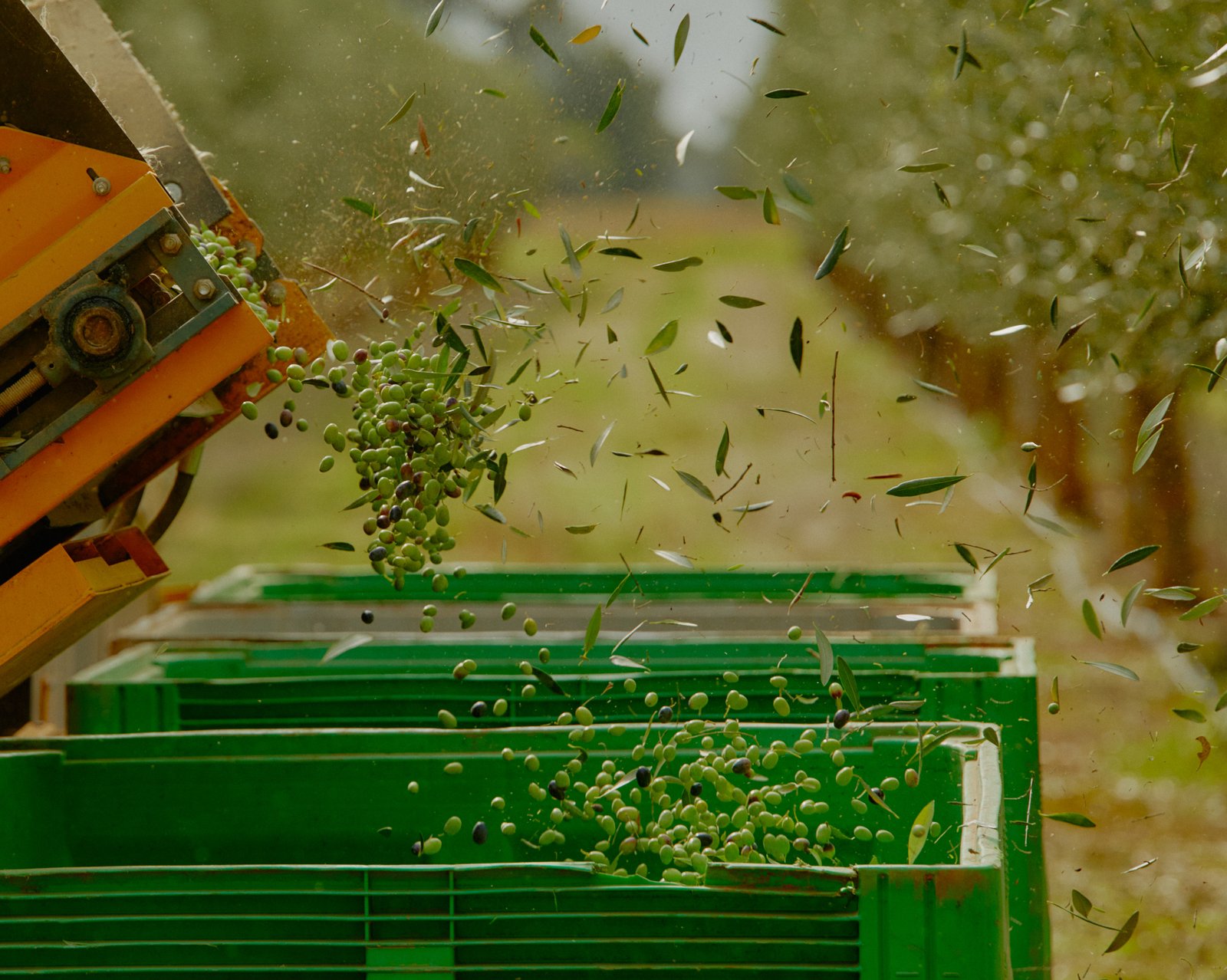
Unlike the historical hand-picking methods, still romanticised on the bottle labels many of us are used to, Goldi relies exclusively on high-speed mechanical harvesting using overhead shakers and mechanical harvesters. 

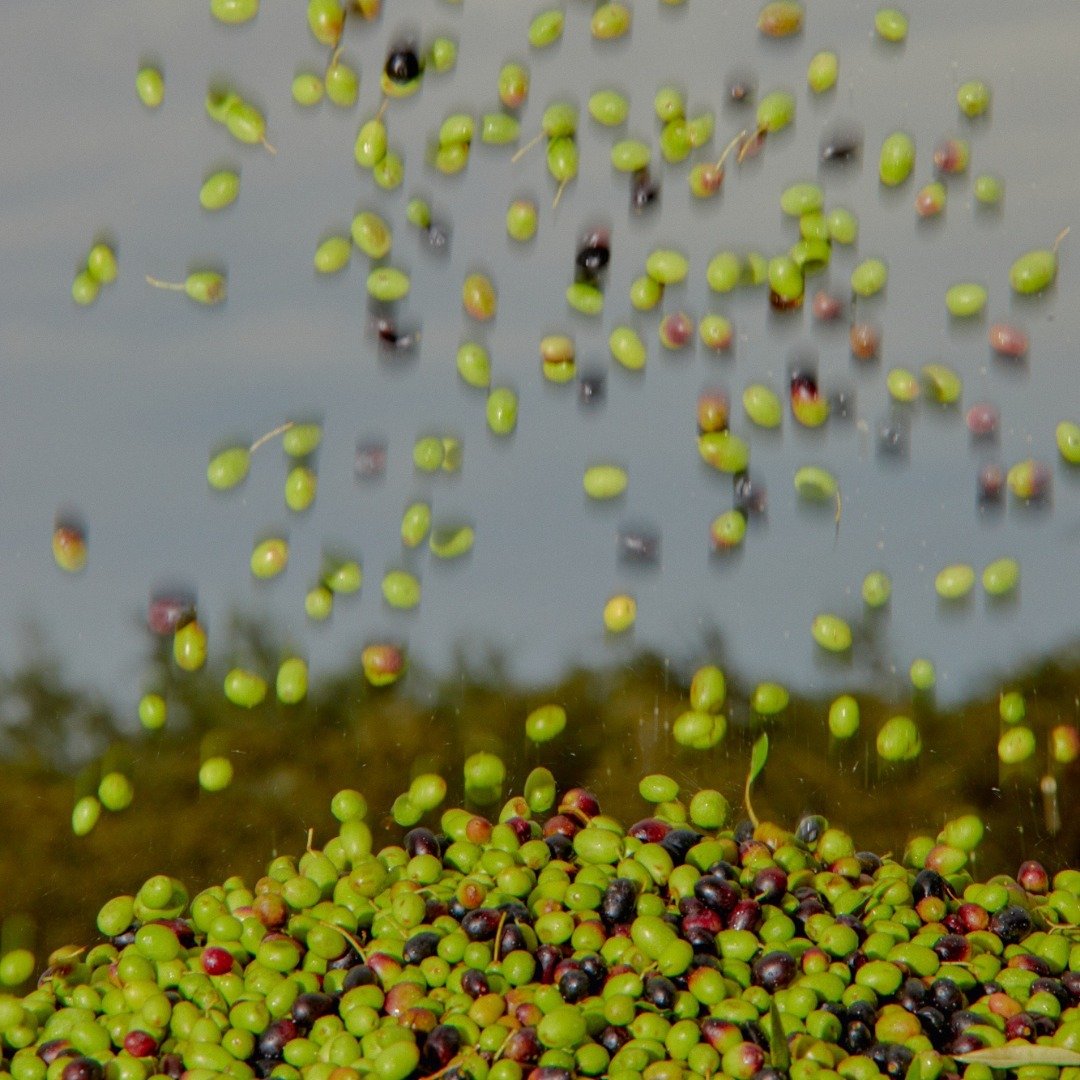
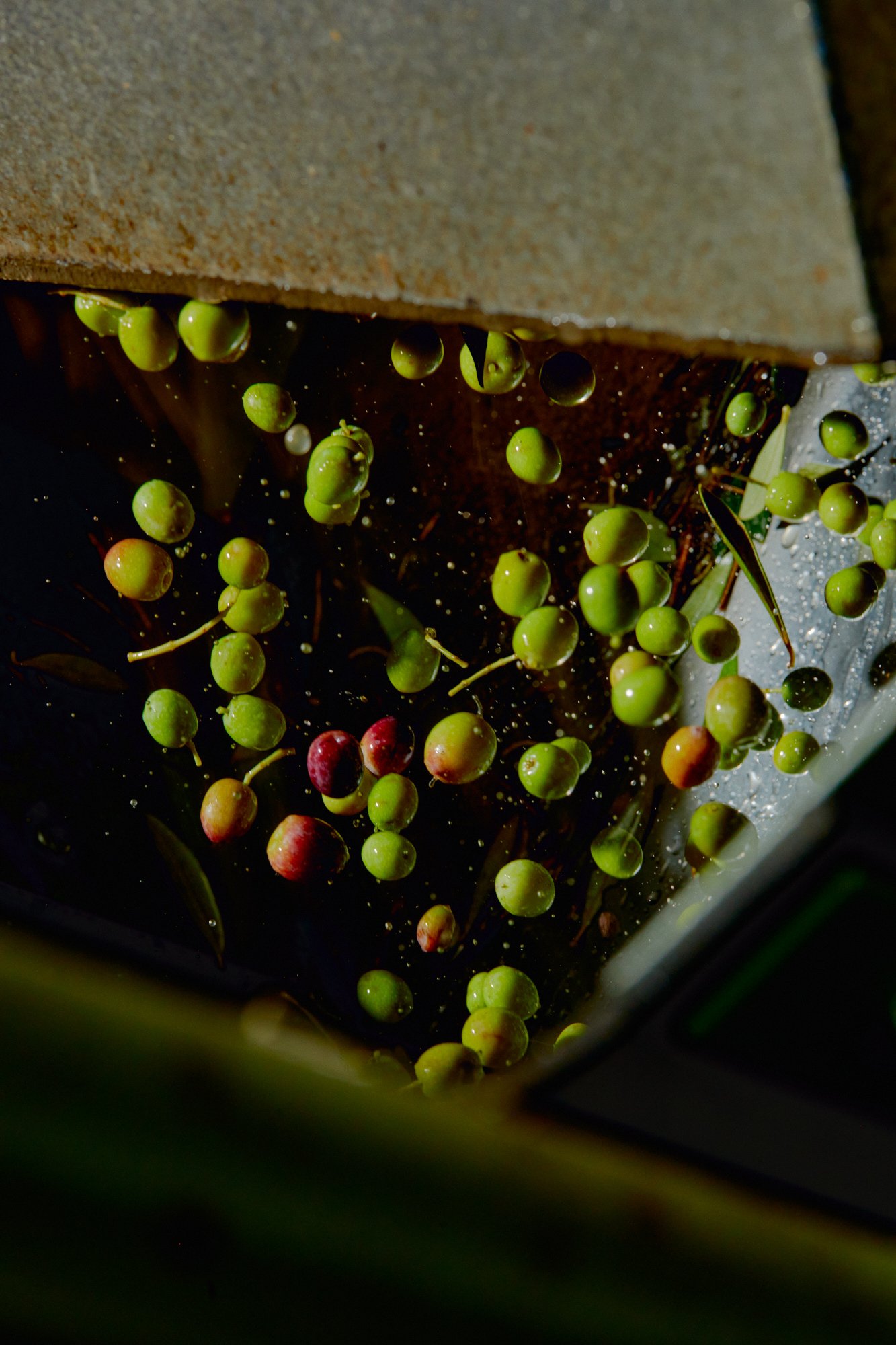
The reason comes down to quality, because the moment an olive is plucked from its branch, the cell membranes begin to break down, which leads to fermentation. Modern harvesting technology means Goldi can move fruit from orchard to mill within a strict four-hour window, locking in the vibrant green colours, rich flavour and high polyphenol count before fusty, musty, or winey traits tarnish the olives.

“The marker of quality is how fast you’re going from pick to process,” Owen says. “It’s all about that speed. So as soon as an olive comes off the tree, you’re trying to get it into that mill and crushed so the oil is separated as quickly as possible.”

The entire operation runs on an eco-conscious, sustainable farming model designed to actively regenerate the land they harvest. The processing mills are largely powered by expanding solar infrastructure, maximising clean energy use during peak pressing periods. 

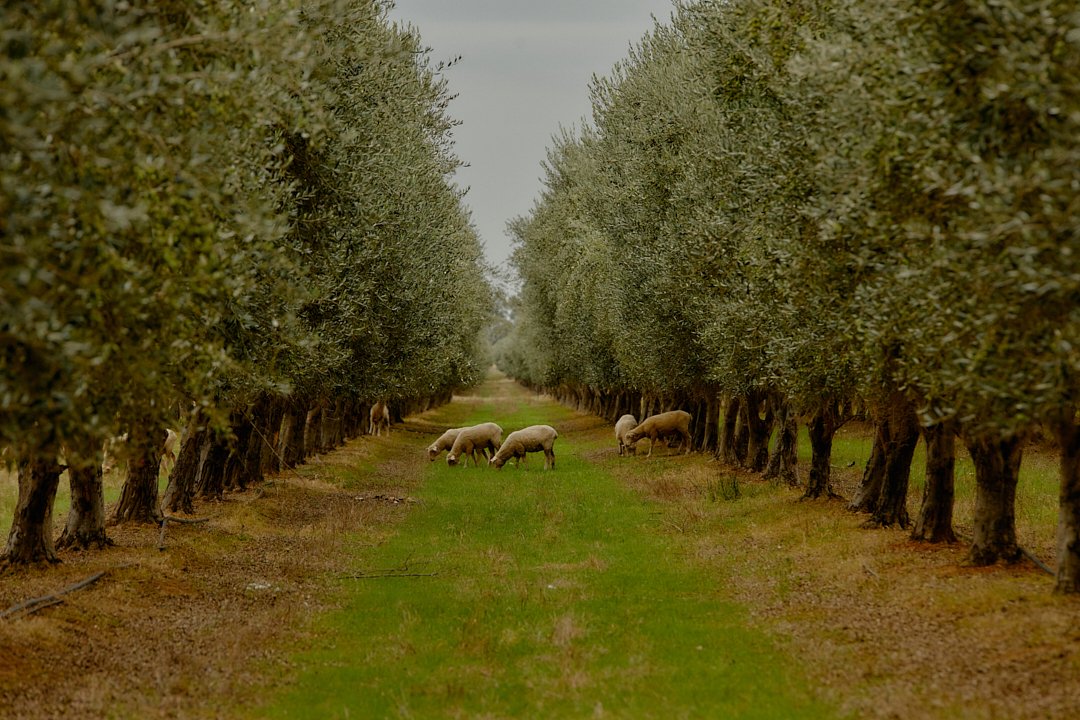
Owen explains that they also rotate flocks of sheep through the active groves, a method used across the Mediterranean for centuries. The sheep offer an organic weed-control and fertilising solution (as opposed to widely used herbicides), but more importantly they graze the undergrowth to the height required by the harvesting machines without damaging the lower tree canopy.

“It solved a weed issue, basically, but there have wound up being multiple benefits” Owen says. “Sheep love olive leaves, so they’ll eat it to a height that’s actually where we want to harvest from, plus they fertilise for us.”
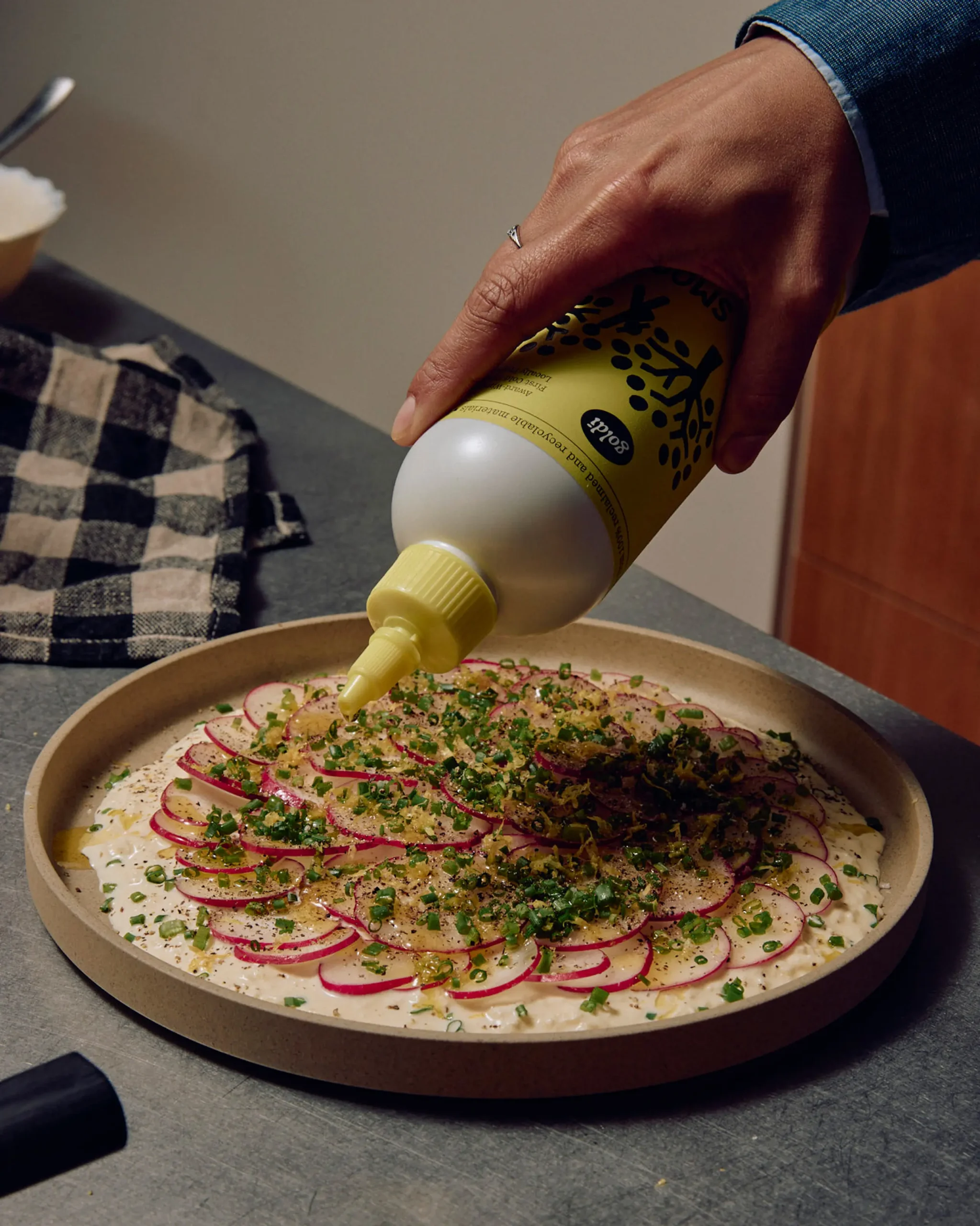
Goldi also recycles every byproduct of the milling process on-site, wasting virtually nothing. Extracted olive pits are blended directly with the pomace (the leftover fruit flesh and skin pulp), and aged into a rich organic compost that is spread back across the grove floor to replenish the terroir. Even their squeeze bottles are made out of reclaimed plastic.

Back when Goldi was preparing to enter the market, the visual landscape of the olive oil aisle was dated and, in Owen’s words, “uninspiring.” Michael brought his experience as an ex-agency graphic designer and web developer to get the business off the ground with design and user experience at it’s core.

“We wanted to explicitly differentiate from the heritage brands,” Michael says. “The old brands sitting on the shelves are just not very eye-catching or original. Our thinking was to have something super bright and interesting that could stand out against that stuff on the shelf. We wanted the kind of packaging that people would buy or enjoy having out on their kitchen bench when friends come over, feeling a real connection to it.”
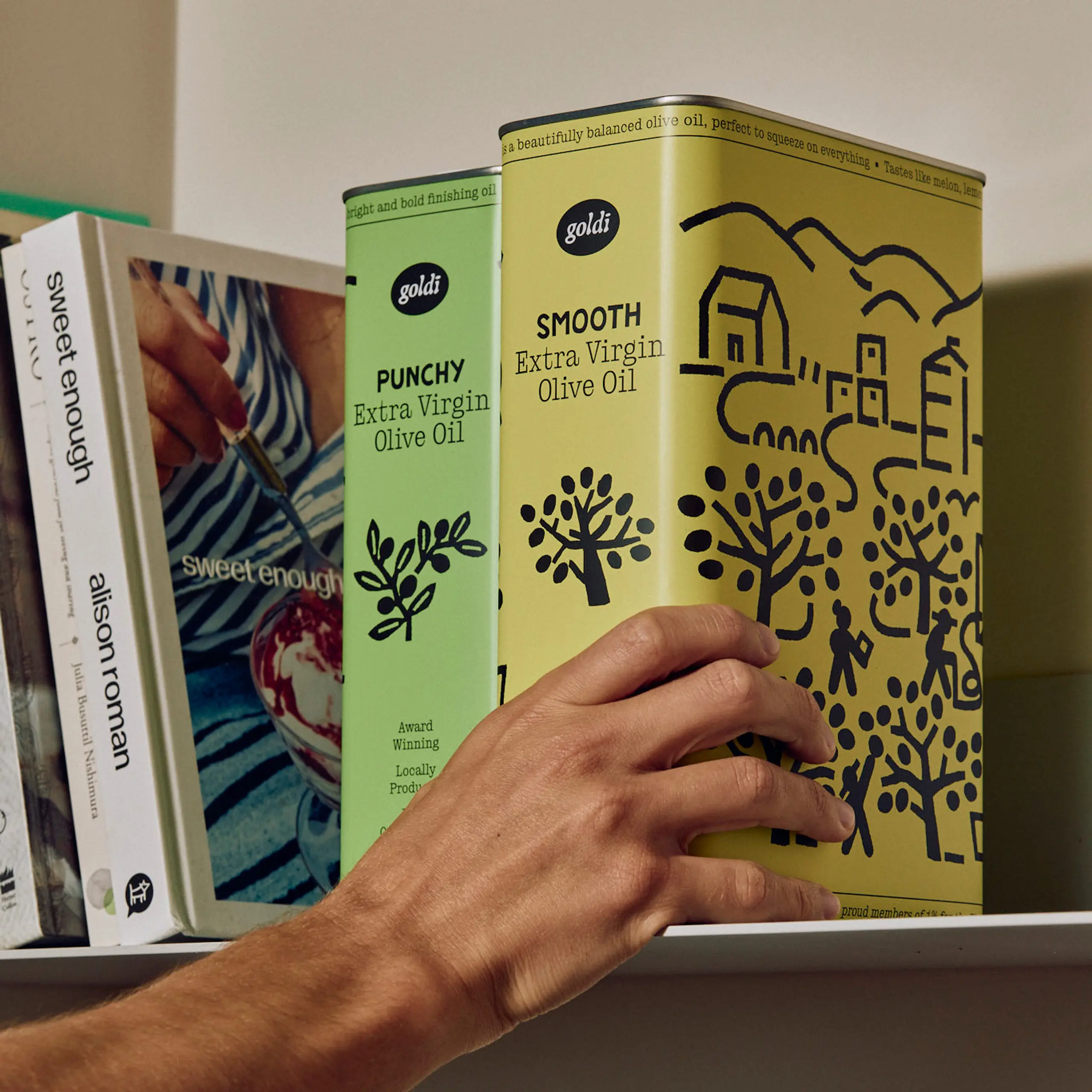
The branding completely bypassed the dark, dusty conventions of the past in favor of a deliberately vibrant color palette that mirrors that of the liquid inside. The Smooth blend utilises a warm, golden palette reflecting its softer, buttery Arbosana flavour profile; while the robust Punchy blend is wrapped in a vivid, electric green that echoes its high-polyphenol, pepper-forward Coratina profile.

To bring an edge of contemporary character to the brand, Michael brought on celebrated Copenhagen-based artist Morten Kantsoe to produce surrealist, marker-drawn line illustrations that envelope the bottles. 

“There’s a whole story to the labels,” Micheal says. “Smooth tells stories of harvest-time whereas Punchy depicts life on and the beauty of the farm. From the smaller bottles to the larger tins, the illustrations zoom out to take a wider perspective. I brought Morten on because his style suited the personable, human branding and he’s absolutely killed it.”

Goldi’s signature range includes myriad other options like lemon, lime, chilli, jalapeno and garlic infused oils, balsamic vinegar, and a tomato sauce that is lacto-fermented and uses Goldi’s own oil for an elevated take on the classic Australian variety. But, the brand has also just launched its most unique product yet, one that until now has been guarded by the family for use behind closed doors.
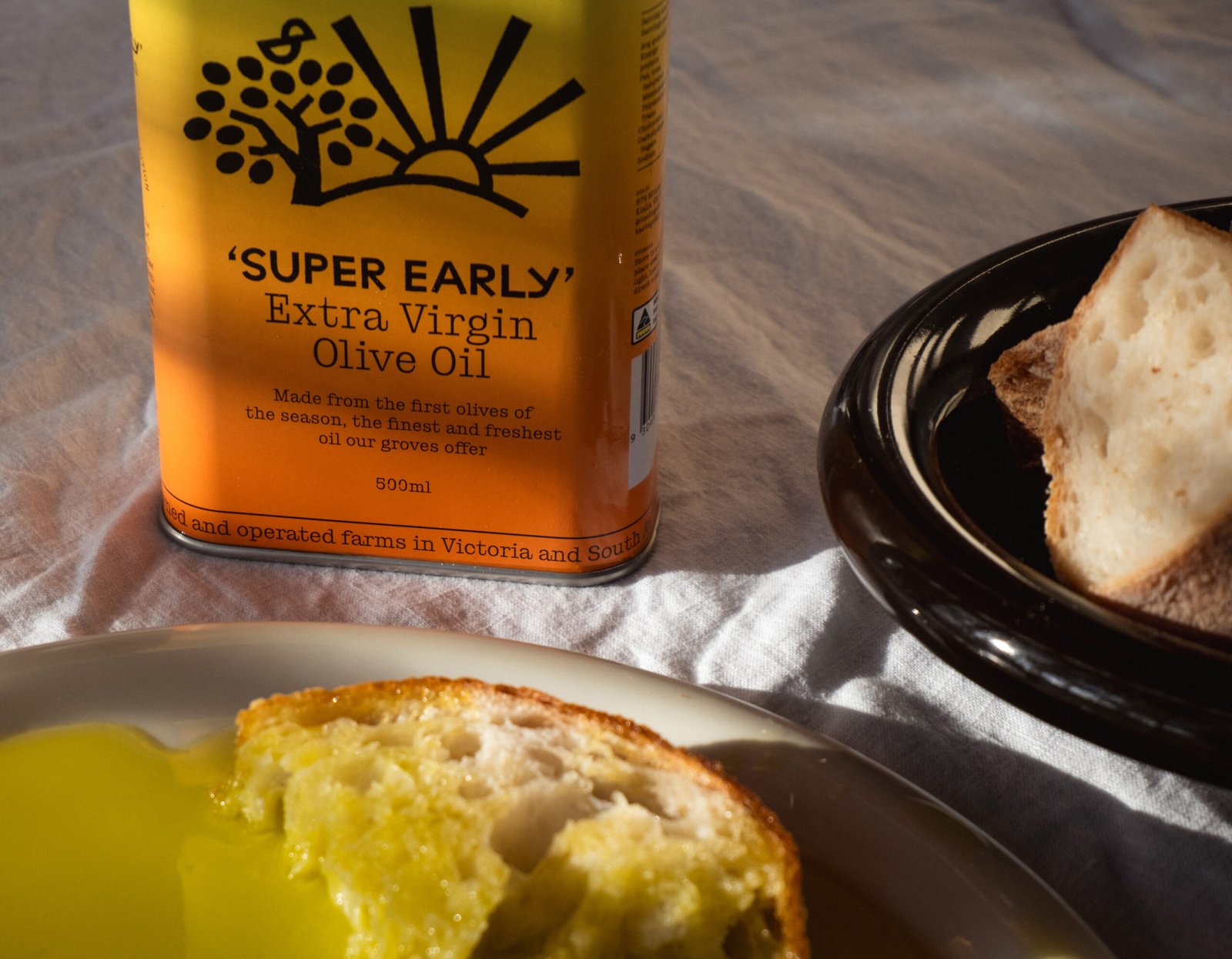
It’s called Super Early Harvest, and it’s an ultra-premium extra virgin olive oil pressed from unripened green olives harvested at the dawn of the season, before it is run through the mills at a temperature five degrees cooler than the typical cold-pressing standard. From a yield perspective, the process is wildly inefficient, Owen tells me, because green olives hold a fraction of the oil found in mature, purple fruit. But from a sensory perspective, the result is unparalleled.

The thick, buttery, deep green Super Early Harvest oil smells of freshly cut grass, and offers a sharp, peppery throat-kick that’s the result of an immense concentration of antioxidants and raw polyphenols, measuring at a very high 445 mg/kg. 

“It’s a limited release; there’s actually a really small window of which you can actually harvest this stuff,” Owen says. “It has a really, really strong flavor, so it’s a true finishing oil, like, you wouldn’t waste this. My mum actually keeps a 200-liter tank of this early harvest oil sitting at her home with a float on top that she gets filled up, and that’s the one she gives to all her friends in bottles. It’s an inefficient, special oil, but it offers this unparalleled flavor.”

As Goldi matures, now ranged in dozens of grocers around the country, and with an online store that is growing steadily, the family-owned producer is devoted to retaining what makes it special. And, Owen tells me his mum won’t ever part ways with her tank of early harvest oil.

“We like the family side of it and we like our independence…being able to make the special oil that we want to make,” Owen says. “We love the product… and we’re still out there growing because we believe in it.” 

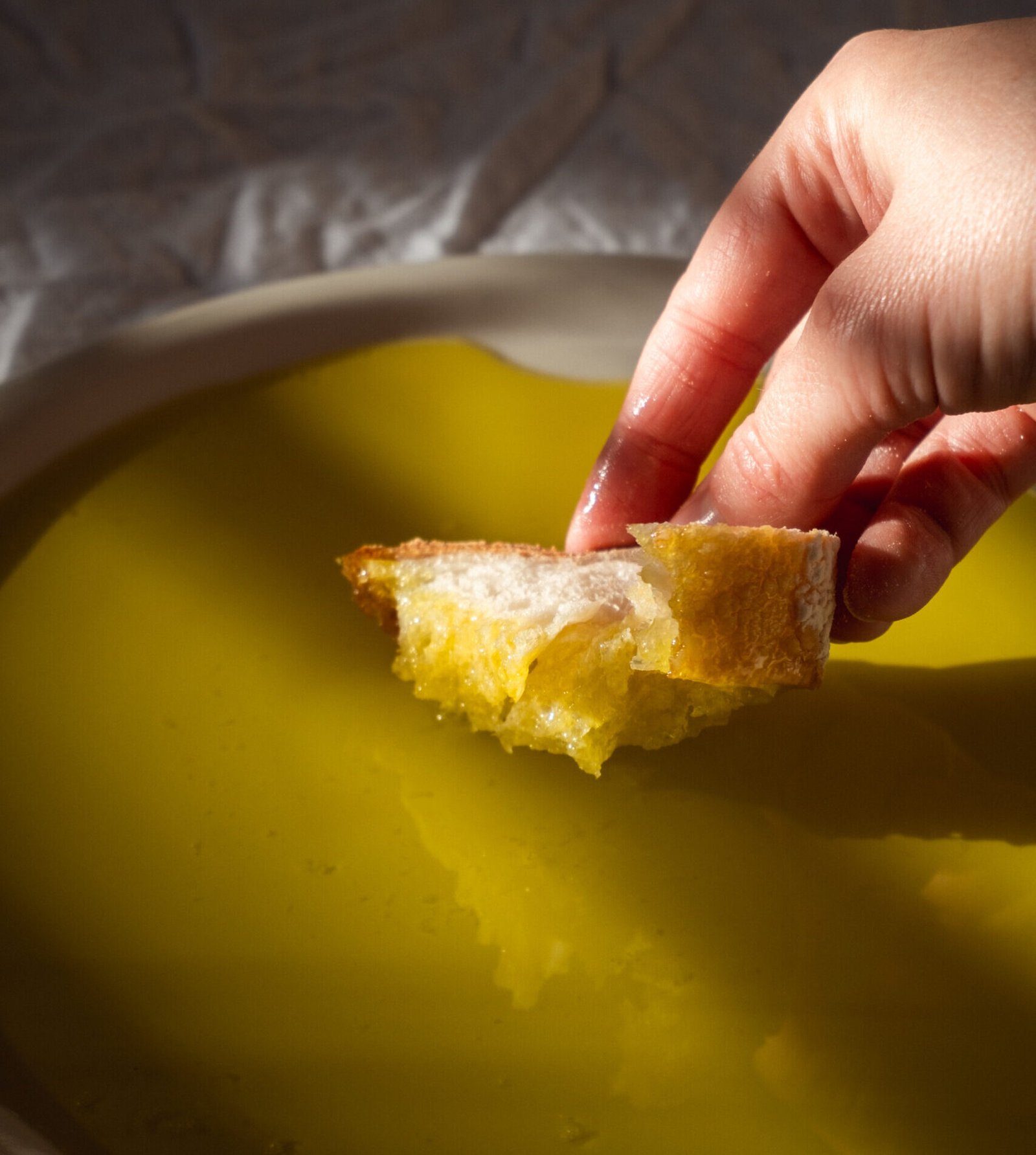
After speaking with Owen, I went out for lunch with an Italian friend of mine who’s about as passionate about olive oil as one can be. He imports olive oil that his family presses back in Italy because nothing here is quite the same. I mentioned that I’ve got a tin of Goldi’s new Super Early Harvest to taste. He told me, bluntly, that there’s only one way: “Get a slice of really good, crusty bread, and drizzle it on…maybe add a slide of tomato, IF it’s fresh.”

I did just that. The verdict? It’s better than Owen described, perhaps my own revelatory moment, and if I was his mum I’d be keeping that tank of Super Early Harvest under wraps.

Your next Read

In a world obsessed with what’s next, it is worth asking why we keep coming …

In a city like Melbourne, where heritage facades butt up against concrete ambition and pocket …

For more than seven decades, Sydney Film Festival has occupied a defining place in Australian …

I drove a Polestar 4 recently, my first time, massage seat and heated steering wheel …