83rd Venice Film Festival Review: "Bunker" Directed by Florian Zeller

White

“Bunker” Is Florian Zeller’s Beautifully Unsubtle Portrait of Class at Venice

9 September, 2026

Words by:

Sarah Palmieri

For all its unsubtlety, Florian Zeller's "Bunker" poses a visually captivating and philosophically thoughtful portrait of class in modern society, unafraid of politics, and anchored by two complete auteurs of their craft, Penélope Cruz and Javier Bardem.

There’s something about watching a real-life love affair onscreen. Not in a Bachelorette kind of way, but acting sweethearts, cast together to lean on their relationship for our collective entertainment. Yes, there might be a perverse thrill in it, wondering if this is really how they are at home. I can’t help but muse on Pitt and Jolie in Mr. & Mrs. Smith… But if they are a treat, then the sovereign leaders of Spanish cinema, Penélope Cruz and Javier Bardem, are a whole other level.

After the brilliant The Father (2020) and then the ever-disappointing The Son (2022), French writer-director Florian Zeller is back with Bunker, a new film that leans on his sweet, tender, and thoughtful writing, sometimes at the expense of being a little too on the nose.

“From the very beginning, I was most interested in having them (Cruz and Bardem) together onscreen, because I thought it would be a unique way to catch something special,” Zeller said at the Venice press conference, adding: “To blur the line between reality and fiction, and to approach the burning authenticity of the truth.”
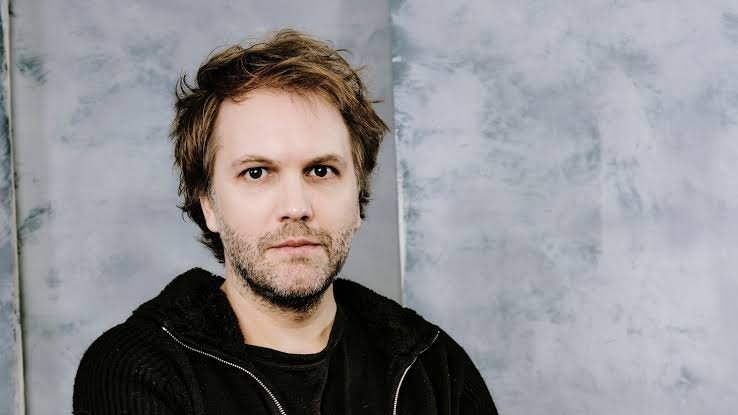
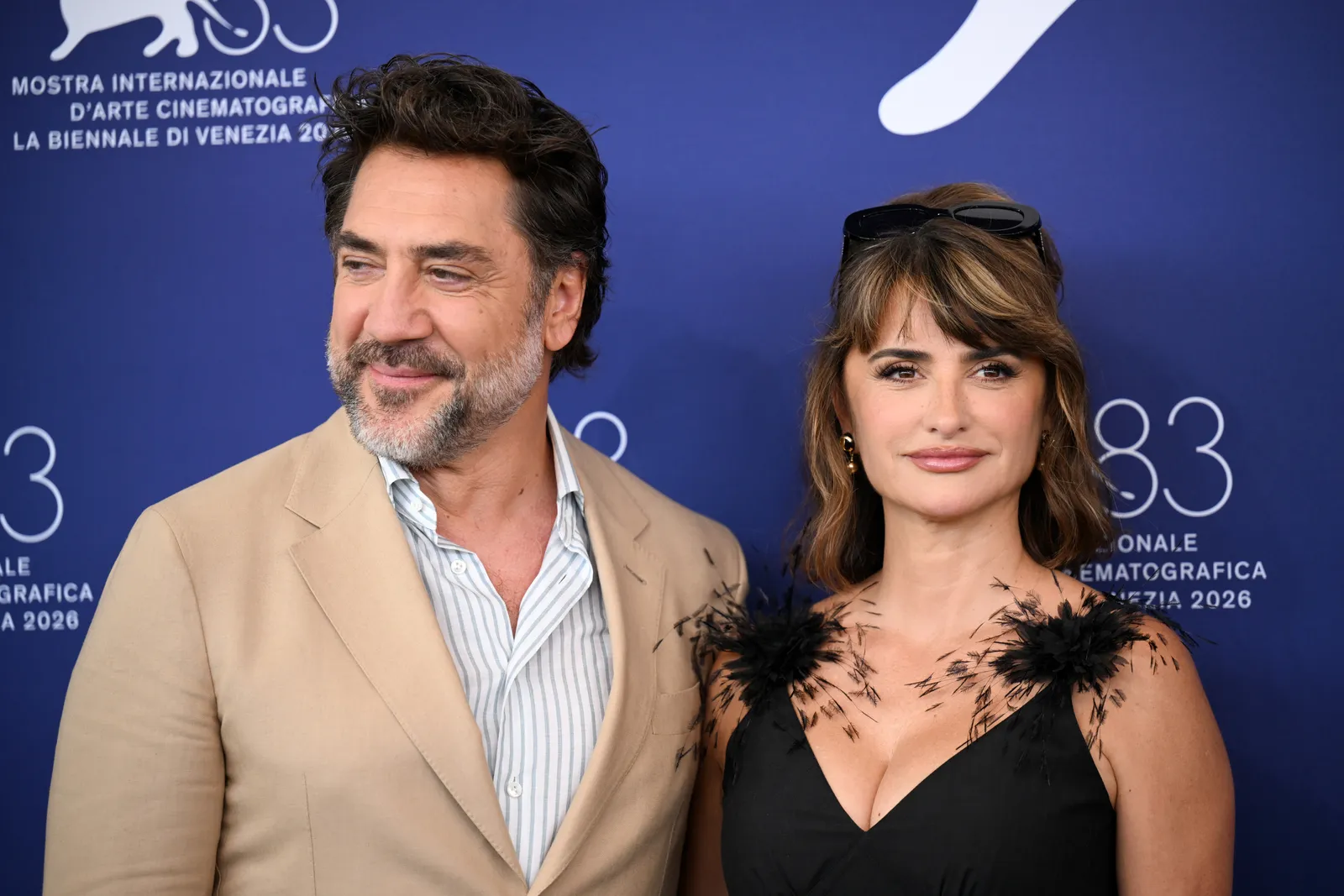
Bunker, which just premiered in competition at the Venice Film Festival, is a philosophical, sleekly designed dramatic thriller set inside the architectural prowess of Miguel (Bardem) and Sofia’s (Cruz) London Victorian home, where they live with their two young daughters and an awfully gorgeous cat named Blu.

Visually, it excels. From their clothing (Miguel often looks like he’s walked straight off a Comme des Garçons runway) to the interior of their home. Vast clean lines, large open windows and red walls (in the kitchen, an almost Almodóvarian slab of red cabinetry, fittingly, given Cruz’s history with the director), shot in a lightly grainy tone by British cinematographer Ben Smithard. The aesthetic brought me back to a mixture of Tár, and, though more subdued, Tom Ford’s Nocturnal Animals.

Drama begins when a hole appears in the wall to their neighbour’s studio — the home of Toby, an intimidating working-class man who’s lived next door his whole life, played brilliantly by Stephen Graham (Adolescence, This Is England). Through him, the film explores class as gentrification: not being able to afford to live where you grew up. As Graham put it, “You had a home, and now you can’t have that home, so where do you go?”

It’s around this time that Miguel, who has recently been awarded a prestigious prize for his work as an architect, is asked to build a bunker for a wealthy, Musk-type billionaire, Andrew, played by Paul Dano. The offer becomes the basis for a philosophical question about where our society is headed: toward preparing for the worst by retreating into ever more elaborate bunkers, like the one Andrew wants on his private Hawaiian island. It’s an idea that has seemingly become quite the rage (and not so far off from real life either, given the reported doomsday retreats various Silicon Valley executives have been building from New Zealand to Hawaii).

For all its unsubtlety, I can’t help but admire Zeller for making a film with such a strong moral compass, one that he and the cast are unafraid to discuss. When asked about the importance of the film, Bardem told journalists ” I think it’s important: to have a responsibility toward the world we live in, and not take that for granted.”

“Artistically speaking, this movie speaks about how much we are willing to see, feel, and welcome the other, or how much, based on what we imagine and our fears, we are going to isolate, criminalise, and dehumanise the other,” Bardem continued.

The Venice Film Festival this year has fallen a little flat in comparison to previous editions. Great films, for sure, but the feeling of seeing something monumental, I can’t say has been on the cards for me. Against the likes of Paul Schrader’s disturbing The Basics of Philosophy or Casey Affleck’s mediocre Company, whose press conference was all about not wanting to make a political statement, about following a feeling rather than any real intention, Bunker is powerful. A reminder that to leave a cinema with something truly interesting to discuss is surely part of the experince itself.

Your next Read

The Genesis of a Design Visionary Reflecting on his roots, Dale Hardiman shares, “Adam and …

Racing cars are rarely treated as objects of contemplation. They are built to do one …

The door to the Parts Department meeting room, at the back of the studio space, …

I’m in the Northern Territory with Hino Trucks, for the Darwin Supercars round, and with …