Davide Di Giovanni, NON and the Shape of a Feeling

White

Davide Di Giovanni, NON, and the Shape of a Feeling

19 November, 2026

Words by:

Justin Jackie

In “And Roses Wilt in the End”, Davide Di Giovanni turns a familiar corner of Sydney into somewhere I barely recognise. I’m not sure I’d want to see it anywhere else.

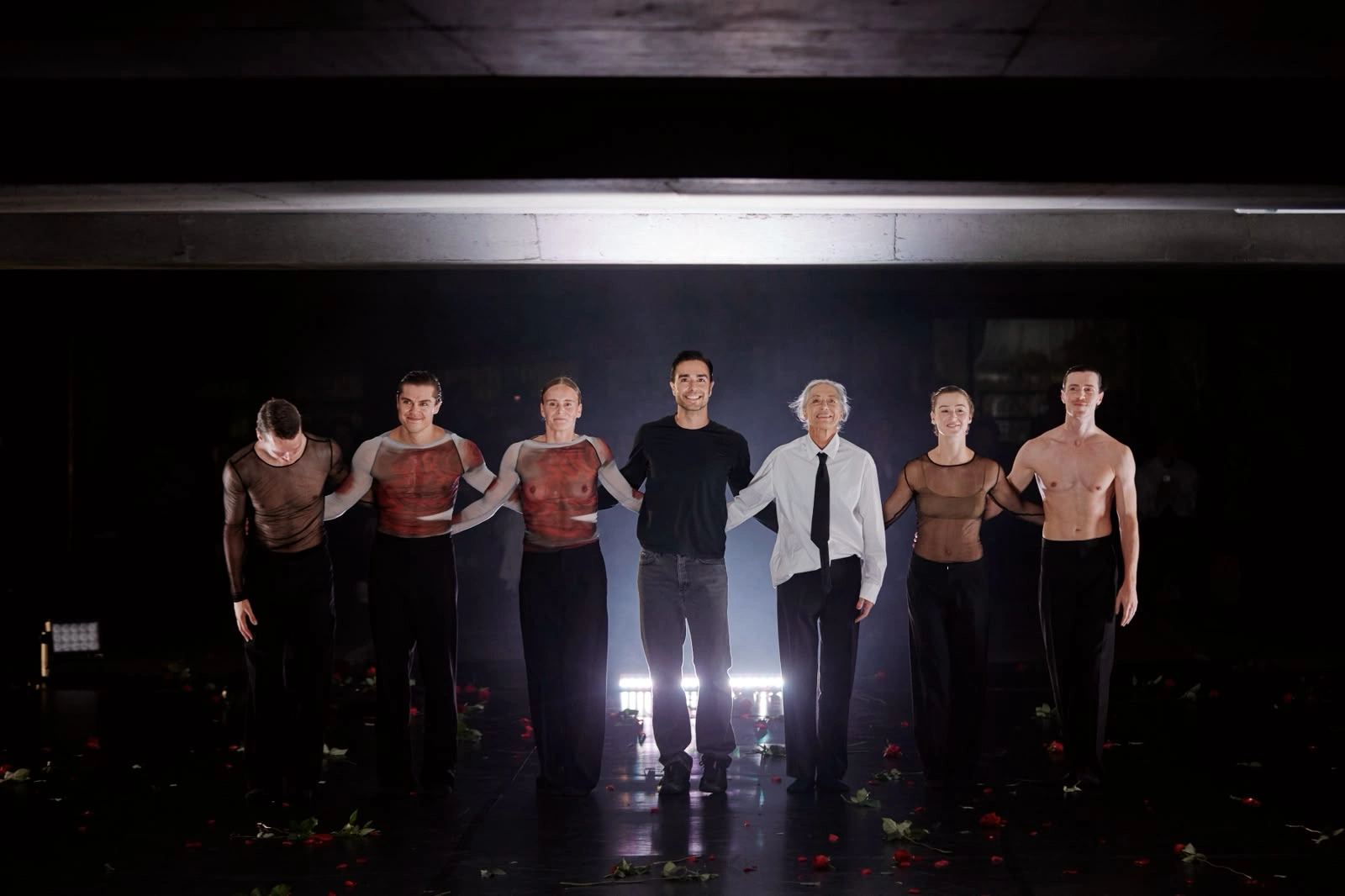
When I first moved to Sydney, I worked at the gym at the Entertainment Quarter. Like most work carparks, it was one of the least stimulating environments you’re likely to encounter. But when I went back on Monday night to see And Roses Wilt in the End, I could barely make out the concrete columns. It was dark enough to feel like I’d walked into another building, except that from the level above I could still faintly hear the triggering sounds of go-karts screeching around the track.

From my seat in the press area, I watched people flood in from the other end of the car park. Most of the seats weren’t allocated, and for a few seconds the scramble for chairs in the dark looked like a very low-stakes scene from The Last of Us. Then, while there was still a little chatter, the music slowly came up, and the dancers began to edge towards the stage. There was no announcement and no hard break between the scramble for seats and the start of the show. The crowd caught on quickly. Phones went away. I had the feeling almost immediately that I was about to see something special.

This was the fourth chapter of NEW OLD NOW (NON), the independent project Davide Di Giovanni began developing after a period of reflection during lockdown. I’d interviewed Davide a few days before opening night, when I still knew the car park better than I knew his work.
I found him warm, with a femininity to him and a candour I hadn’t expected from a conversation in the lead-up to a show. He spoke openly about the women who had shaped him, especially his mother. When it came to the performance itself, he was more inclined to talk about the feelings and ideas behind it than to tell me what was going to happen. I came away with a sense of why he wanted to make it and very little idea what I was going to see.

Davide described wanting somewhere to make work on his own terms after years of dancing for other choreographers. But he also wanted to see what might happen outside a black-box theatre. The car park, with its low ceiling and raw concrete, gave him an answer that had as much to do with temperament as it did logistics. “I think the beauty in that car park is just that it’s quite brutal,” he told me. He tends to see things in a dreamy way and likes having something raw to set that against.
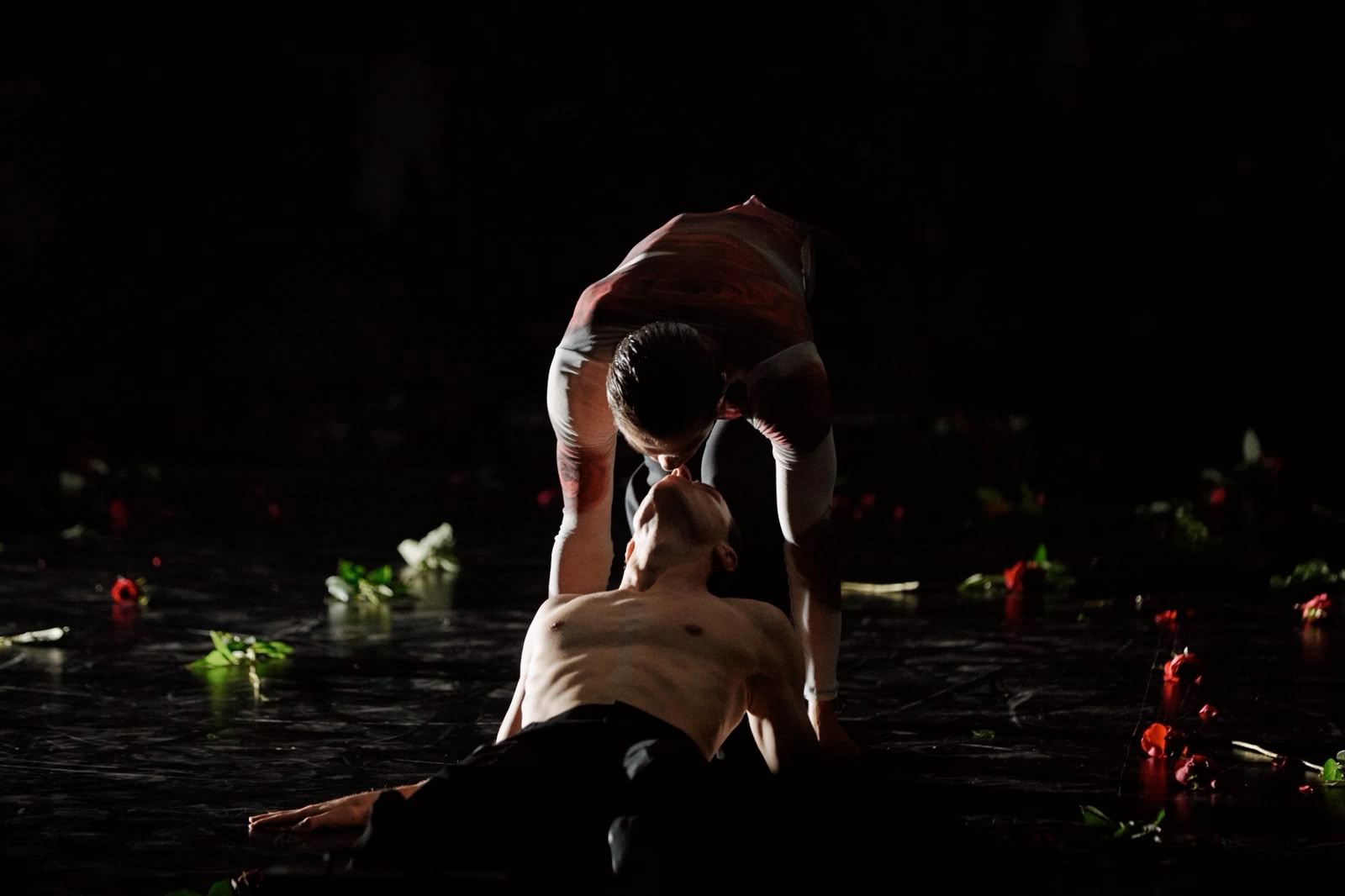
I’d put it to him that ‘choreographer’ felt like a slightly limiting title for what he does. Unsurprisingly, he’d already thought about that. “I really don’t believe that choreography is just movement,” he said. In talking through a scene, he’d go from asking why two dancers were paired to thinking about faces, clothes, light and the music that changes how all of it feels. “I start from the feeling that the moment will give me.” He said he thinks more like a film director, though he wasn’t sure he’d call himself one. I got the sense that he thinks about the whole show holistically. Partly because each choice affects the next, and partly because, on a production this small, the jobs don’t always stay separate.

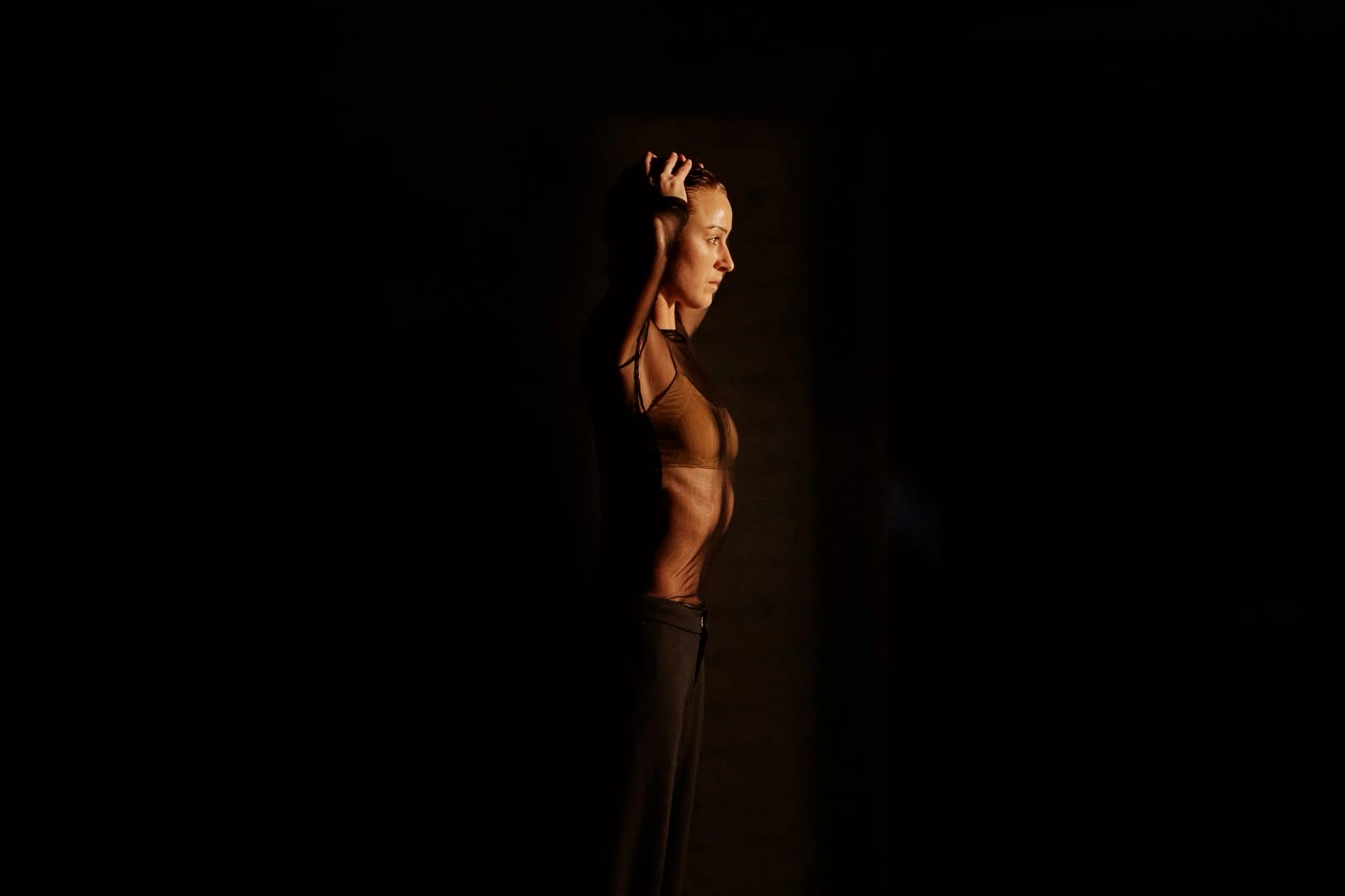
Speaking to him beforehand gave me a different way into the performance. He’d talked me through some of the problems the building posed, and now I could see what those problems had turned into. Lighting was the clearest example. Without the lighting rig he’d have in a theatre, Davide had to think about how to move a light without leaving the audience staring into it. His solution was to ask a dancer to move it. “And so it became part of the choreography,” he said. On the night, I watched dancers crawl along the edge of the stage and change the angle of the lights from the floor.

At one point the fog was thick enough that I could see the wind pushing it sideways through the car park. From where I sat, I saw the dancers in side profile, moving against it. In another passage, several performers appeared to be moving at quarter speed while a dancer in the middle moved much faster. It put me in mind of Radiohead’s “Street Spirit (Fade Out)” music video, where people seem to inhabit different speeds within the same frame. That was my association, not a reference Davide had given me. He’d talked fondly about Fellini and Sorrentino, and about the way Fellini could make a place feel like a reality of its own. What struck me watching the piece was that it could produce that filmic effect with no cuts, in a relatively unpredictable environment you couldn’t edit.

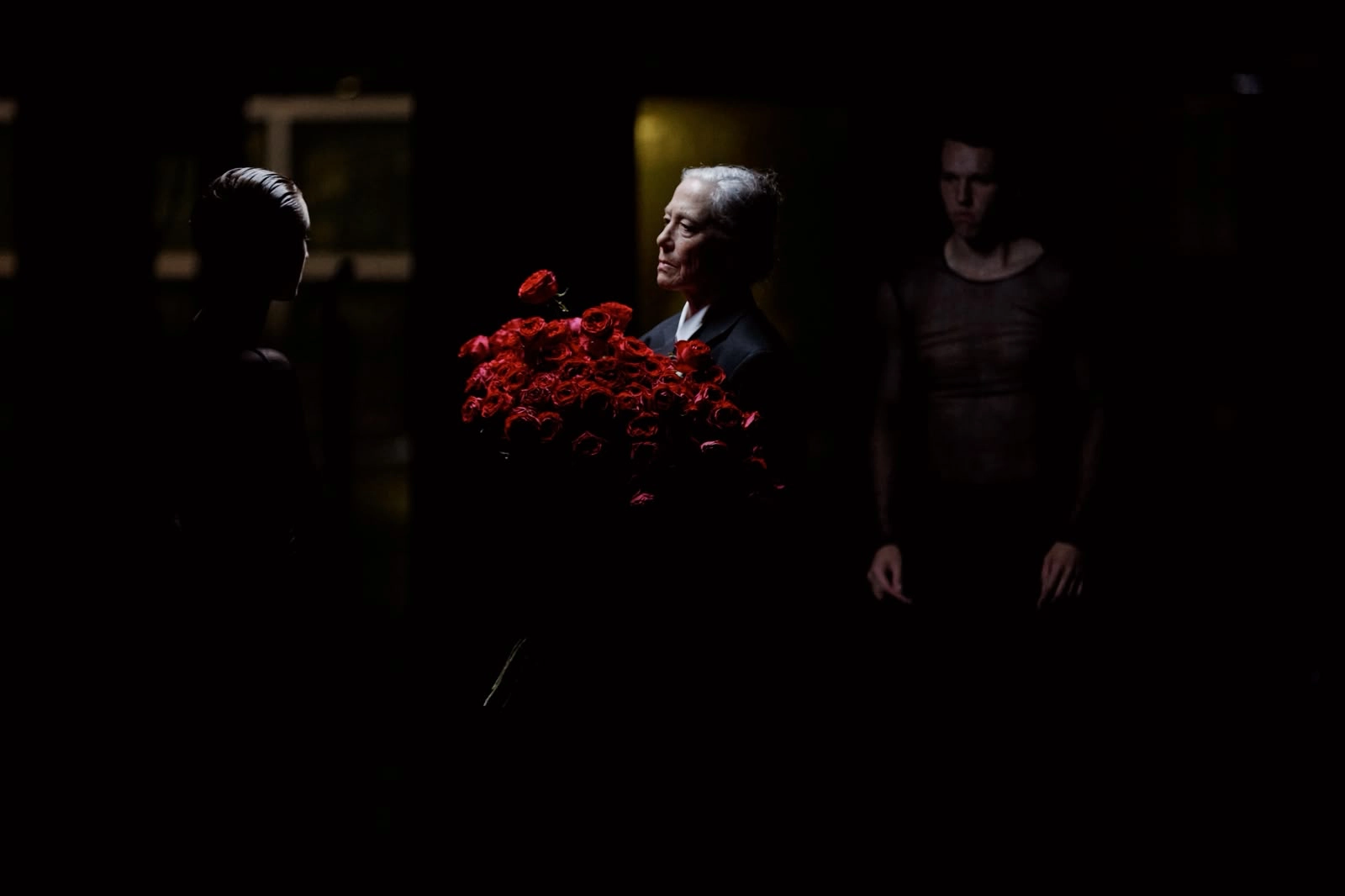
For Davide, the piece began with the voice of the Portuguese singer Amália Rodrigues. That led him to other women singing about love, including Mina, and back to memories of his mother, who was a musician. In the car park, the sound moved from the nostalgic and romantic into stretches that felt closer to house music. Roses ended up scattered across the floor. And then there was a woman in a suit, her hair slicked back, who looked just familiar enough to distract me for a moment. It was Shane Carroll, who had taught me in an introductory ballet course at Sydney Dance Company. I was grateful for the dark, because if she saw me, I could only assume she’d still have PTSD from my turnout.


Carroll spoke as she walked through the space and later stood with a microphone in the middle of it. Davide had asked her to draw on words she remembered hearing from choreographers earlier in her career. He’d also spoken frankly about getting older as a dancer. “I can’t move the way that I used to,” he said. He was interested in giving people of different ages the same movement and seeing what each body did with it. Carroll carries forward a figure of time and memory from earlier chapters of NON. I couldn’t tell you what every encounter between the dancers meant, but the difference between how they moved was more interesting to me than settling on what each of them stood for.

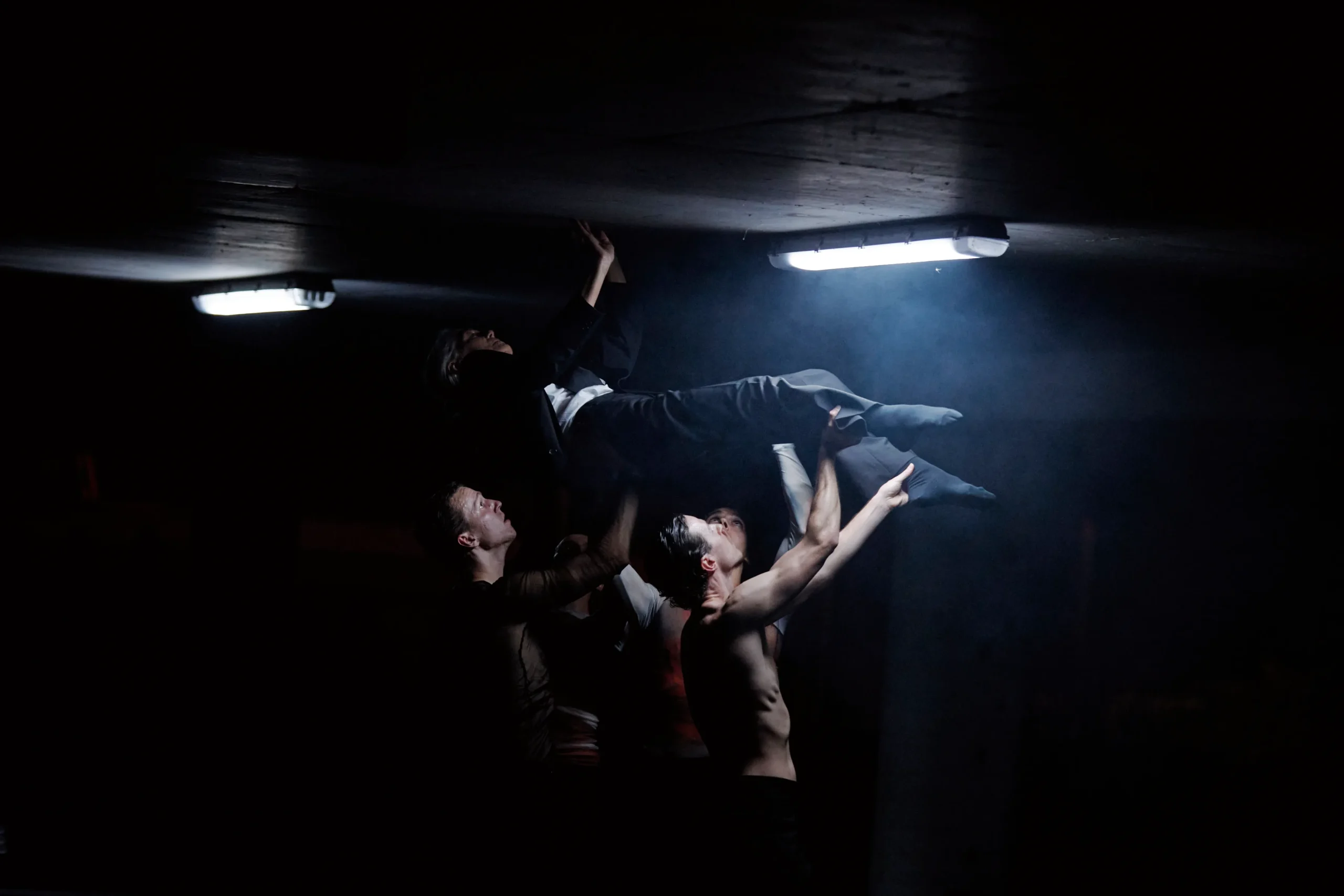
At one point, Carroll was lifted towards the ceiling, a hand reaching up beside the car park’s fluorescent fittings. It’s an image that would lose something beneath a high theatre ceiling. You can see exactly how much space there is for the lift and how little is left above her.

It was one of the best productions of its kind I’ve seen anywhere. It had the confidence of something I’d expect to come across in a more adventurous European city, with a much larger budget. I could just as easily imagine encountering it as performance art at Mona. During the interview, Davide had compared Sydney with Munich, where he’d worked, and talked about how hard it can be for small independent projects to get support here. Sydney knows how to put on a polished show, and the big venues do what they do well. What I see less often is someone outside those institutions getting the room to take a risk on something that might not work. Finding this much ambition on a Monday night in a car park made me happy to be wrong about what I could expect from the city.

What made it more impressive was knowing how few people were behind it. Davide told me his core team was four people. When he listed his own jobs, it sounded less like a title than a staffing problem. “I do press, I do ticketing, I do production, I do dance, and I do creation.” Nothing about watching the show made me think it had been made by a team that small.

There’s a sense of inevitability about what comes next for NON. I’d be surprised if other venues, in Sydney and further afield, weren’t in Davide’s inbox soon. He deserves the attention and the resources that might come with it. I keep coming back to a line from Rilke. “If my devils are to leave me, I am afraid my angels will take flight as well.” As Davide’s productions get bigger, he’ll have the chance to work with larger crews and in spaces that give him more control. I’d love to see what he does with that. But some of what I loved about this show came from the very things a bigger production might be able to do away with. The dancers had to move the lights themselves, and the wind sent the fog across them. I hope the work keeps some of that rawness as it grows.


Your next Read

All cities can be defined by a great restaurant, or a landmark, or in some …

Two years ago, Lina Zabaleta, the DJ and collective founder known to Melbourne’s dance floors …

An old film recording of director Sofia Coppola (The Virgin Suicides, 1999; Lost in Translation, …

The market grew, and grew, reaching its zenith in late 2021, as Wall Street investors, …