The Aston Martin Vantage S

Knowing What to Keep

Black

The Aston Martin Vantage S: Knowing What to Keep

23 July, 2026

Words by:

Justin Jackie

The sports car world changed. Aston Martin simply understood which parts of the formula were worth preserving.

Spend enough time around modern performance cars, and you begin to realise there is no longer a single blueprint for building one. What was once a relatively straightforward formula has splintered into an increasingly diverse collection of powertrains, drivetrains and philosophies. Technology, once there primarily to support the driving experience, has increasingly become part of the headline. Performance figures that would have seemed absurd only a decade ago are now commonplace, while electrification and hybrid assistance have transformed not only how sports cars perform, but what they represent.

Some of the most compelling sports cars today, however, aren’t those pushing furthest into the future, but those that have remained faithful to the ideas that made them desirable in the first place. Not because they’re nostalgic, or because they’ve ignored progress. Quite the opposite. They’ve evolved where necessary while resisting the temptation to reinvent themselves simply because the market expects something new.

In an industry preoccupied with adding more, whether that’s power, technology, drive modes or complexity, there is something refreshing about manufacturers that continue to focus on refining a singular idea. By resisting unnecessary reinvention, these cars have become more distinctive with every passing year.

It’s an unusual phenomenon. Products rarely become more desirable simply by staying true to themselves; more often, they risk being left behind. Yet in a sports car landscape where the definition of performance has never been broader, a handful of manufacturers have found themselves in an unexpectedly enviable position. They haven’t stood still, but they have understood which parts of the formula were worth preserving.

Few manufacturers illustrate that shift more clearly than Aston Martin. For decades, the British marque has remained committed to a particular vision of the sports car: front-engined, rear-wheel drive, elegant in proportion and built around a sense of occasion that extends beyond outright speed. While competitors have repeatedly redefined their cars in response to changing tastes and technologies, Aston Martin has spent much of its history refining a philosophy it had little reason to abandon.

That philosophy reached an important milestone with the arrival of Ian Callum’s V8 Vantage in 2005. More than a new entry point to the range, it established a design language that would shape Aston Martin for the next two decades. Compact by the company’s standards, yet unmistakably muscular, it distilled the marque’s identity into a more athletic form. Its drama came not from oversized vents or exaggerated bodywork, but from proportion: a long bonnet, a cabin pushed rearward and broad rear haunches that gave the car a sense of latent power even when standing still.

Under the stewardship of Marek Reichman, that philosophy has been carefully evolved rather than replaced. Beneath the familiar silhouette, almost everything has changed. Performance has increased dramatically, the chassis has become considerably more sophisticated and the cabin has finally entered the contemporary digital age. Yet the Vantage has never felt like a car chasing fashion. Its proportions remain immediately recognisable, as does the balance it strikes between elegance and aggression.
A five-day loan from Aston Martin Australia presented an opportunity to answer a simple question: after two decades of careful evolution, how much had the Vantage really changed?

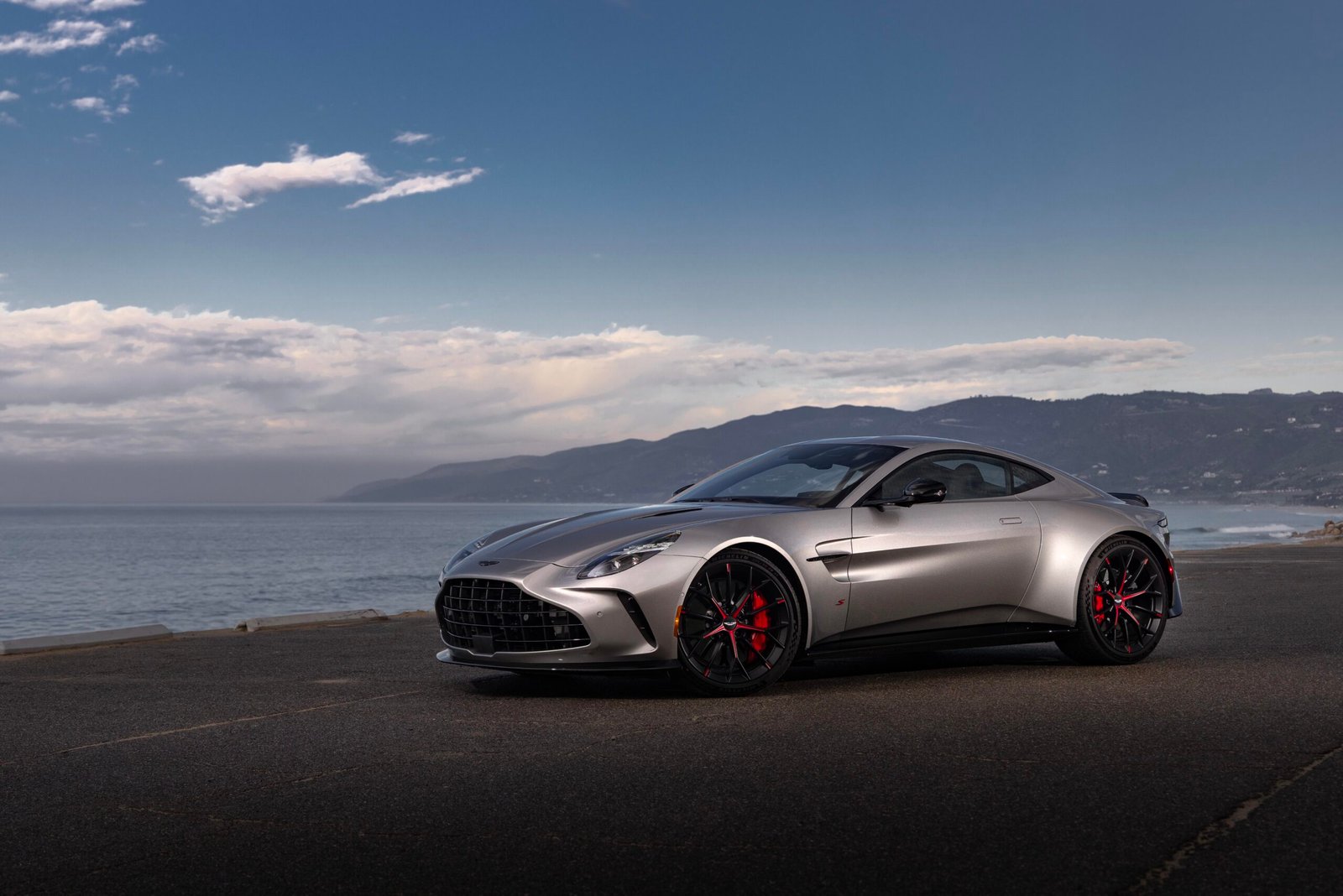
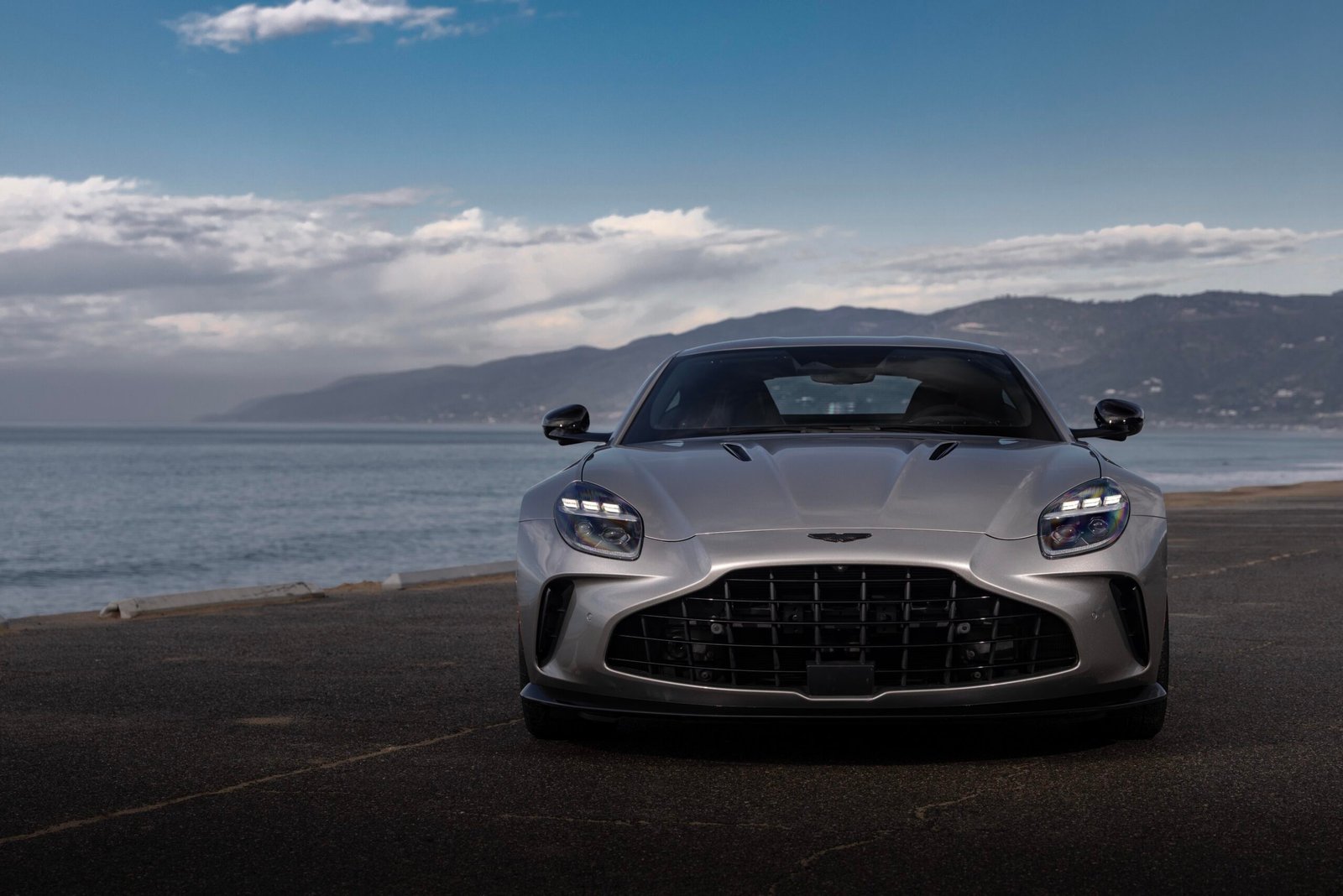
I spent much of the first afternoon walking around it, trying to work out exactly what Aston Martin had altered. Unlike so many performance variants that seem determined to advertise themselves, the S asks you to look twice. The overall shape is untouched, the stance is familiar and, even parked in the driveway, it still looked unmistakably like a Vantage.

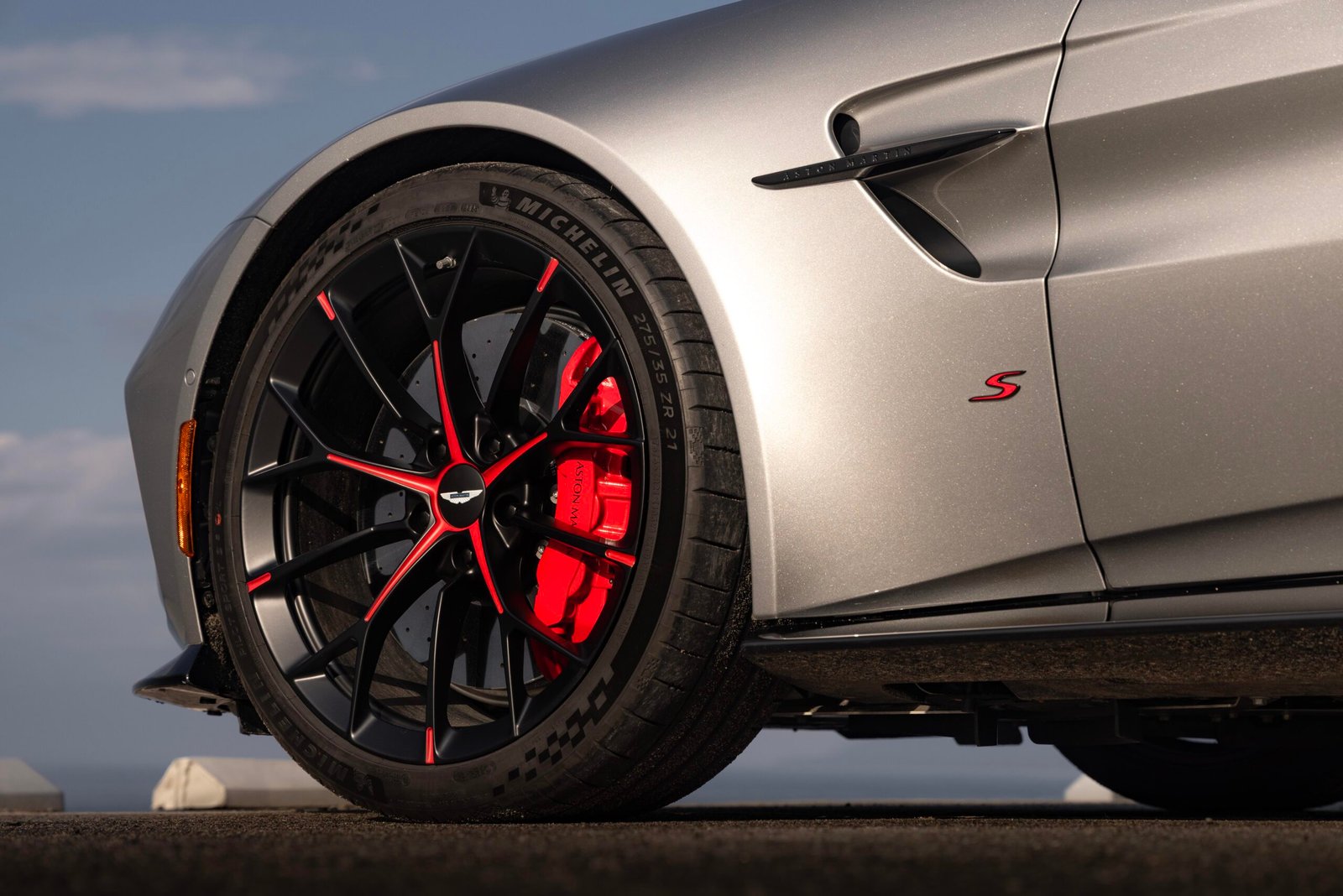
Only after spending time with it did the differences begin to reveal themselves. A pair of centrally mounted bonnet blades now helps extract heat from the twin-turbocharged V8 beneath, introducing a little more visual tension across the nose without interrupting its clean lines. The discreet S badges on the front guards are almost unusually restrained by modern performance-car standards. Each is hand-made from forged brass before being filled with red glass enamel, the sort of detail that rewards curiosity.

Around the back, a revised decklid spoiler provides the clearest visual distinction. It contributes 44 kilograms of rear downforce at the Vantage S’s top speed, forming part of a total of 111 kilograms generated by the revised bodywork and underfloor, yet it never feels as though it is competing with the shape beneath it. Even the optional 21-inch wheels and bronze brake callipers on the test car felt considered rather than ostentatious.

The more time I spent with the Vantage S, the more I appreciated Aston Martin’s restraint. It would have been easy to exaggerate the visual differences between the standard car and the flagship, but that would have missed the point entirely. The Vantage has always relied on proportion rather than ornament, and the S understands that some designs are strengthened by careful editing rather than wholesale revision.

Standing behind it, the familiar rear three-quarter view still carries most of the car’s visual drama. The roofline falls neatly into the short deck, while the rear guards shoulder much of the visible weight. They are the sort of proportions that make you glance back after locking the car and, as I would discover over the following five days, they are just as much a part of the experience from behind the wheel as they are from the outside.
Opening the door, it’s immediately obvious Aston Martin never intended the Vantage S to feel spacious. The broad sills still demand a deliberate step over before you lower yourself into the seat, and once inside the cabin seems to close in around you. The shoulder line sits high, the centre console rises prominently between the seats and the dashboard wraps tightly around the driver. In an era where many interiors prioritise openness and visibility, creating spaces that feel airy and almost lounge-like, the Vantage S still feels unapologetically intimate.

The view ahead is dominated by an impossibly long bonnet, while every glance towards the mirrors is met by those broad rear haunches rising above the beltline. After a day or two, they stop being something you notice and become part of the way you judge the car’s dimensions. Every lane change is a quiet reminder of the shape wrapped around you.

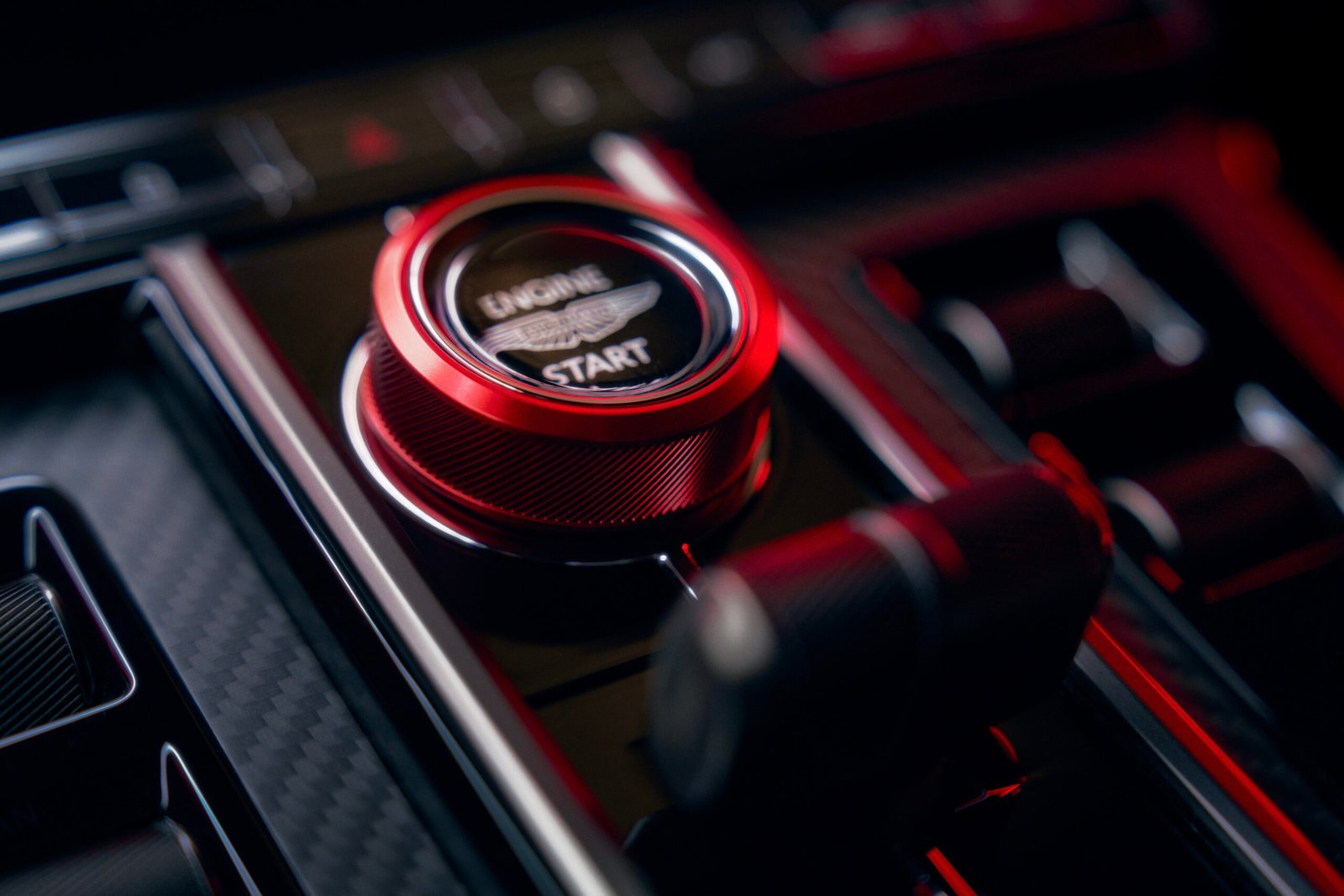
It also feels like an interior designed by people who understood that not every interaction should happen through a screen. Beautifully machined rotary dials have a reassuring weight, while the functions you use most often remain physical buttons within easy reach. Climate control, drive modes and chassis settings can all be adjusted instinctively, without digging through layers of menus or taking your eyes from the road. There is a tactility to the cabin that feels increasingly uncommon. Each click and rotation reminds you that the satisfaction of using something well made is every bit as important as how it looks.

That’s perhaps one of the more surprising things about the Vantage S. At a time when much of the industry embraced minimalist interiors dominated by ever-larger touchscreens, Aston Martin largely stayed the course. Rather than feeling old-fashioned, that decision has become one of the cabin’s greatest strengths. The physical controls no longer feel like relics from another era. If anything, they’re a reminder that not every interaction is improved by replacing it with a touchscreen.

For years, however, Aston Martin interiors carried one unavoidable compromise. However beautifully assembled they were, the infotainment rarely matched the rest of the car. It became the caveat that inevitably found its way into almost every review, a small but persistent reminder that the craftsmanship had outpaced the technology. That criticism no longer feels justified.

Apple CarPlay Ultra is the sort of update that’s easy to underestimate because it doesn’t announce itself with dramatic new functionality. Instead, it quietly removes the one weakness owners had learned to tolerate. Navigation, media and vehicle information all feel seamlessly integrated. Rather than competing for attention, the technology finally disappears into the background, allowing the craftsmanship, tactility and driving environment to become the focus once again.
 

A five-day press loan changes your relationship with a car.

Car launches are designed to leave an impression. Five days is long enough for that impression to settle into routine. You stop thinking about the spec sheet and start using the car as though it were your own, which is often when its real character begins to emerge.

The Vantage S spent as much time doing ordinary things as it did carving up good roads. It squeezed into supermarket car parks, crawled through Sydney traffic and quickly reminded me that a low-slung sports car with a long bonnet and broad shoulders is never going to be effortless around town. You become acutely aware of its width, the length of its nose and the attention it attracts, even if that attention is rarely as overt as you might expect.

One of the more entertaining parts of living with the Vantage S was watching other people’s reactions. From behind the wheel, you start noticing the subtle double takes, the pursed lips and the knowing smiles from people who recognise what they’re looking at. It’s rarely the sort of attention that demands a camera phone or an Instagram story. Instead, it feels like quiet appreciation from people who understand what the car represents.

Somewhere around the third day, I caught myself taking the long way home. I’d stopped evaluating another aspect of the chassis or finding excuses to hear the V8 one more time. I simply wanted to spend a little longer behind the wheel. I became oddly protective of the remaining kilometres on Aston Martin’s 500-kilometre allowance, mentally keeping track of every unnecessary detour while simultaneously looking for reasons to make another one.

By the final full day, there was one part of the Vantage S I still hadn’t fully explored. I’d spent the week learning how it fit into everyday life, but I still hadn’t discovered where its dynamic limits really sat. With roughly 400 kilometres remaining on Aston Martin’s press allowance, it felt like the right moment to stop asking theoretical questions and start asking practical ones.

The Vantage S would have been perfectly content spending the afternoon on one of New South Wales’ great touring roads. Long, flowing corners, smooth bitumen and enough distance to settle into the sort of effortless rhythm Aston Martin has always done so well. It felt like the environment the car had been conceived for, covering ground quickly without ever asking too much of its driver.

I had something else in mind.

Wiseman’s Ferry has a habit of exposing sports cars. The road is rarely pristine, its surface changing constantly between smooth tarmac, patched repairs and loose gravel dragged onto the racing line. Tight directional changes arrive with little warning and, on the day I visited, passing showers ensured grip levels were never entirely predictable. If there was a place to discover whether the Vantage S could do more than simply grand tour, this was probably it.

On paper, it certainly had the credentials. Aston Martin’s 4.0-litre twin-turbocharged V8 now produces 680PS and 800Nm, enough to dispatch 0–100 km/h in 3.4 seconds before continuing to a top speed of 325 km/h. Those numbers place it firmly among the quickest front-engined sports cars on sale today, but figures reveal very little about how a car chooses to deploy its performance.

The first surprise was just how naturally the Vantage S settled into this environment. Rather than encouraging you to attack every corner, it seemed happiest settling into a rhythm. It wanted to grand tour when the road opened up, then slalom through tighter sections with a composure that never felt hurried. The steering is honest rather than razor sharp, allowing the front axle to lean on an immense amount of mechanical grip before the rear follows faithfully behind.

What I hadn’t expected was how much fun it could be when the road became tighter and a little messier.

The Vantage doesn’t try to disguise its layout or its mass. Under heavier braking and quicker directional changes you’re always aware there’s a front-mounted V8 sitting ahead of you, and that awareness becomes part of the experience rather than a limitation. Instead of shrinking around you like a lighter, mid-engined sports car, it encourages a more physical style of driving. You point it towards an apex, lean confidently on the front axle and then let the rear tyres dig into the road on the way out. There were moments where it genuinely felt like I was wrestling the car through a sequence of tighter bends, the V8 grunting its way from corner to corner with a muscular honesty that somehow made the whole experience even more enjoyable.

As the afternoon wore on, the weather began to close in. Damp patches appeared beneath the trees, loose gravel became harder to spot and the road surface grew increasingly inconsistent. With 680PS and 800Nm being sent exclusively to the rear wheels, the Vantage S demanded a little more respect than it had earlier in the day. There were moments where it felt almost impatient beneath me, the rear tyres gently relinquishing their grip if I became greedy with my right foot.

On broken, slippery roads it could occasionally feel like a bull in a china shop, but I mean that in the best possible way. The Aston never felt unruly or intimidating. It simply refused to disguise the amount of engine sitting ahead of me or the performance being sent to the rear axle. It expected smooth inputs, rewarded commitment and occasionally reminded me that physics still has the final say.

By the time I pointed the Vantage S back towards Sydney, I wasn’t thinking about the remaining kilometres on Aston Martin’s allowance anymore. I was thinking about how reluctant I was to hand the keys back. Somewhere between the first day spent studying its details and an afternoon wrestling it through the changing conditions around Wiseman’s Ferry, the Vantage S had quietly stopped feeling like a press car.

By the time I reluctantly returned the car, I kept coming back to a thought that had been quietly forming all week.

The Vantage S hasn’t become more appealing because Aston Martin stumbled across the perfect formula. Nor has it become more desirable because the company resisted change. Spend five days with it, and it’s obvious just how much has evolved. The chassis is sharper, the powertrain is considerably more potent and, perhaps most importantly, the cabin has finally entered the digital age without sacrificing the tactility that always made it feel special.

What Aston Martin has done particularly well is recognise the difference between refinement and reinvention.

Throughout the week, that philosophy revealed itself again and again. It was there in the exterior, where subtle revisions respected Ian Callum’s original proportions instead of chasing visual drama. More than twenty years after that original design language was established, the Vantage remains one of the most handsome sports cars on sale. Its appeal lies in proportions that never needed chasing after fashion in the first place. It was there in the cabin, where beautifully machined metal controls still perform the tasks that deserve physical interaction, while Apple CarPlay Ultra quietly removes the technological compromise owners had accepted for years. It was there on the road, where the Vantage never pretended to be a lightweight mid-engined sports car, instead embracing the character that comes with a front-mounted V8 and rear-wheel drive.

The sports car landscape hasn’t become better or worse over the past decade. It has simply become broader. Some manufacturers have pursued electrification, others have chased ever-faster lap times, while many have become showcases for increasingly sophisticated software. Those cars all have their place, and many of them are genuinely extraordinary.

The Vantage S simply demonstrates that progress doesn’t always require a completely new direction. Sometimes it comes from understanding what was already worth preserving.

Five days wasn’t enough to experience everything the Vantage S is capable of, but it was long enough to understand why it feels increasingly relevant. Its growing appeal comes from Aston Martin carefully choosing which parts of a changing world were worth embracing, and which parts of its own philosophy were worth preserving.

In doing so, it reminded us that the hardest part of good design isn’t knowing what to change. It’s knowing what to keep.


Your next Read

Jerry Saltz pulled in one of the hottest audiences Australia has to offer. Sincerely, I …

The brand did not emerge from a desire to disrupt skincare so much as a …

The beauty industry can be loud. New launches every week. Promises of instant glow. Before …

Let’s be honest, Sydney has to be Australia’s flashiest city, and that’s coming from someone …